
High frequency tooth pass cutting method
a cutting method and high frequency technology, applied in metal-working equipment, milling equipment, manufacturing tools, etc., can solve the problems of heat conducting into the workpiece and loss to the environment, and achieve the effect of softening the material and easy cutting the material
- Summary
- Abstract
- Description
- Claims
- Application Information
AI Technical Summary
Benefits of technology
Problems solved by technology
Method used
Image

Examples
Embodiment Construction
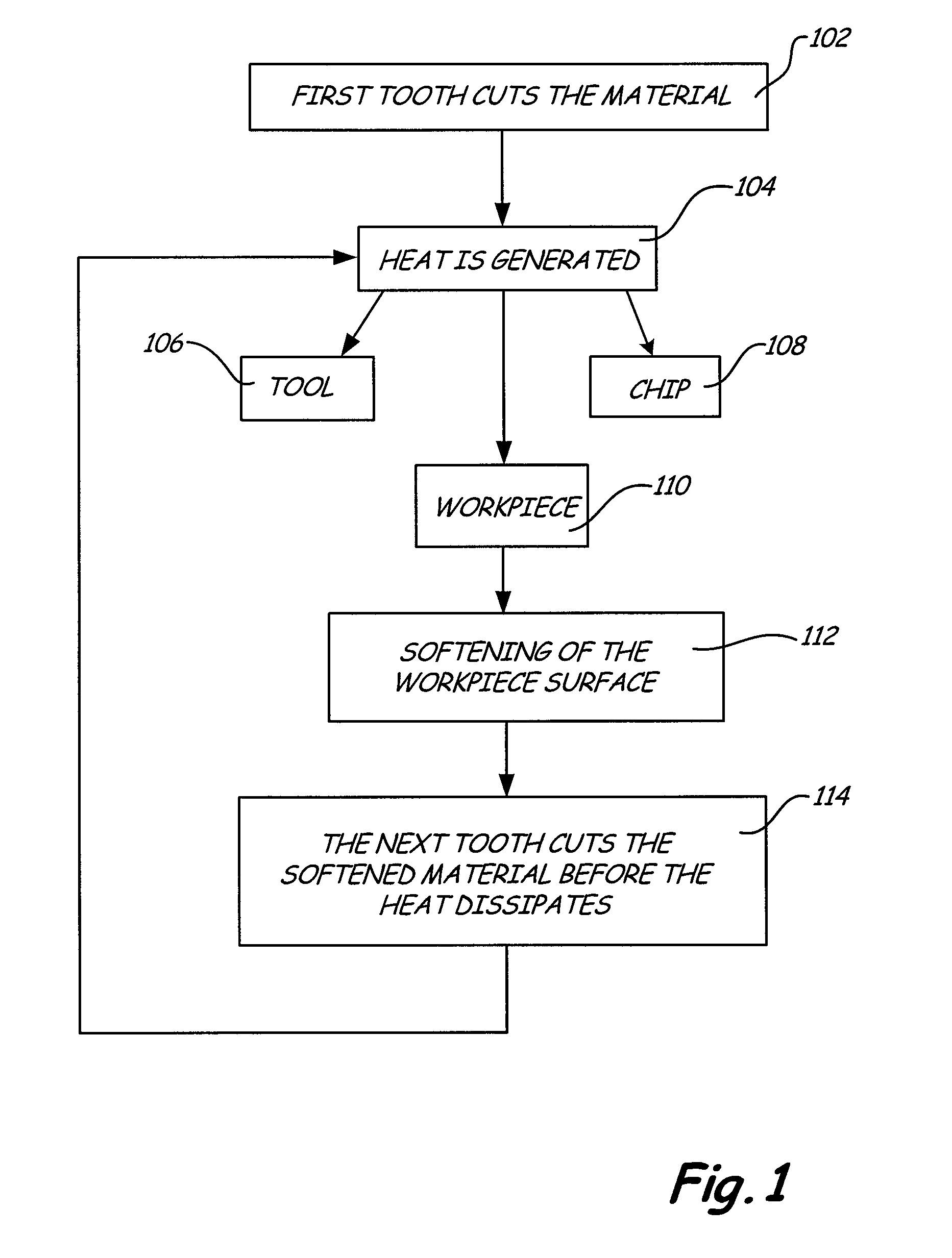
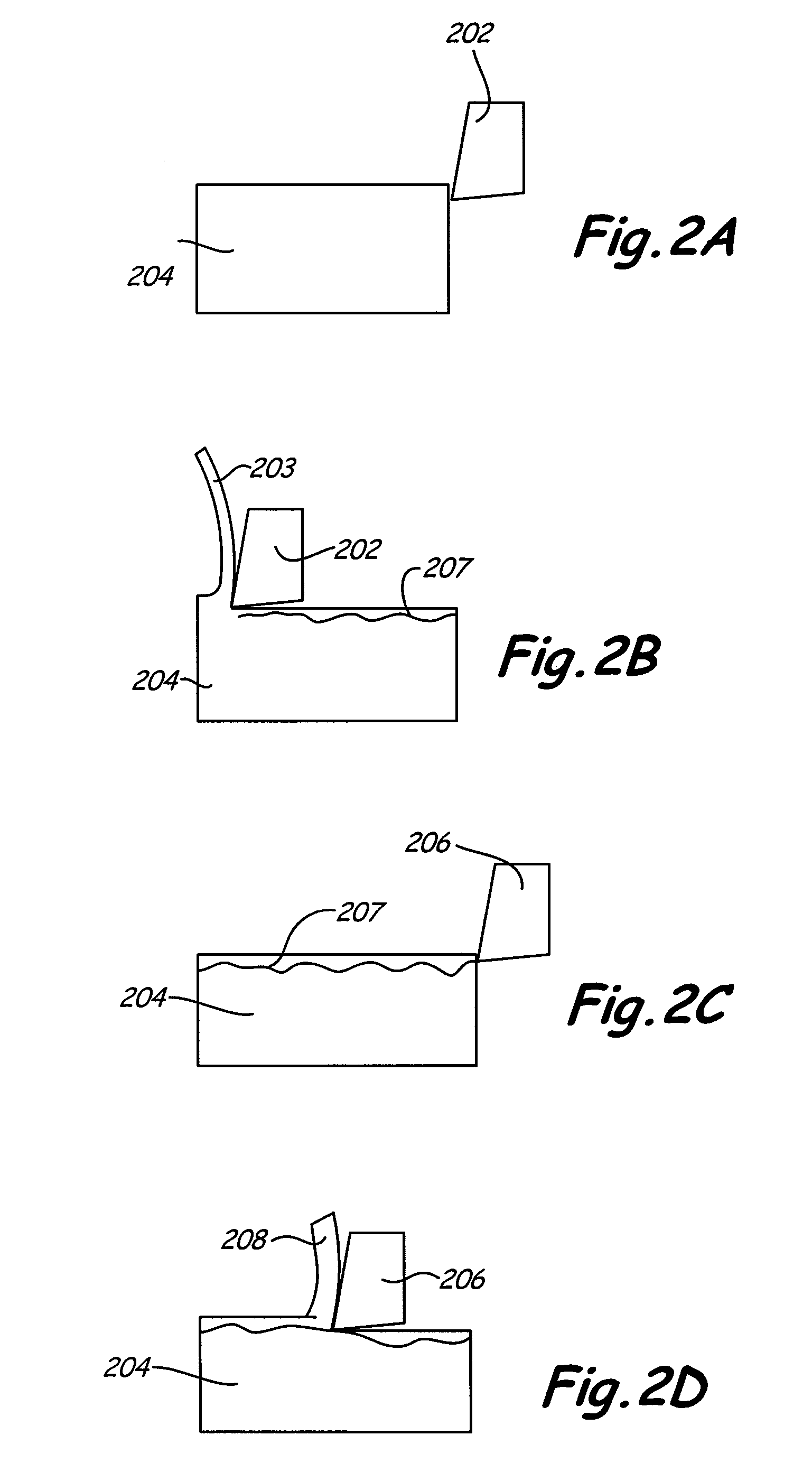
[0019]FIG. 1 is a flow chart showing a method 100 of cutting materials according to the present invention. As shown in FIG. 1, the first tooth of a multiple tooth cutting tool cuts the workpiece (block 102). This cutting process generates heat caused by forces between the cutting tool and the workpiece (block 104). Generally, this heat is distributed into three portions. One portion of the heat goes into the cutting tool (block 106), another portion goes into the chip or waste created by the cut (block 108), and the remaining portion goes into the workpiece (block 110). The heat conducted into the workpiece softens the surface of the workpiece (block 112). Depending on the thermal properties of the workpiece material, this heat from the surface gets transported into the bulk of the workpiece at a particular rate of conduction. The next tooth then cuts the workpiece before too much of the heat is transferred into the bulk of the workpiece (block 114). This process results in cutting ...
PUM
| Property | Measurement | Unit |
|---|---|---|
| Angle | aaaaa | aaaaa |
| Diameter | aaaaa | aaaaa |
| Time | aaaaa | aaaaa |
Abstract
Description
Claims
Application Information
 Login to View More