
Hole Cutter With Minimum Tooth Pitch to Blade Body Thickness Ratio
a technology of blade body and blade, which is applied in the field of hole cutters, can solve the problems of not being configured to allow the chips or dust generated during cutting to flow through the aperture and away from the interior reducing so as to reduce the volume of chips and reduce the thickness of the blade body. , the effect of high tooth pitch
- Summary
- Abstract
- Description
- Claims
- Application Information
AI Technical Summary
Benefits of technology
Problems solved by technology
Method used
Image

Examples
Embodiment Construction
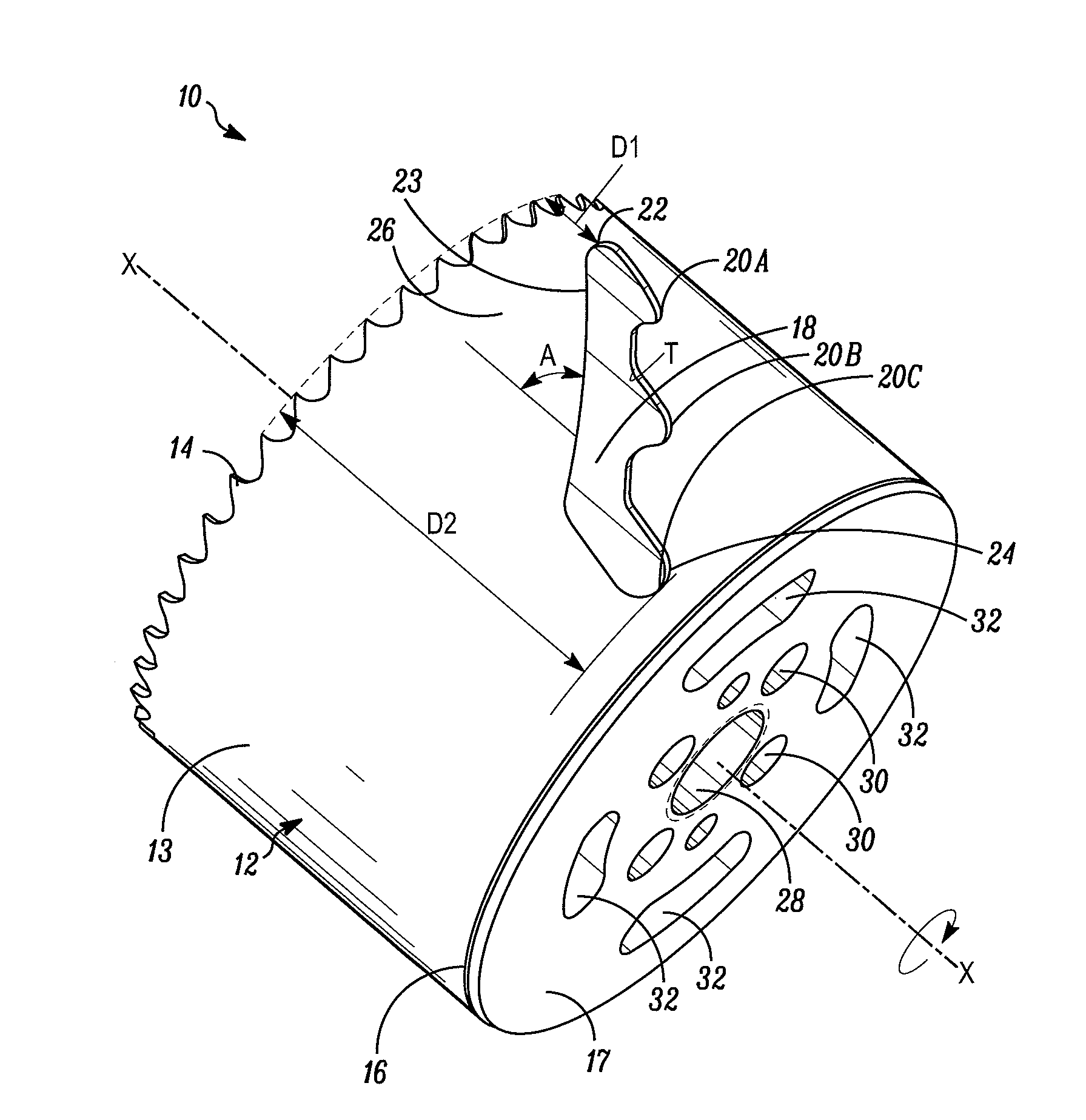
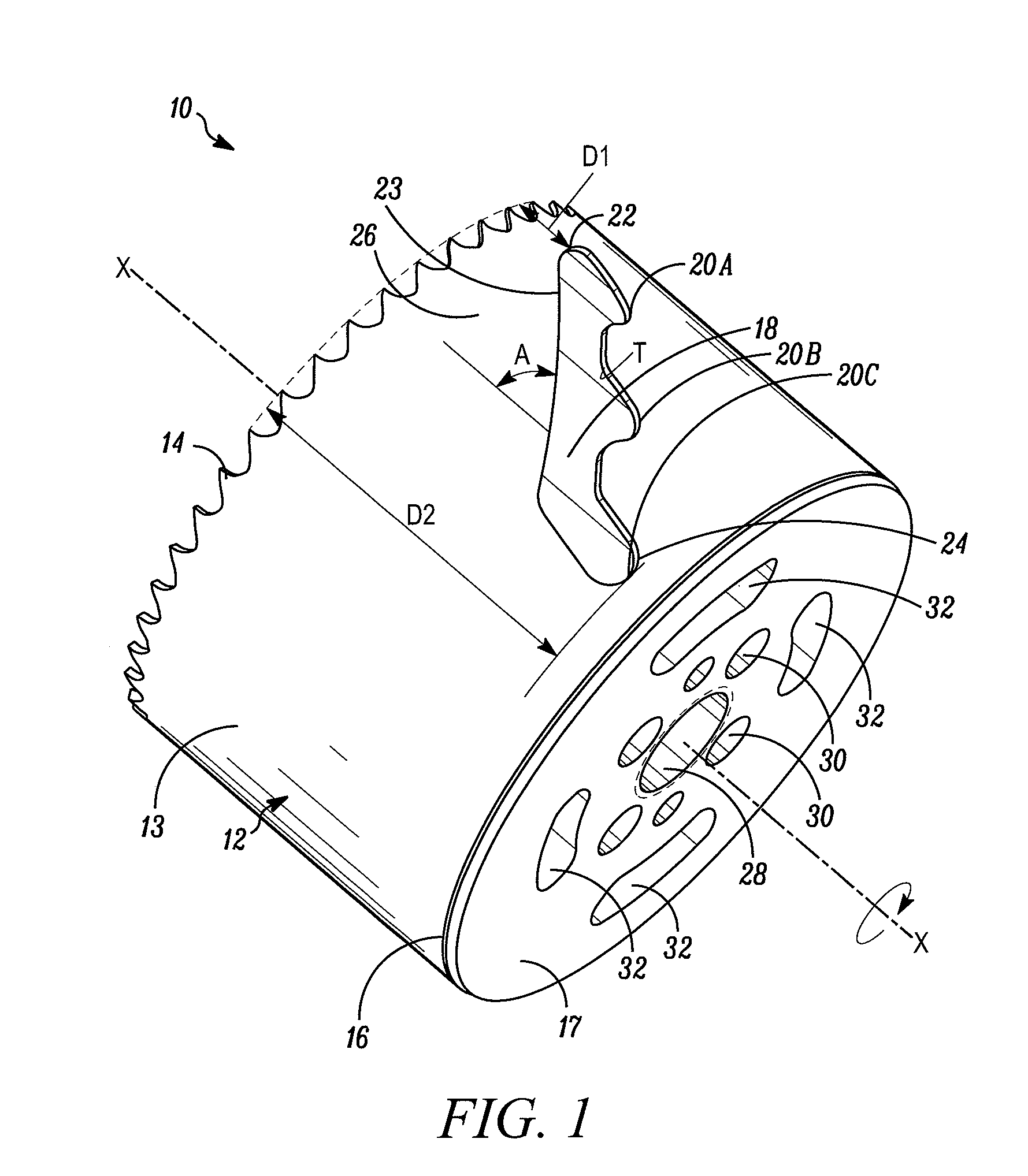
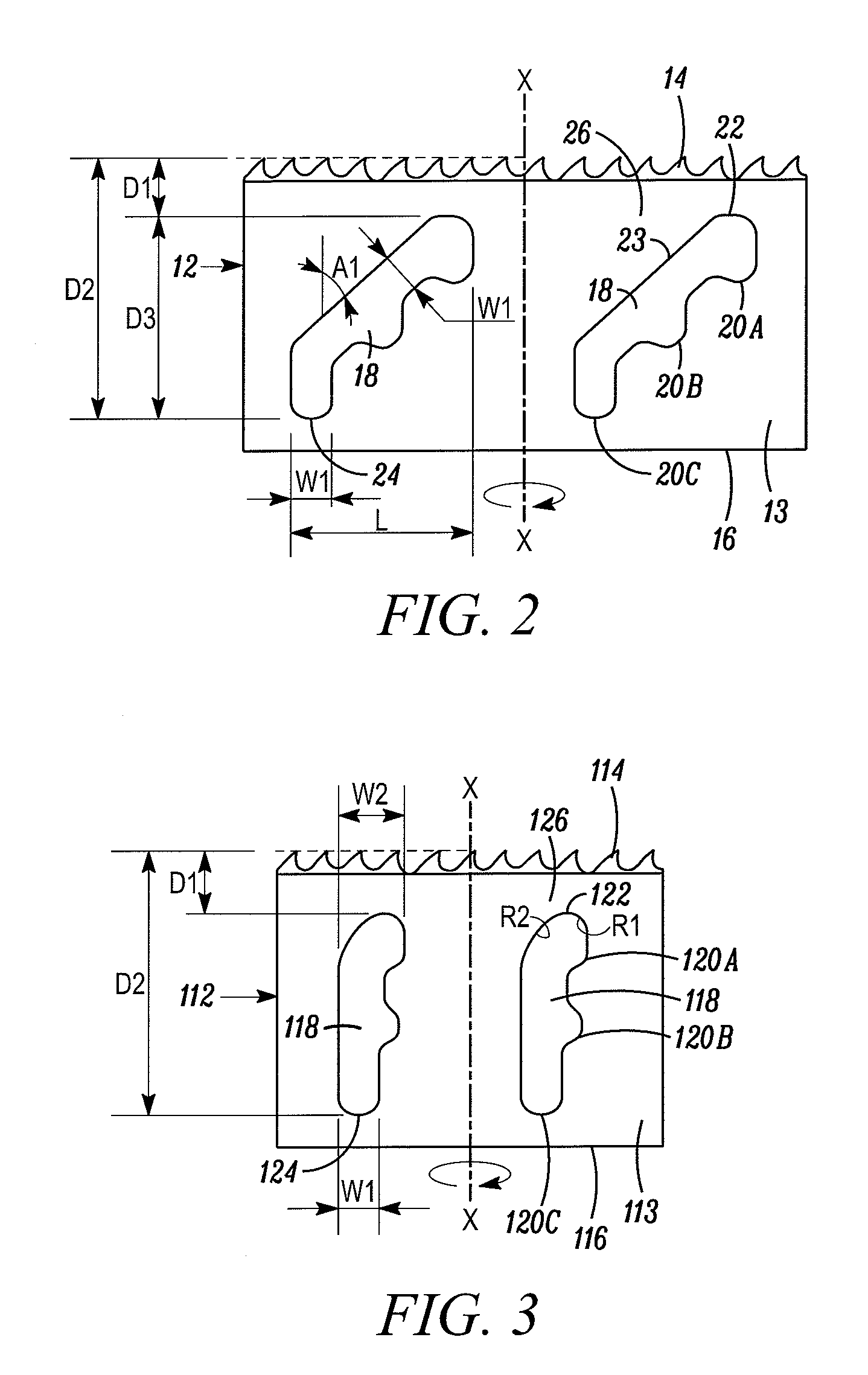
[0018]In FIG. 1, a hole cutter embodying the present invention is indicated generally by the reference numeral 10. The term “hole cutter” is used here to mean a tool that cuts holes in work pieces, such as wood or metal work pieces, and includes without limitation hole saws. The hole cutter 10 includes a blade body 12 defining a side wall 13. The blade body 12 is shown in FIG. 2 in its flattened state; however, as shown in FIG. 1, the blade body 12 is rolled or otherwise formed into a substantially cylindrical shape to form the hole cutter 10. As shown in FIG. 1, the side wall 13 extends around an axis of rotation “X” of the hole cutter 10 to define the substantially cylindrical blade body 12. One end of the blade body 12 is provided with a cutting edge 14 oriented substantially perpendicular to the axis of rotation X, and the opposing end of the blade body defines a rim 16. As shown in FIG. 1, a cap 17 is fixedly secured, such as by welding, to the rim 16 to enclose the respective ...
PUM
| Property | Measurement | Unit |
|---|---|---|
| Length | aaaaa | aaaaa |
| Length | aaaaa | aaaaa |
| Angle | aaaaa | aaaaa |
Abstract
Description
Claims
Application Information
 Login to View More