Biological oil composition, formulations comprising the oil composition, and use thereof to prevent or treat cardiovascular disease

a technology of biochemical oil and formulation, applied in the direction of biocide, plant growth regulator, food preparation, etc., can solve the problems of too complex mechanisms and no longer be questioned

US20110251276A1Inactive Publication Date: 2011-10-13CALANUS
1 Cites 1 Cited by

Patent Information

Authority / Receiving Office
US · United States
Patent Type
Applications(United States)
Current Assignee / Owner
Publication Date
2011-10-13
Estimated Expiration
Not applicable · inactive patent

Smart Images

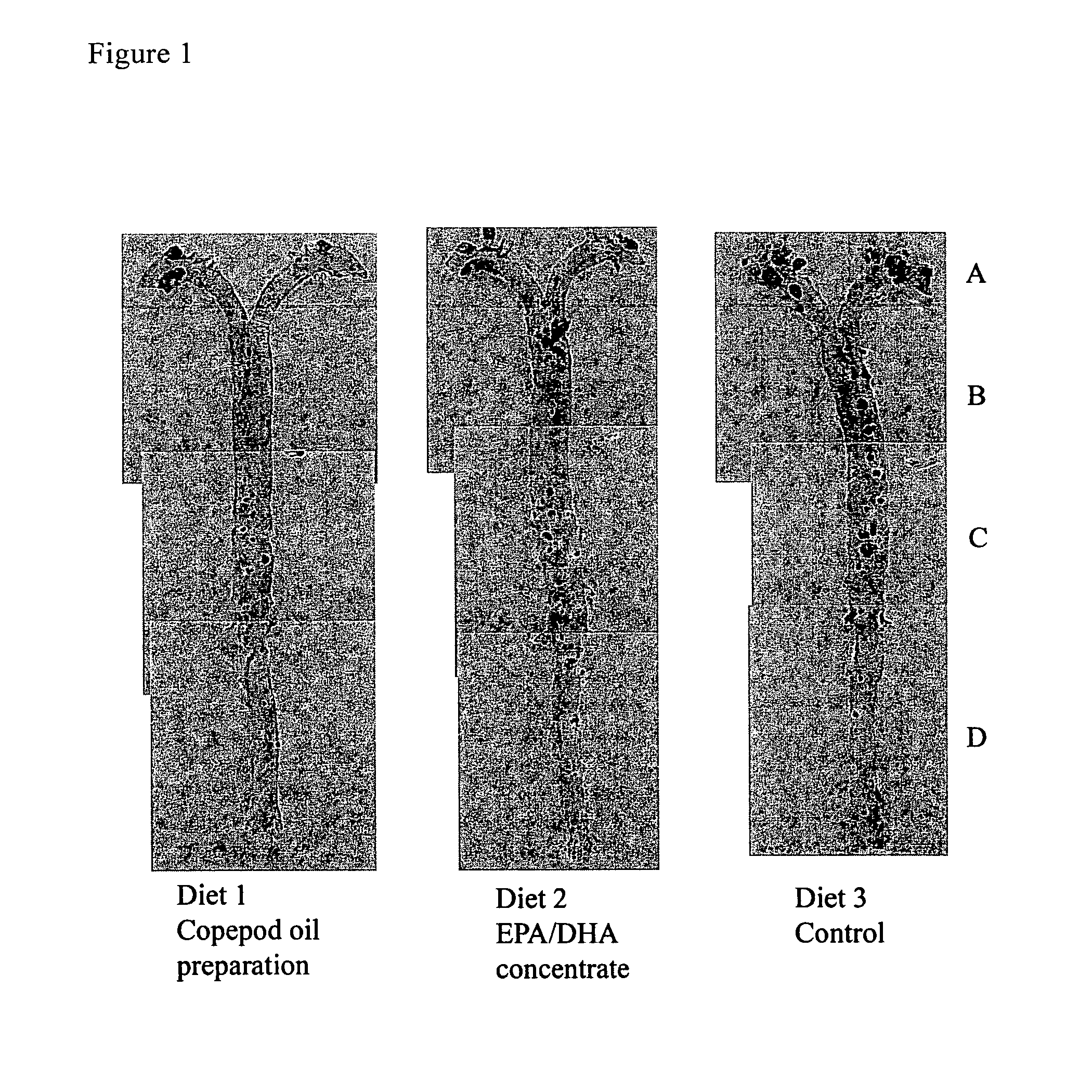
  • Figure 1
    Figure 1
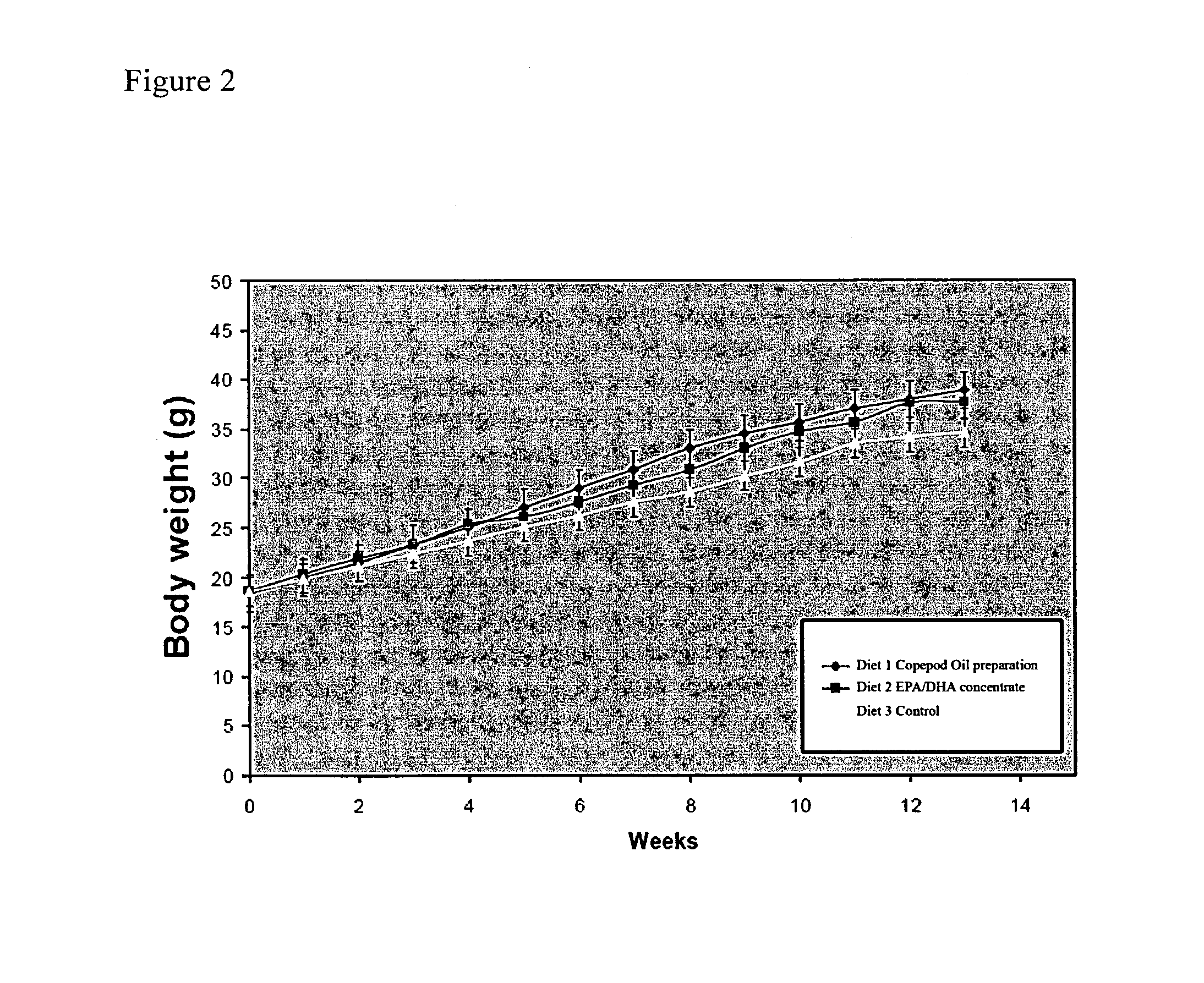
  • Figure 2
    Figure 2
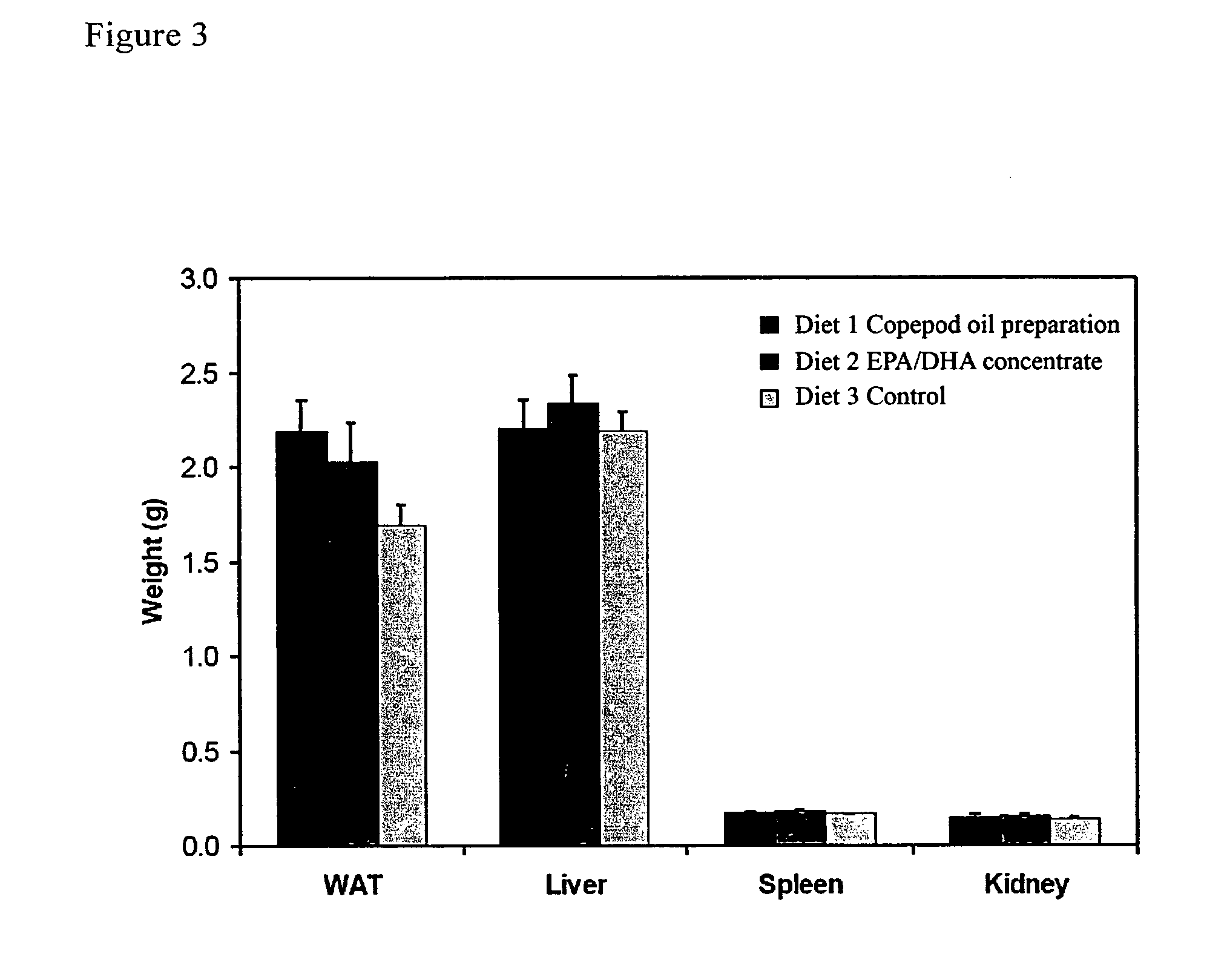
  • Figure 3
    Figure 3
Patent Text Reader

Abstract

This invention relates to a biological oil composition, preferably obtained from a copepod, most preferably the copepod Calanus finmarchicus and the use thereof to prevent or treat formation of atherosclerotic plaques and hence development of coronary heart disease. The composition comprises the same marine n-3 polyunsaturated fatty acids (PUFAs) generally regarded as being responsible for the anti-atherosclerotic effect of marine oils, namely EPA (C20:5n-3 eicosapentaenoic acid) and DHA (C22:6n-3 docosahexaenoic acid). However, quite unexpectedly, it has been found that the oil composition of the present invention has a remarkably higher ability to prevent formation of atherosclerotic plaques than what can be attributed to EPA and DHA alone, and moreover, unlike EPA and DHA alone it has a notable blood cholesterol lowering effect.
Need to check novelty before this filing date? Find Prior Art

Description

FIELD OF INVENTION

[0001] The present invention concerns a biological oil composition, formulations comprising the oil composition, and the use of the oil composition in dietary supplements, functional foods and pharmaceutical products for the prevention or treatment of cardiovascular disease.BACKGROUND OF INVENTION

[0002] In the 1970's, Bang, Dyerberg and Nielsen described the plasma lipid and lipoprotein pattern of Eskimos living on the west coast of Greenland, and compared it with that of the Danish population (H. O. Bang, J. Dyerberg and A. B. Nielsen. Plasma lipid and lipoprotein pattern in Greenlandic West-coast Eskimos. Lancet 1971;1:1143-45). Later, Dyerberg and his collaborators (J. Dyerberg, H. O. Bang and N. Hjørne. Fatty acid composition of the plasma lipids in Greenland Eskimos. American Journal of Clinical Nutrition 1975;28:958-66) related the differences they found, to the remarkably low mortality from coronary heart disease among the Eskimos, compared to Danes. Since the...

Examples

examples

[0046]Experimental

[0047]When studying the preventive efficacy of any drug candidate or dietary ingredient on coronary heart disease, the most reliable end-point analyses are the actual disease manifestations, such as, for instance, formation of atherosclerotic plaques. Effects on blood parameters considered to be indicative of the risk of disease development are of course important for evaluation of mode of action of new anti-atherogenic drug candidates, but it is preferable to relate such blood analyses to efficacy data on the disease manifestation itself This has been the philosophy in the studies constituting the foundation of the present invention.

[0048]The biological effects of the copepod oil of this invention were recorded in mice deficient in apolipoprotein E (ApoE). Mice of this strain are routinely used to determine effects of dietary components on development of vascular inflammation and atherosclerotic plaques, since they develop atherosclerotic lesions according to a pa...