Context-Sensitive Dynamic Bloat Detection System

a dynamic bloat detection and context-sensitive technology, applied in the field of bloat detection systems, can solve the problems of wasting time and effort in manually selecting and tuning collection implementations, not clear and not knowing how to choose an alternative collection implementation. , to achieve the effect of minimizing space, minimizing time and improving collection allocation

a dynamic bloat detection and context-sensitive technology, applied in the field of bloat detection systems, can solve the problems of wasting time and effort in manually selecting and tuning collection implementations, not clear and not knowing how to choose an alternative collection implementation. , to achieve the effect of minimizing space, minimizing time and improving collection allocation

US20110295789A1Active Publication Date: 2011-12-01IBM CORP

Image

Smart Image Click on the blue labels to locate them in the text.
Viewing Examples
Smart Image
  • Context-Sensitive Dynamic Bloat Detection System
  • Context-Sensitive Dynamic Bloat Detection System
  • Context-Sensitive Dynamic Bloat Detection System

Examples

Experimental program
Comparison scheme
Effect test

example

[0032]TVLA is a flexible static analysis framework from Tel-Aviv University. See, e.g., T. Lev-Ami and M. Sagiv, “TVLA: A framework for Kleene Based Static Analysis,” Saskatchewan, Lecture Notes in Computer Science, vol. 1824, 280-301 (Springer-Verlag, 2000). The framework performs abstract interpretation with parametric abstractions, and computes a set of abstract states that over-approximate the set of all possible concrete program states. Generally, TVLA is a memory-intensive application, and its ability to tackle key verification challenges such as concurrent algorithms (which have large state spaces) is mostly limited by memory consumption. The TVLA framework makes extensive use of collections.

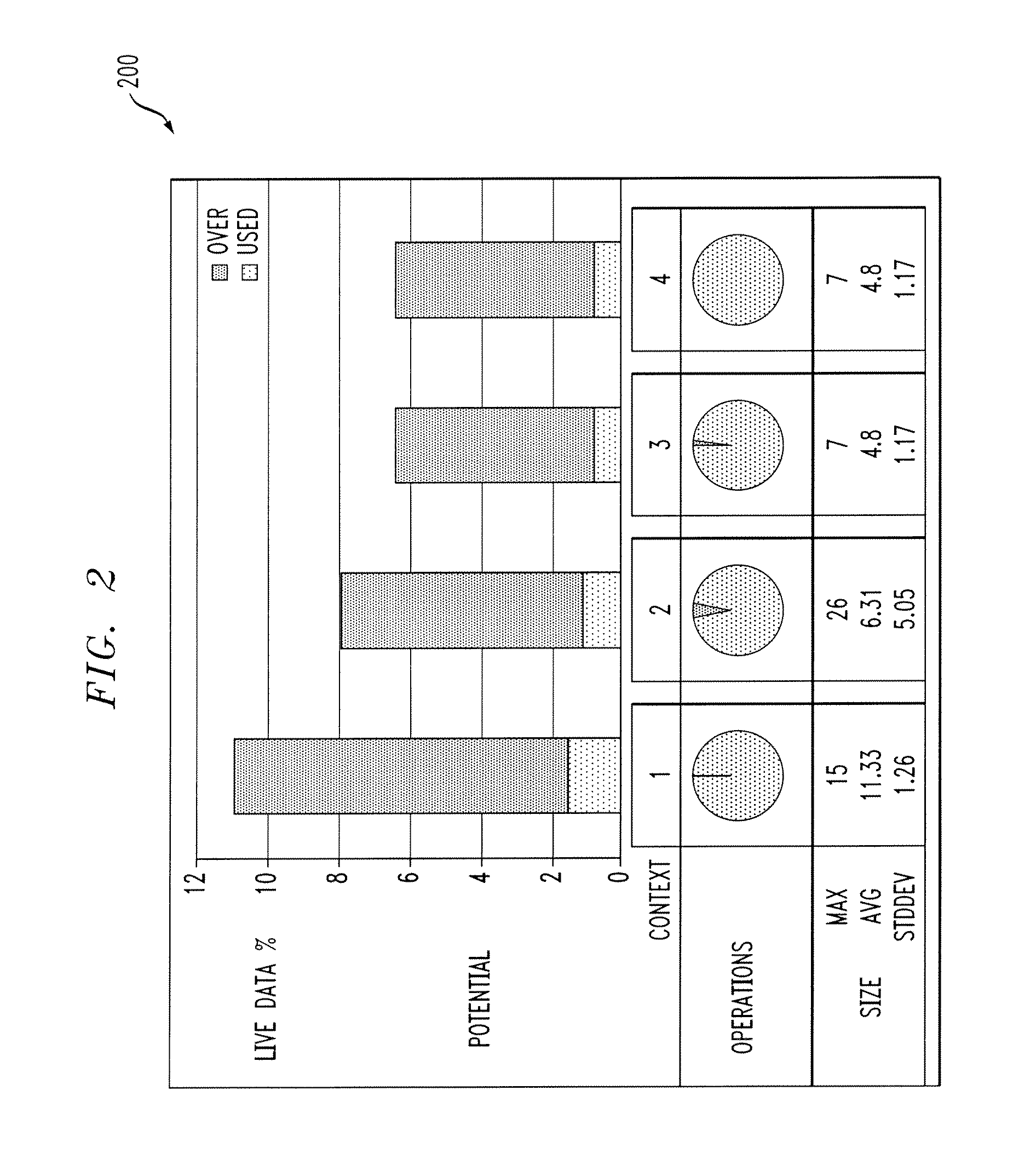
[0033]The present example substantially optimizes the collections usage in TVLA. The first step towards that goal is to check the potential for collection optimizations in the application.

[0034]FIG. 2 illustrates an exemplary ranked list 200 of allocation contexts in which there is a pote...

the structure of the environmentally friendly knitted fabric provided by the present invention; figure 2 Flow chart of the yarn wrapping machine for environmentally friendly knitted fabrics and storage devices; image 3 Is the parameter map of the yarn covering machine
Login to View More

PUM

No PUM Login to View More

Abstract

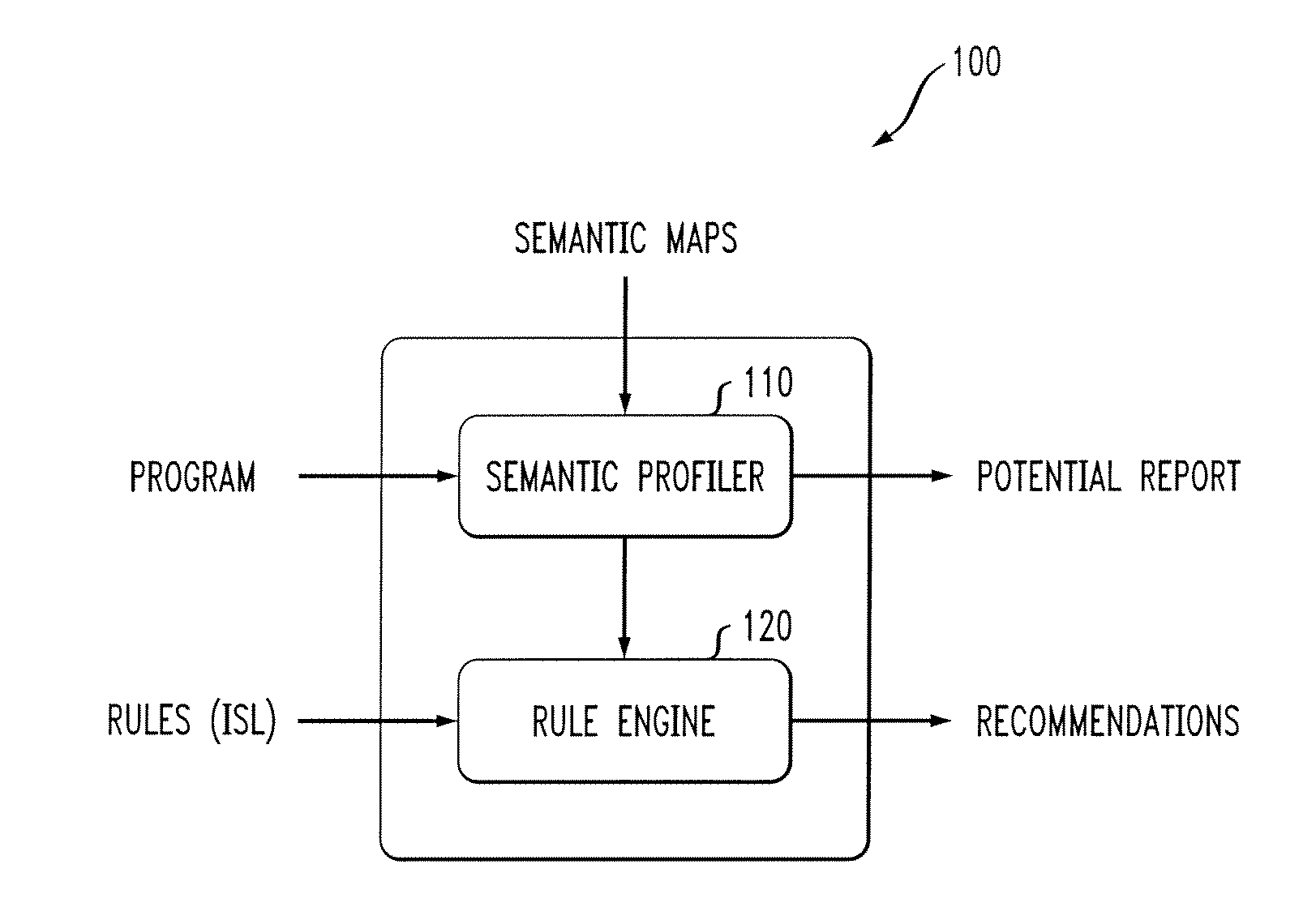
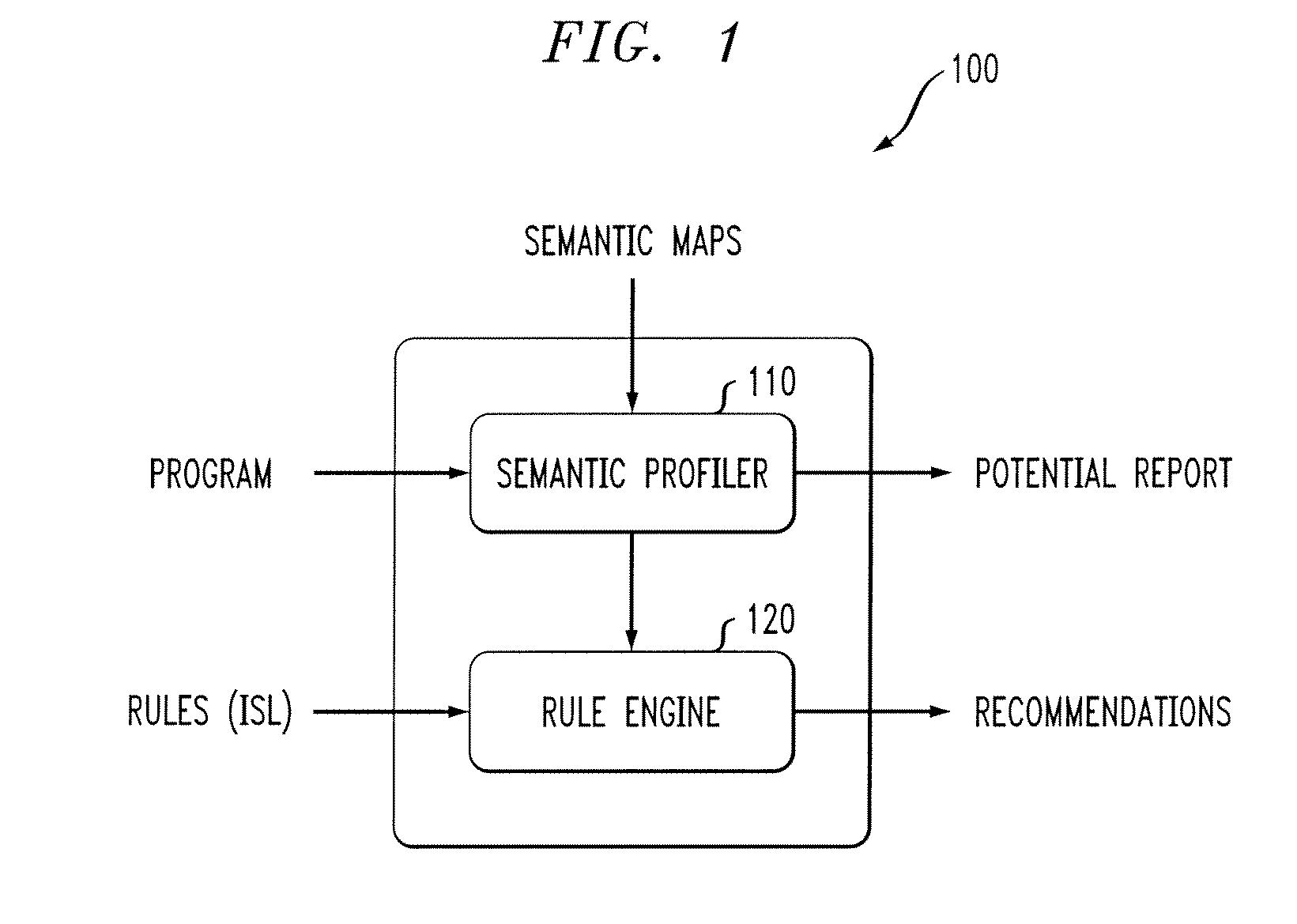
Methods and apparatus are provided for a context-sensitive dynamic bloat detection system. A profiling tool is disclosed that selects an appropriate collection implementation for a given application. The disclosed profiling tool uses semantic profiling together with a set of collection selection rules to make an informed choice. A collection implementation, such as an abstract data entity, is selected for a given program by obtaining collection usage statistics from the program. The collection implementation is selected based on the collection usage statistics using a set of collection selection rules. The collection implementation is one of a plurality of interchangeable collection implementations having a substantially similar logical behavior for substantially all collection types. The collection usage statistics indicate how the collection implementation is used in the given program. One or more suggestions can be generated for improving the collection allocated at a particular allocation context.

Description

FIELD OF THE INVENTION[0001]The present invention relates generally to bloat detection systems and, more particularly, to methods and apparatus for selecting an appropriate collection implementation for a given application.BACKGROUND OF THE INVENTION[0002]Many programming languages, such as Java, C#, Python and Ruby, include a collection framework as part of the language runtime. Generally, collection frameworks provide the programmer with abstract data types for handling groups of data (e.g, lists, sets and maps), and hide the details of the underlying data structure implementation. Modern programs written in these languages rely heavily on collections, and choosing the appropriate collection implementation (and parameters) for every usage point in a program may be critical to program performance.[0003]Real world applications may be allocating collections in thousands of program locations, making any attempt to manually select and tune collection implementations into a time consumi...

Claims

the structure of the environmentally friendly knitted fabric provided by the present invention; figure 2 Flow chart of the yarn wrapping machine for environmentally friendly knitted fabrics and storage devices; image 3 Is the parameter map of the yarn covering machine
Login to View More

Application Information

Patent Timeline
01 Dec 2011
Publication
US20110295789A1
IPC
G06N5/02
CPC
G06N5/025
Inventors
SHACHAM, OHAD; VECHEV, MARTIN