
System and method for conserving power in a medical device
a technology for medical devices and power conservation, applied in sustainable buildings, instruments, therapy, etc., can solve the problems of shortened useful life of batteries, and achieve the effect of reducing battery runtime, effective implementation of treatment methods, and reducing the useful life of batteries
- Summary
- Abstract
- Description
- Claims
- Application Information
AI Technical Summary
Benefits of technology
Problems solved by technology
Method used
Image

Examples
Embodiment Construction
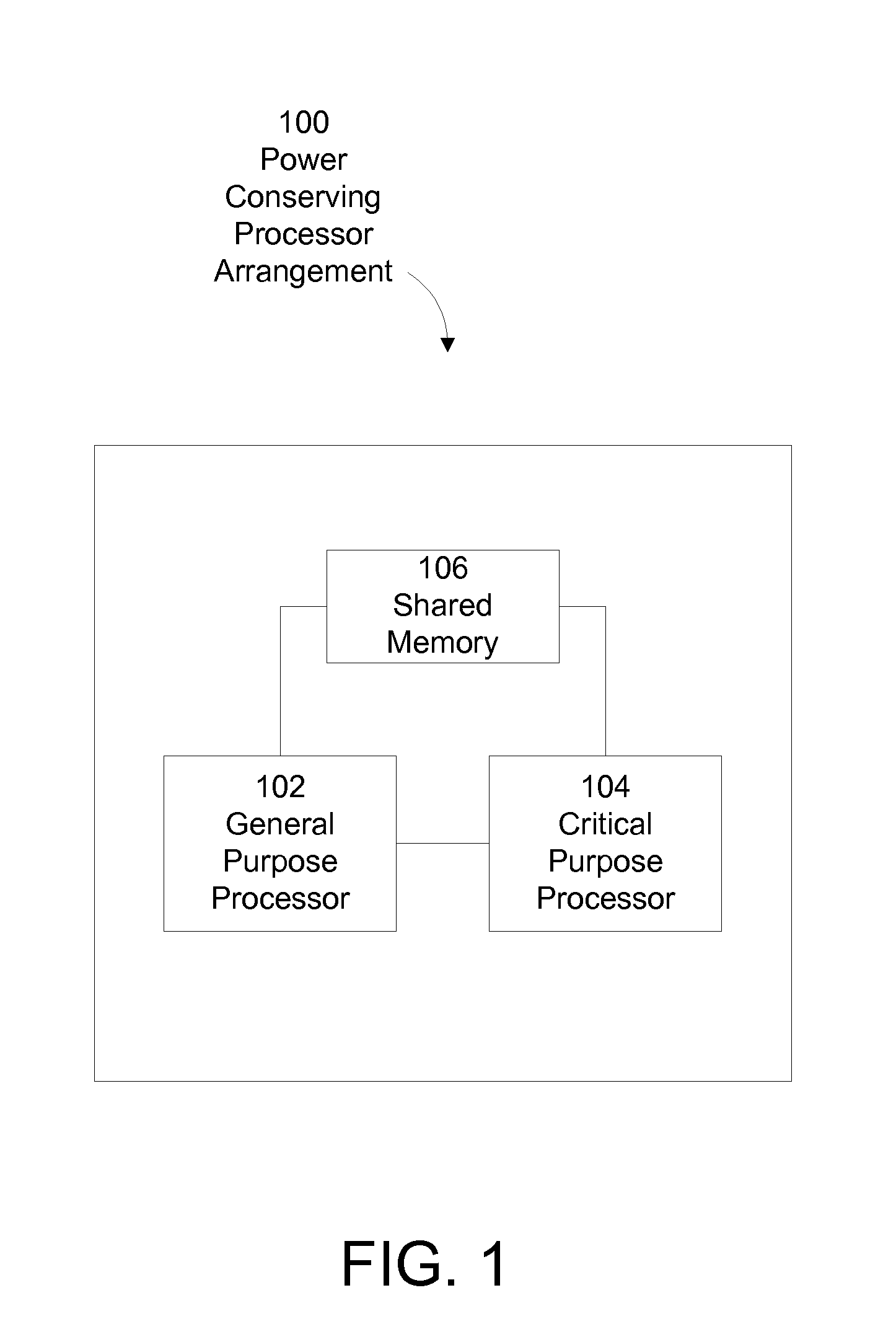
[0028]Aspects and examples relate to apparatus and processes for selectively executing instructions on particular processors within a processor arrangement. The manner in which the instructions are executed conserves electrical energy and isolates particular functionality to particular components. For instance, methods and apparatus in accord with some examples include a medical device having a critical purpose processor that is configured to execute one or more critical functions and a general purpose processor that is configured to execute the remainder of the functions of the medical device. In these examples, the critical purpose processor generally remains active while the general purpose processor generally remains inactive. This arrangement of processors results in lower power consumption by the medical device than would an arrangement including only the general purpose processor. Lower power consumption, in turn, results in decreased operating temperature which extends the l...
PUM
 Login to View More
 Abstract
Description
Claims
Application Information
 Login to View More