
RNA INTERFERENCE MEDIATED INHIBITION OF GENE EXPRESSION USING CHEMICALLY MODIFIED SHORT INTERFERING NUCLEIC ACID (siNA)
a technology of short interfering nucleic acid and interference, which is applied in the direction of dna/rna fragmentation, peptide/protein ingredient, vector-based foreign material introduction, etc. it can solve the problems that the sirna is not shown to what extent these modifications are tolerated, and the limmer cannot provide any examples of such modifications. , to achieve the effect of modulating rna function and/or, improving the various properties of native sirna
- Summary
- Abstract
- Description
- Claims
- Application Information
AI Technical Summary
Benefits of technology
Problems solved by technology
Method used
Image

Examples
example 1
Tandem Synthesis of siNA Constructs
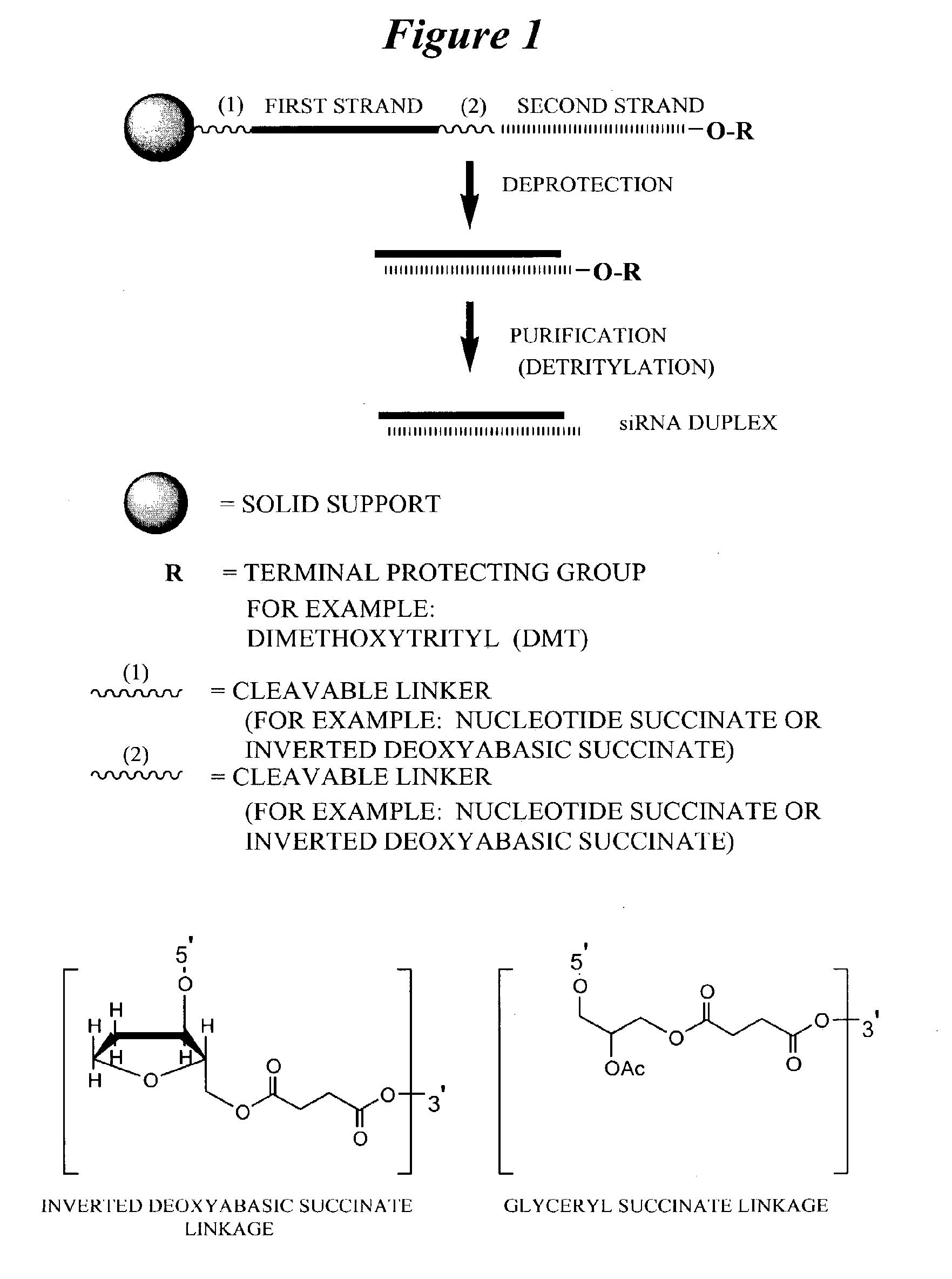
[0581]Exemplary siNA molecules of the invention are synthesized in tandem using a cleavable linker, for example, a succinyl-based linker. Tandem synthesis as described herein is followed by a one-step purification process that provides RNAi molecules in high yield. This approach is highly amenable to siNA synthesis in support of high throughput RNAi screening, and can be readily adapted to multi-column or multi-well synthesis platforms.
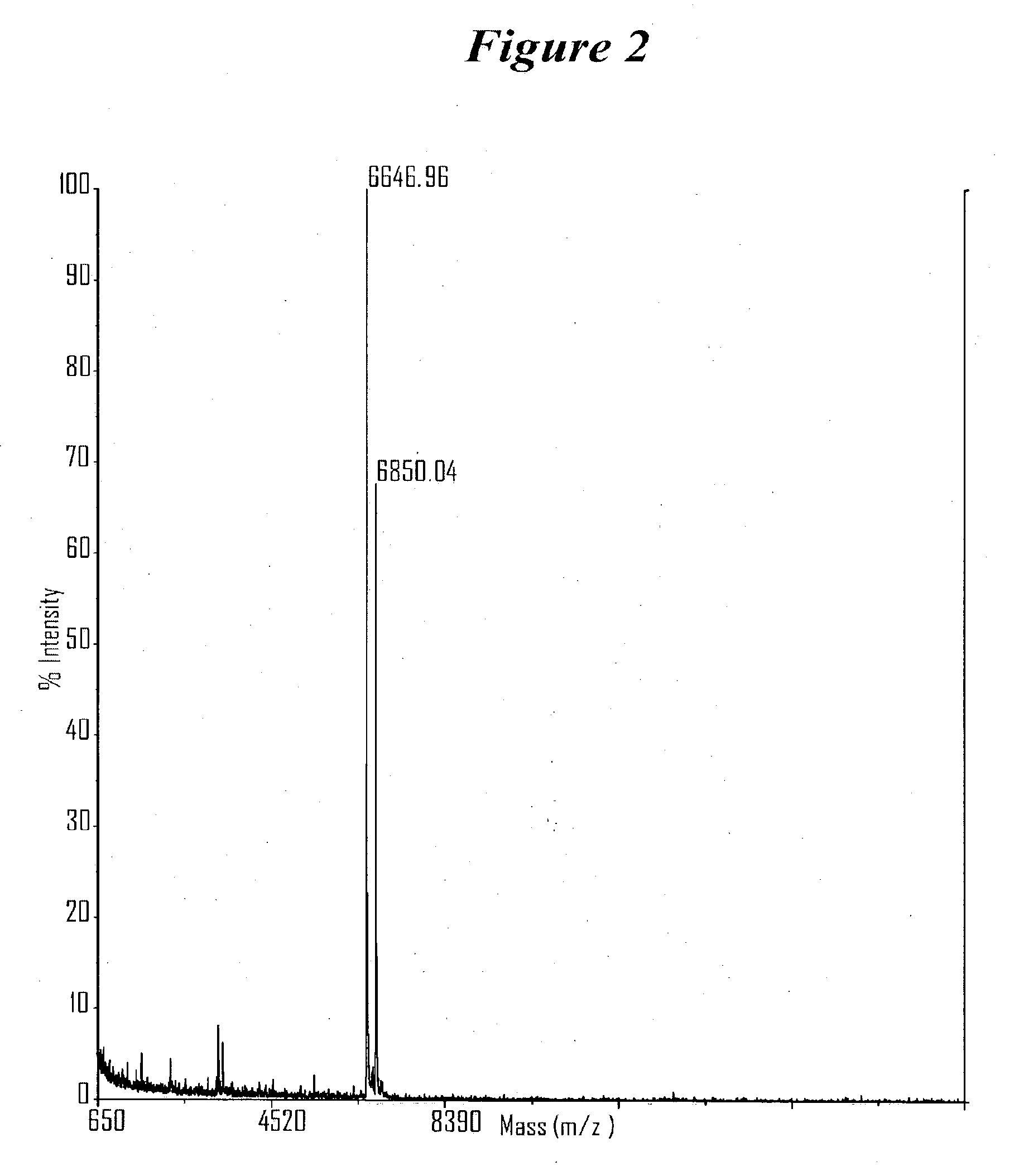
[0582]After completing a tandem synthesis of a siNA oligo and its complement in which the 5′-terminal dimethoxytrityl (5′-O-DMT) group remains intact (trityl on synthesis), the oligonucleotides are deprotected as described above. Following deprotection, the siNA sequence strands are allowed to spontaneously hybridize. This hybridization yields a duplex in which one strand has retained the 5′-O-DMT group while the complementary strand comprises a terminal 5′-hydroxyl. The newly formed duplex behaves as a single molecu...
example 2
Serum Stability of Chemically Modified siNA Constructs
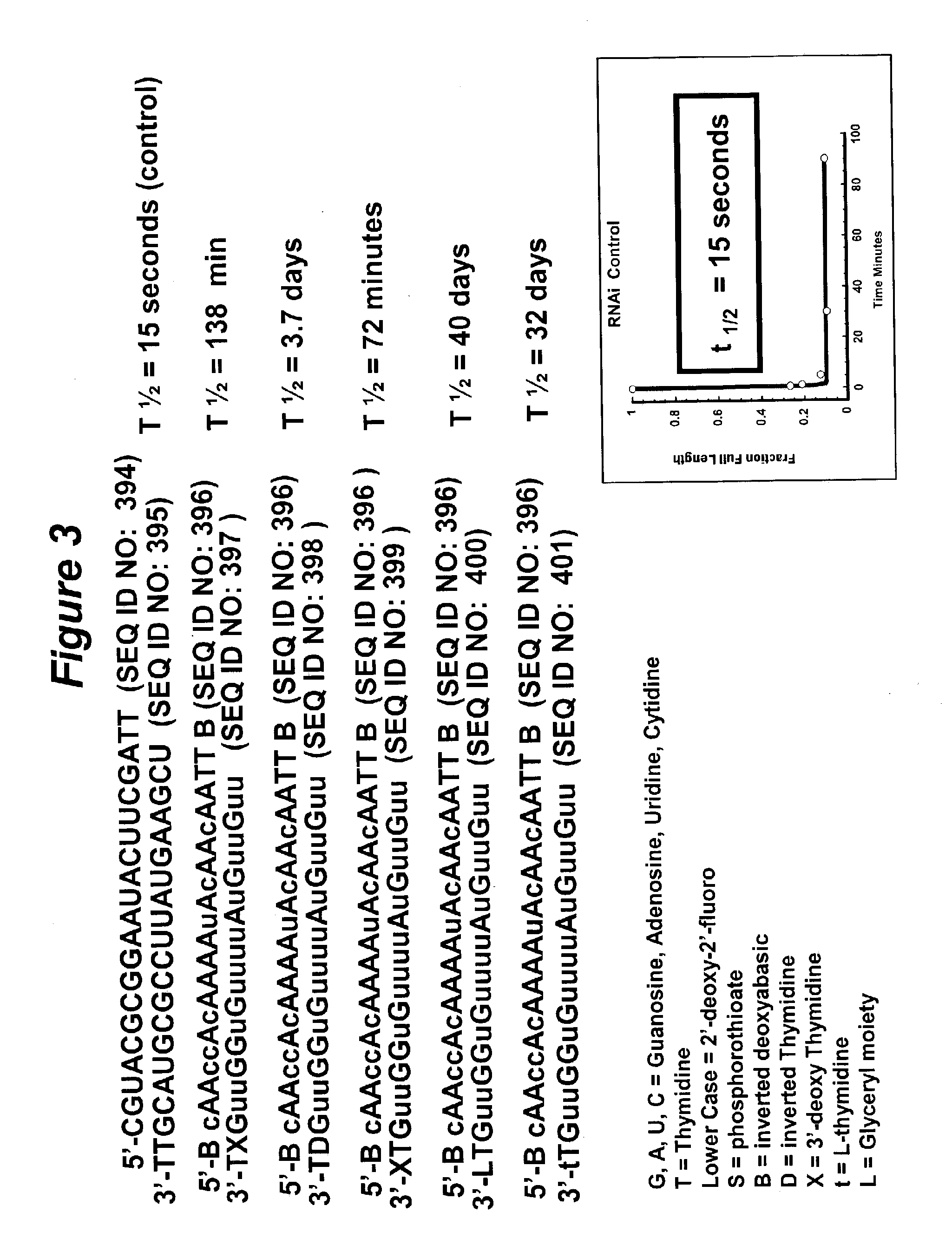
[0586]Chemical modifications were introduced into siNA constructs to determine the stability of these constructs compared to native siNA oligonucleotides (containing two thymidine nucleotide overhangs) in human serum. An investigation of the serum stability of RNA duplexes revealed that siNA constructs consisting of all RNA nucleotides containing two thymidine nucleotide overhangs have a half-life in serum of 15 seconds, whereas chemically modified siNA constructs remained stable in serum for 1 to 3 days depending on the extent of modification (see FIG. 3). RNAi stability tests were performed by internally labeling one strand (strand 1) of siNA and duplexing with 1.5× the concentration of the complementary siNA strand (strand 2) (to insure all labeled material was in duplex form). Duplexed siNA constructs were then tested for stability by incubating at a final concentration of 2 μM siNA (strand 2 concentration) in 90% mouse or hu...
example 3
Identification of Potential SiNA Target Sites in any RNA Sequence
[0588]The sequence of an RNA target of interest, such as a viral or human mRNA transcript, is screened for target sites, for example by using a computer folding algorithm. In a non-limiting example, the sequence of a gene or RNA gene transcript derived from a database, such as Genbank, is used to generate siNA targets having complementarity to the target. Such sequences can be obtained from a database, or can be determined experimentally as known in the art. Target sites that are known, for example, those target sites determined to be effective target sites based on studies with other nucleic acid molecules, for example ribozymes or antisense, or those targets known to be associated with a disease or condition such as those sites containing mutations or deletions, can be used to design siNA molecules targeting those sites. Various parameters can be used to determine which sites are the most suitable target sites within...
PUM
| Property | Measurement | Unit |
|---|---|---|
| molecular weight | aaaaa | aaaaa |
| length | aaaaa | aaaaa |
| stability | aaaaa | aaaaa |
Abstract
Description
Claims
Application Information
 Login to View More