
Methods and Pharmaceutical Compositions (NTSR1 Inhibitors) for the Treatment of Hepatocellular Carcinomas
a technology of hepatocellular carcinoma and composition, which is applied in the direction of drug composition, immunoglobulins against hormones, pharmaceutical active ingredients, etc., can solve the problems of limited effectiveness of global chemotherapeutic agents
- Summary
- Abstract
- Description
- Claims
- Application Information
AI Technical Summary
Benefits of technology
Problems solved by technology
Method used
Image

Examples
example
[0055]NTS and NTSR1 are Expressed in HCC
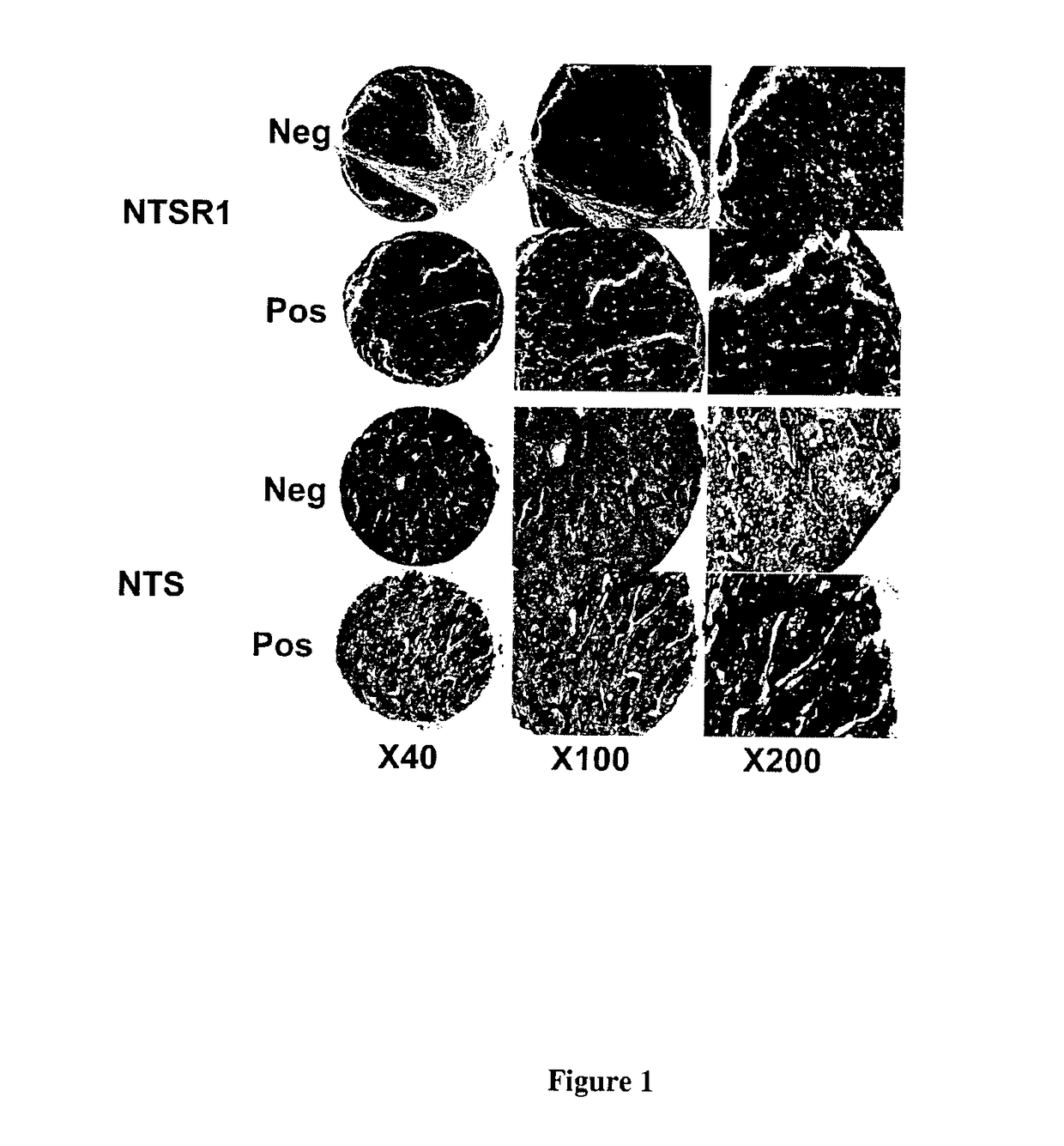
[0056]Expression of NTS and NTSR1 was scored on TMA containing tumors of patients with HCC. NTSR1 labelling was seen on 40 / 72 (56%) of tumors where the staining was clonal, and more intense in the front of the tumor and sometimes polarized. FIG. 1 (top) shows an example of NTSR1 negative and positive labelling. We studied NTS long fragment labelling, in order to evaluate if tumor cells synthesize NTS. Amongst the specimens, 47 / 73 (64%) were scored as positive. FIG. 1 (bottom) shows an example of a positive and negative labeling. Autocrine NTS regulation, as evaluated on successive slides was seen in 31 / 63 (49%) tumors. These observations suggest a potential contribution of NTS / NTSR1 complex in HCC carcinogenesis and progression. We further analyzed the situation with in vitro and in vivo studies to clarify this contribution.
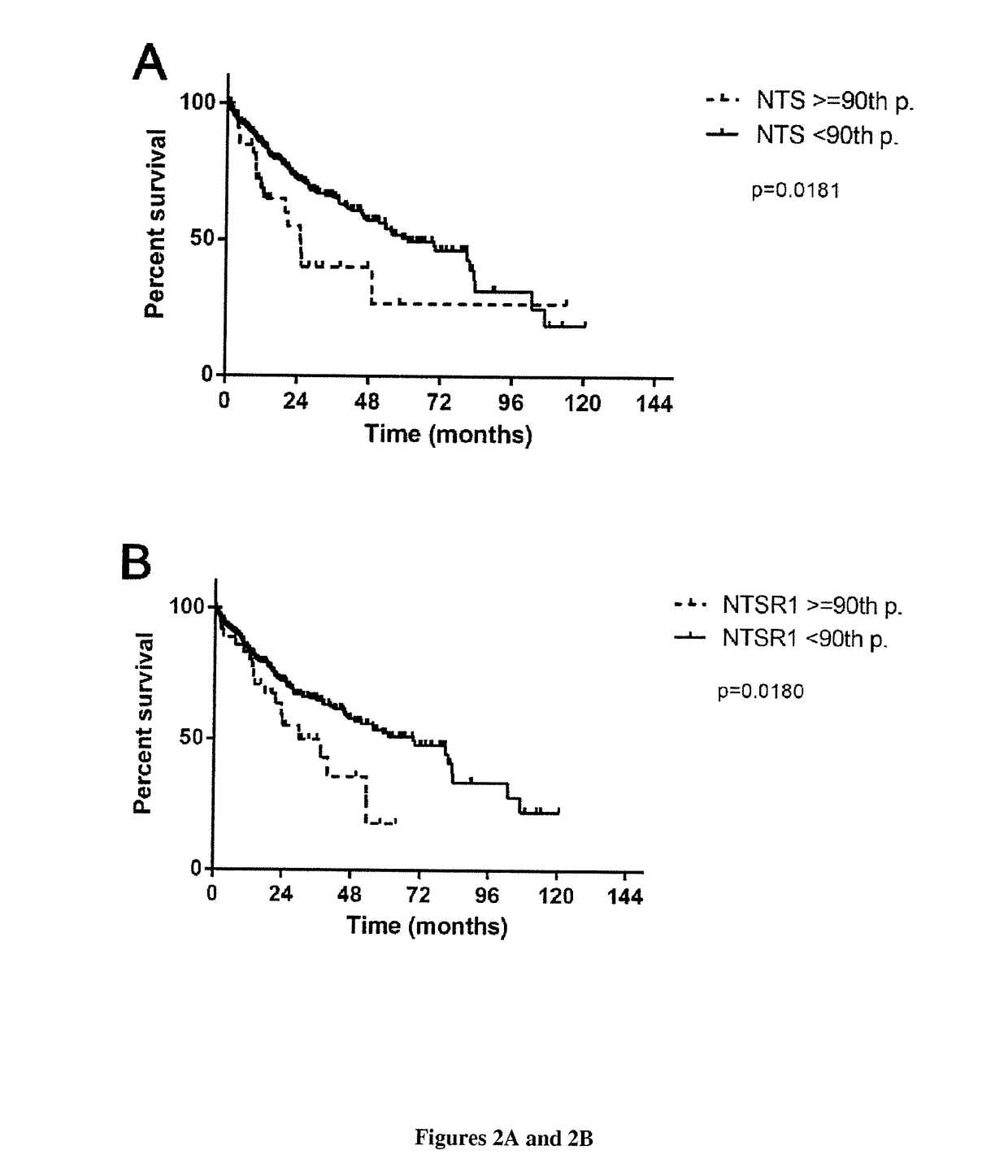
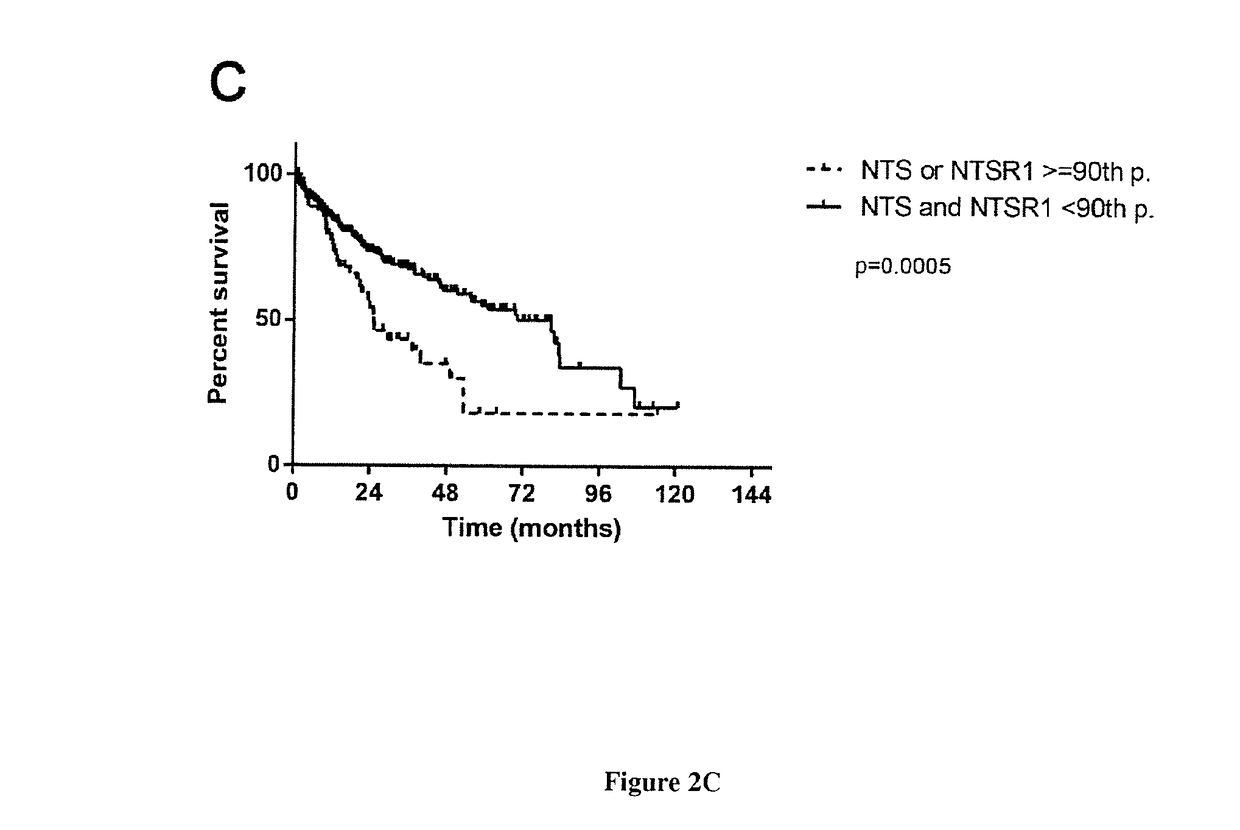
[0057]High NTS or NTSR1 mRNA Expression is Correlated with Worse Overall Survival in the HCC Patients.
[0058]The TCGA data...
PUM
| Property | Measurement | Unit |
|---|---|---|
| Cytotoxicity | aaaaa | aaaaa |
Abstract
Description
Claims
Application Information
 Login to View More