
Methods and pharmaceutical compositions for the treatment of pulmonary bacterial inffections
a technology for pulmonary bacterial infections and pharmaceutical compositions, which is applied in the direction of antibacterial agents, immunoglobulins, peptides, etc., can solve the problems of mild to life-threatening illnesses that require immediate intervention, large economic burden on our society, and inability to metabolize bacterial proteins
- Summary
- Abstract
- Description
- Claims
- Application Information
AI Technical Summary
Benefits of technology
Problems solved by technology
Method used
Image

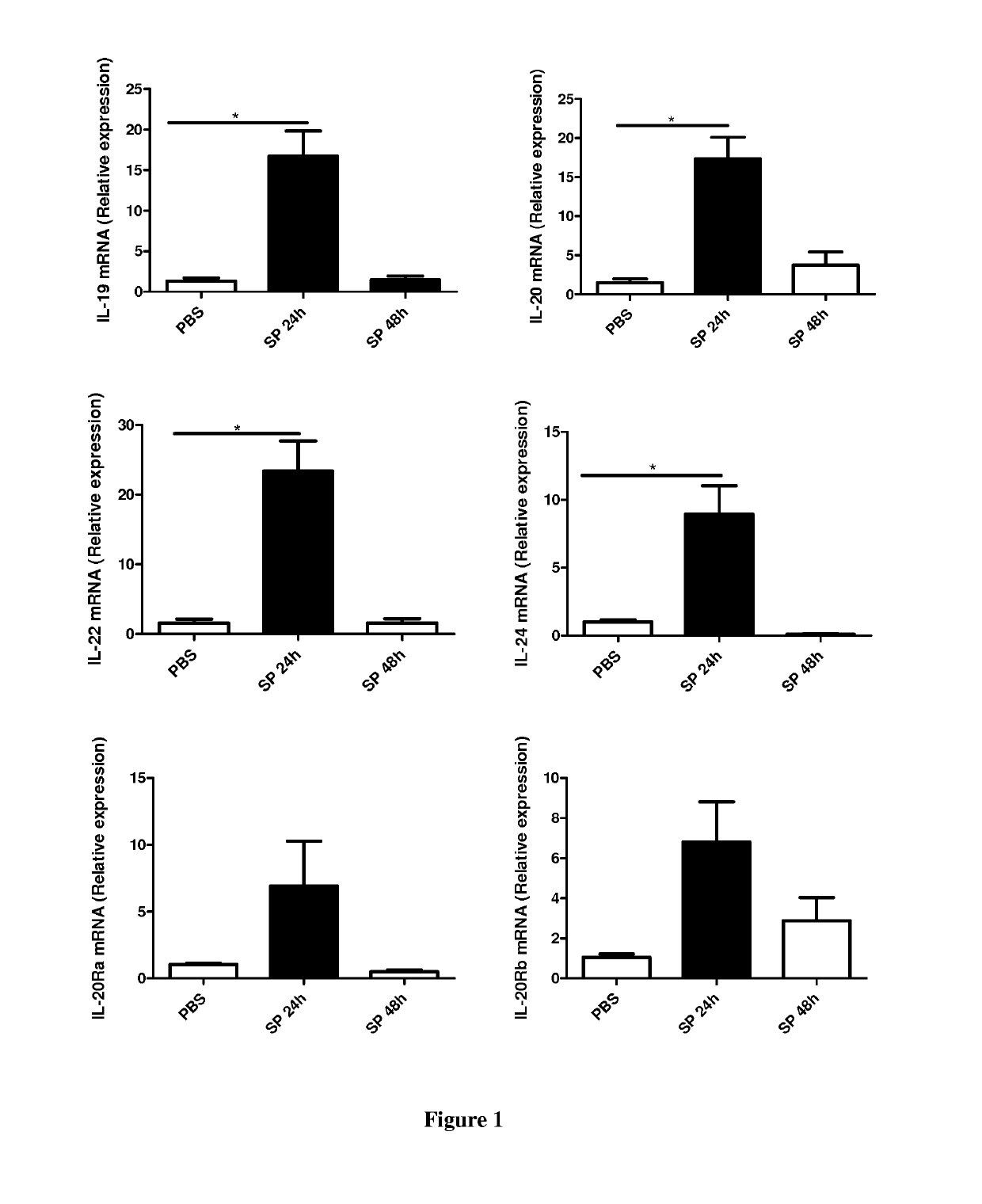
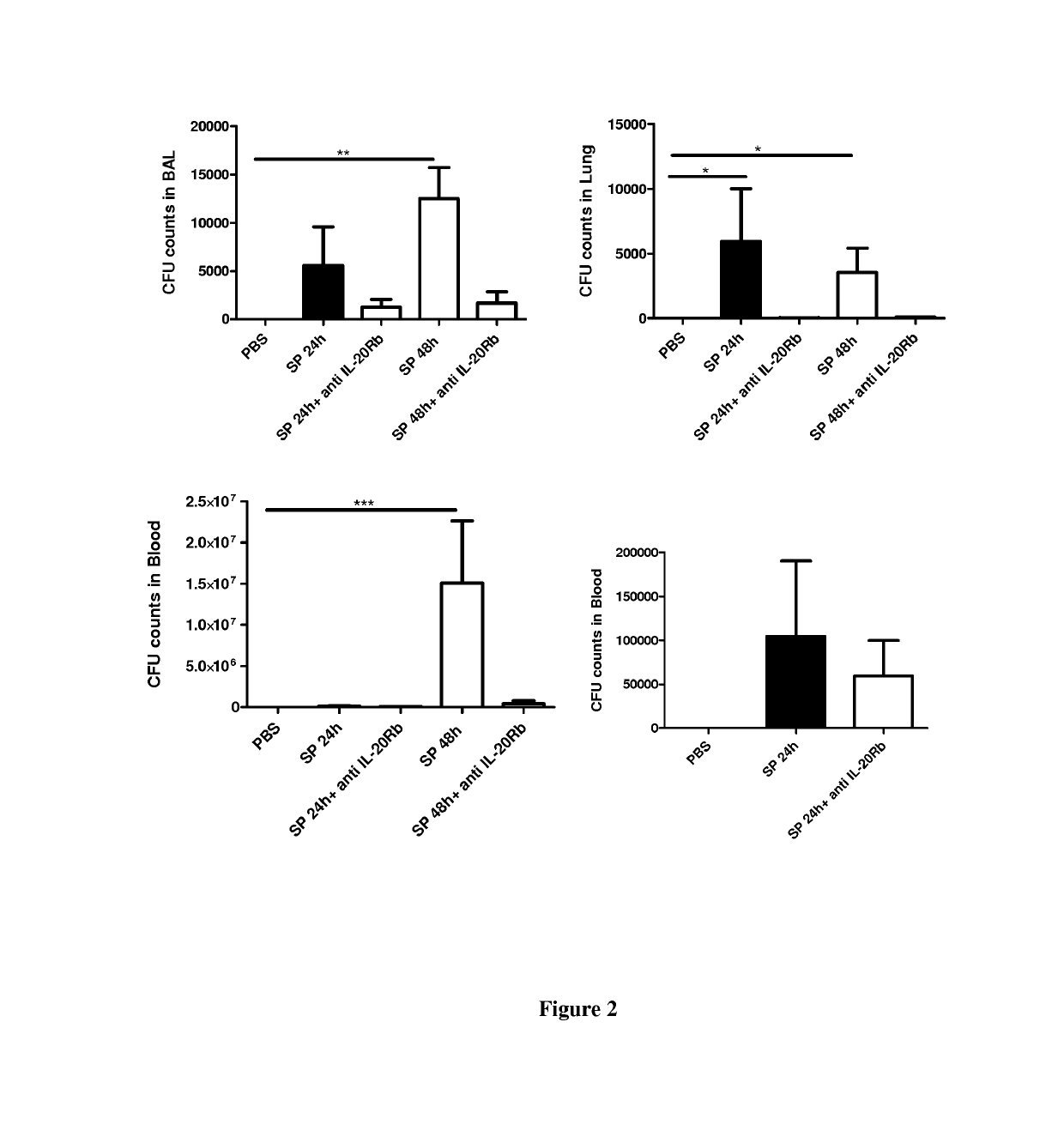
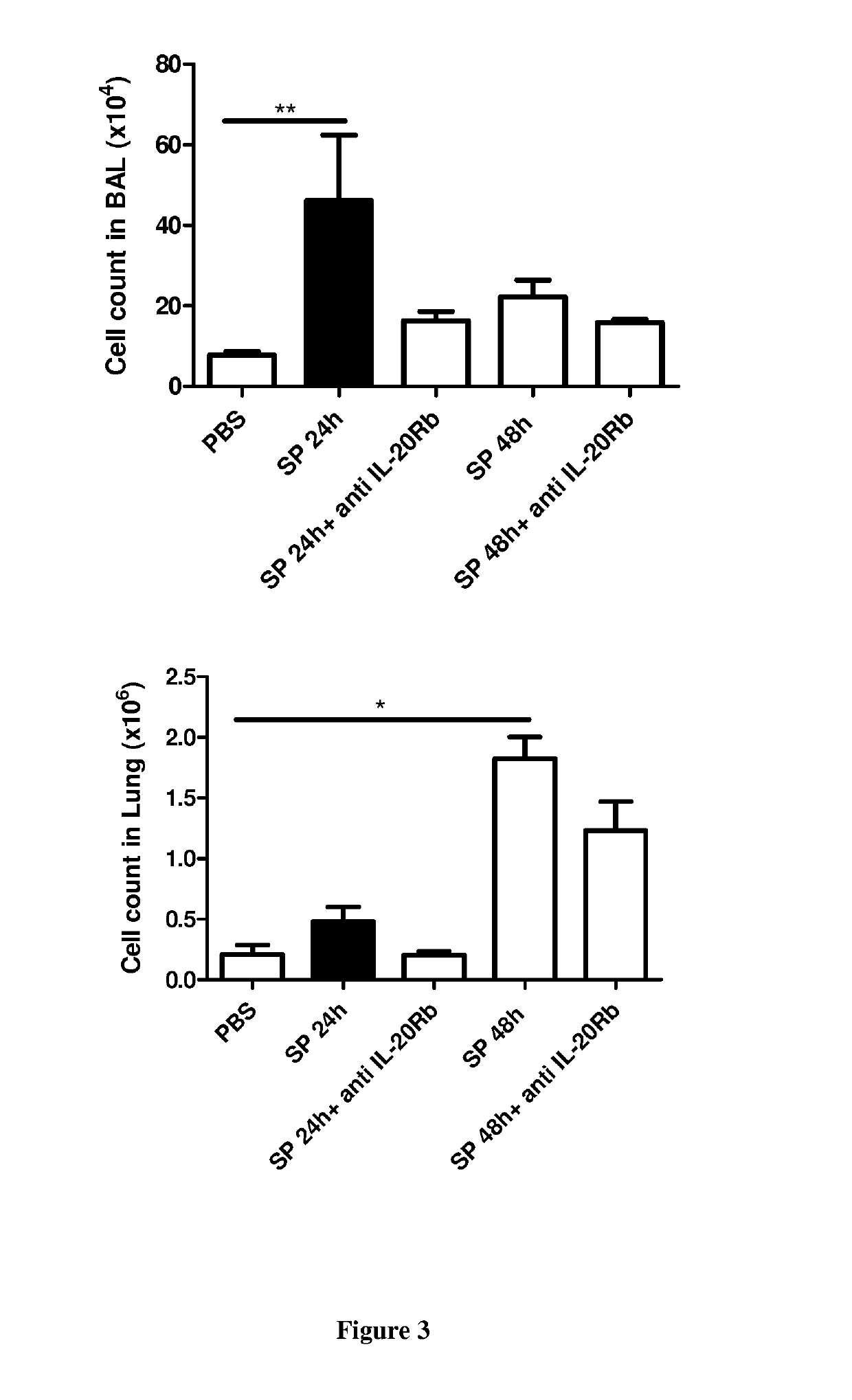
Examples
example
[0058]Material & Methods
[0059]Six- to eight-week-old male wild-type (WT) C57BL / 6 (H-2Db) mice were purchased from Janvier (Le Genest-St-Isle, France). All animal work conformed to the guidelines of Animal Care and Use Committee from Nord Pas-de-Calais (agreement no. AF 16 / 20090). Mice were inoculated by the intranasal route with a clinical isolate of Streptococcus pneumoniae (Sp) serotype 1 described elsewhere (Marques, J. M. et al 2012. Immunobiology 217:420-429). Mice were anesthetized and administered intranasally with 106 Colony-forming units (CFU) of Streptococcus pneumoniae in 50 μl. When indicated mice were treated 24 h before and 24 h after the infection with 50 μg / mice of a blocking rat monoclonal anti-IL-20RB antibody (Clone 20RNTC, Affymetrix) by the intra-peritoneal route.
[0060]Mice were daily monitored for illness and mortality. Bacterial burden in the broncho-alveolar lavages (BAL), lungs and blood was measured by plating samples onto chocolate plates collected after 2...
PUM
| Property | Measurement | Unit |
|---|---|---|
| bacterial resistance | aaaaa | aaaaa |
| permeability | aaaaa | aaaaa |
| pressure | aaaaa | aaaaa |
Abstract
Description
Claims
Application Information
 Login to View More