Privacy display apparatus

US20190215509A1Active Publication Date: 2019-07-11REALD SPARK LLC
0 Cites 50 Cited by

Patent Information

Authority / Receiving Office
US · United States
Current Assignee / Owner
Publication Date
2019-07-11

Smart Images

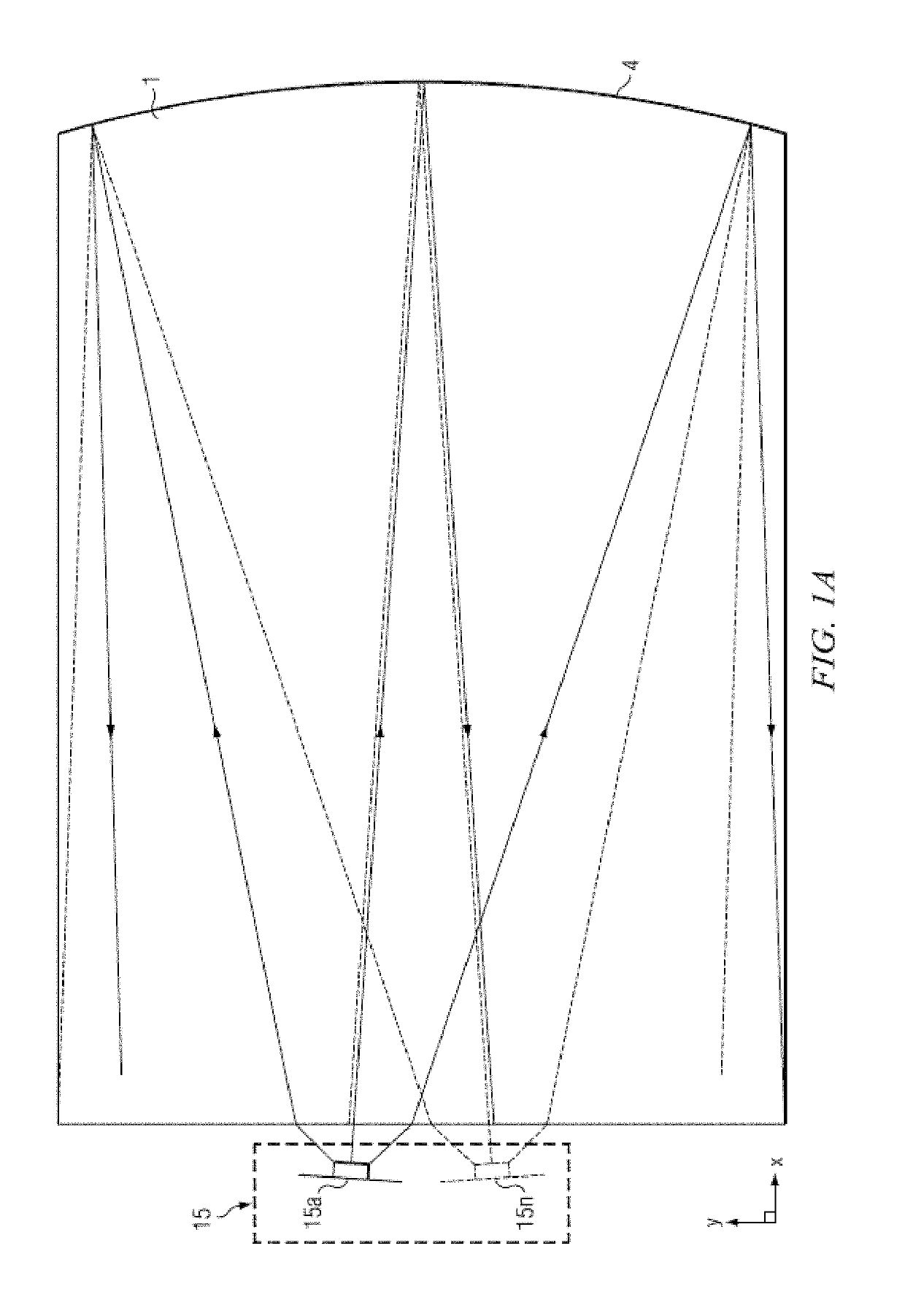
  • Figure 1
    Figure 1
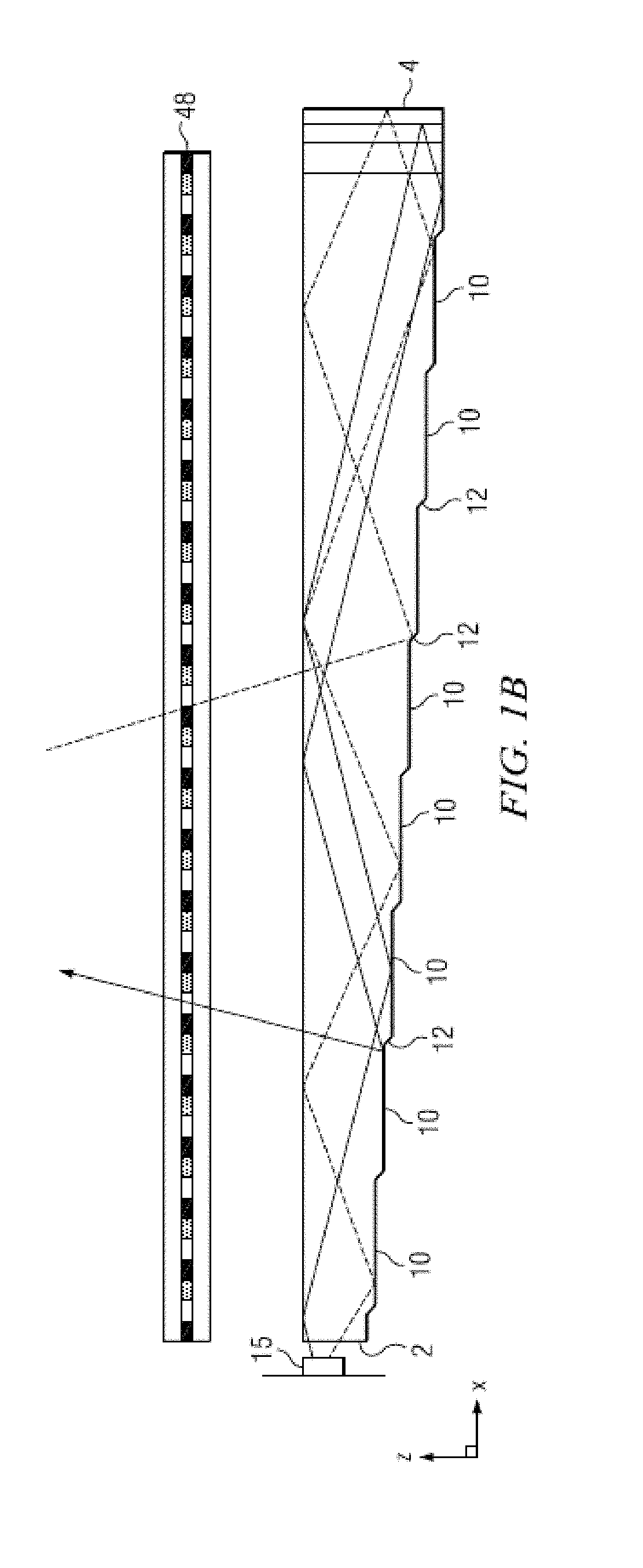
  • Figure 2
    Figure 2
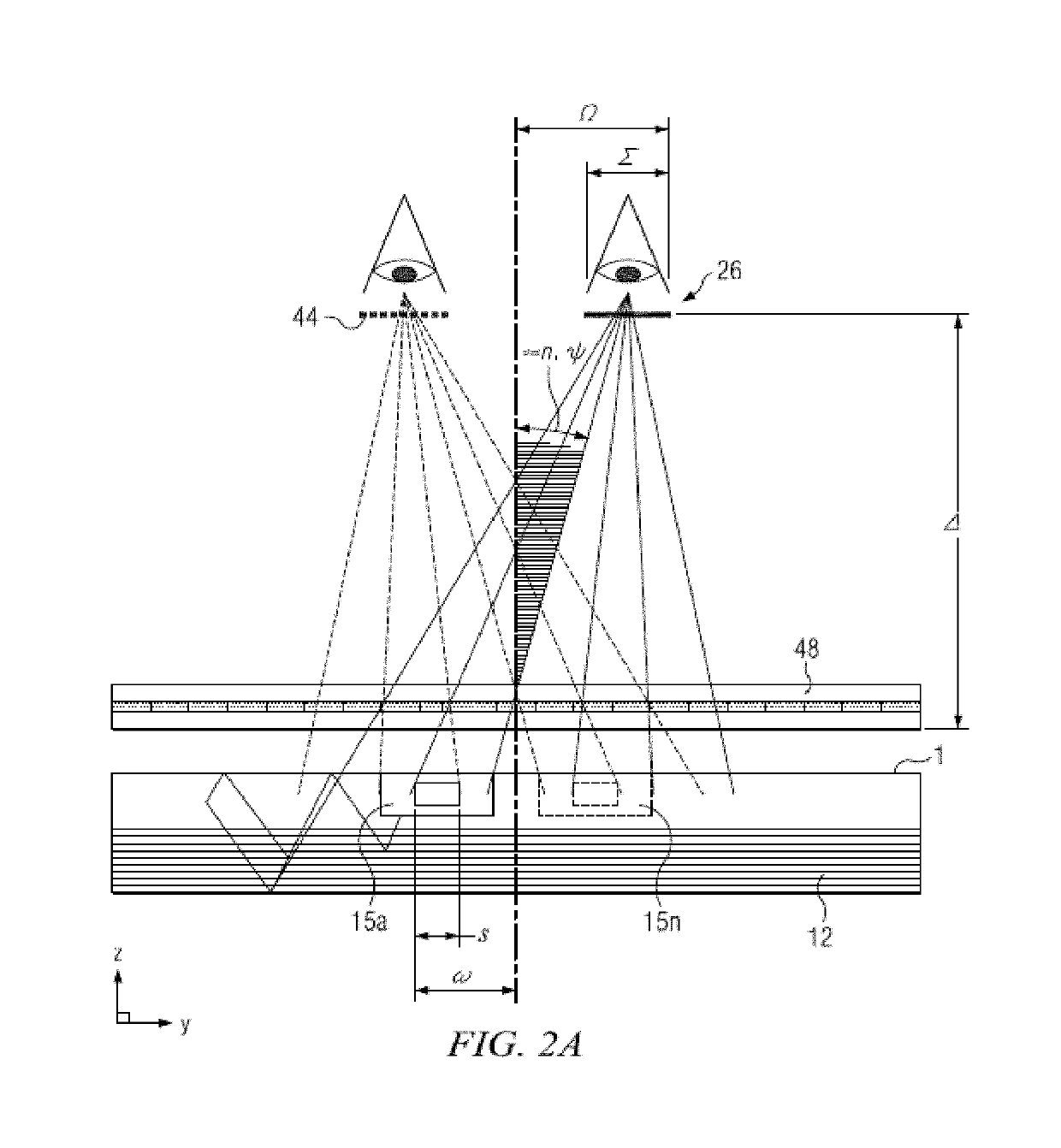
  • Figure 3
    Figure 3
Patent Text Reader

Abstract

An imaging directional backlight apparatus including a waveguide, a light source array, for providing large area directed illumination from localized light sources. The waveguide may include a stepped structure, in which the steps may further include extraction features optically hidden to guided light, propagating in a first forward direction. Returning light propagating in a second backward direction may be refracted, diffracted, or reflected by the features to provide discrete illumination beams exiting from the top surface of the waveguide. The directional backlight may be arranged to switch between at least a first wide angular luminance profile mode and a second narrow angular luminance profile mode. The directional backlight is arranged to illuminate an LCD with a bias electrode arranged to switch liquid crystal directors in black state pixels between a first wide angular contrast profile mode and a second narrow angular contrast profile mode. Performance of privacy operation for off-axis snoopers is enhanced in comparison to displays with only directional backlights or switchable contrast properties.
Need to check novelty before this filing date? Find Prior Art

Description

TECHNICAL FIELD

[0001] This disclosure generally relates to illumination of light modulation devices, and more specifically relates to light guides for providing large area illumination from localized light sources for use in 2D, 3D, and / or autostereoscopic display devices.BACKGROUND

[0002] Spatially multiplexed autostereoscopic displays typically align a parallax component such as a lenticular screen or parallax barrier with an array of images arranged as at least first and second sets of pixels on a spatial light modulator, for example an LCD. The parallax component directs light from each of the sets of pixels into different respective directions to provide first and second viewing windows in front of the display. An observer with an eye placed in the first viewing window can see a first image with light from the first set of pixels; and with an eye placed in the second viewing window can see a second image, with light from the second set of pixels.

[0003] Such displays have reduced sp...

Examples

Embodiment Construction

[0162]Time multiplexed autostereoscopic displays can advantageously improve the spatial resolution of autostereoscopic display by directing light from all of the pixels of a spatial light modulator to a first viewing window in a first time slot, and all of the pixels to a second viewing window in a second time slot. Thus an observer with eyes arranged to receive light in first and second viewing windows will see a full resolution image across the whole of the display over multiple time slots. Time multiplexed displays can advantageously achieve directional illumination by directing an illuminator array through a substantially transparent time multiplexed spatial light modulator using directional optical elements, wherein the directional optical elements substantially form an image of the illuminator array in the window plane.

[0163]The uniformity of the viewing windows may be advantageously independent of the arrangement of pixels in the spatial light modulator. Advantageously, such ...