
Method for assessing the response to pd-1/pdl-1 targeting drugs
a sensitivity and drug technology, applied in the field of sensitivity assessment of pd1/pdl1 targeting drugs, can solve the problems of high price and inability of pd-1 inhibitors, and achieve the effects of long overall survival, good therapeutic benefit, and long disease-free survival
- Summary
- Abstract
- Description
- Claims
- Application Information
AI Technical Summary
Benefits of technology
Problems solved by technology
Method used
Image

Examples
examples
Results
[0123]Transcriptional Changes Associated with Hypoxia on Primary Melanoma
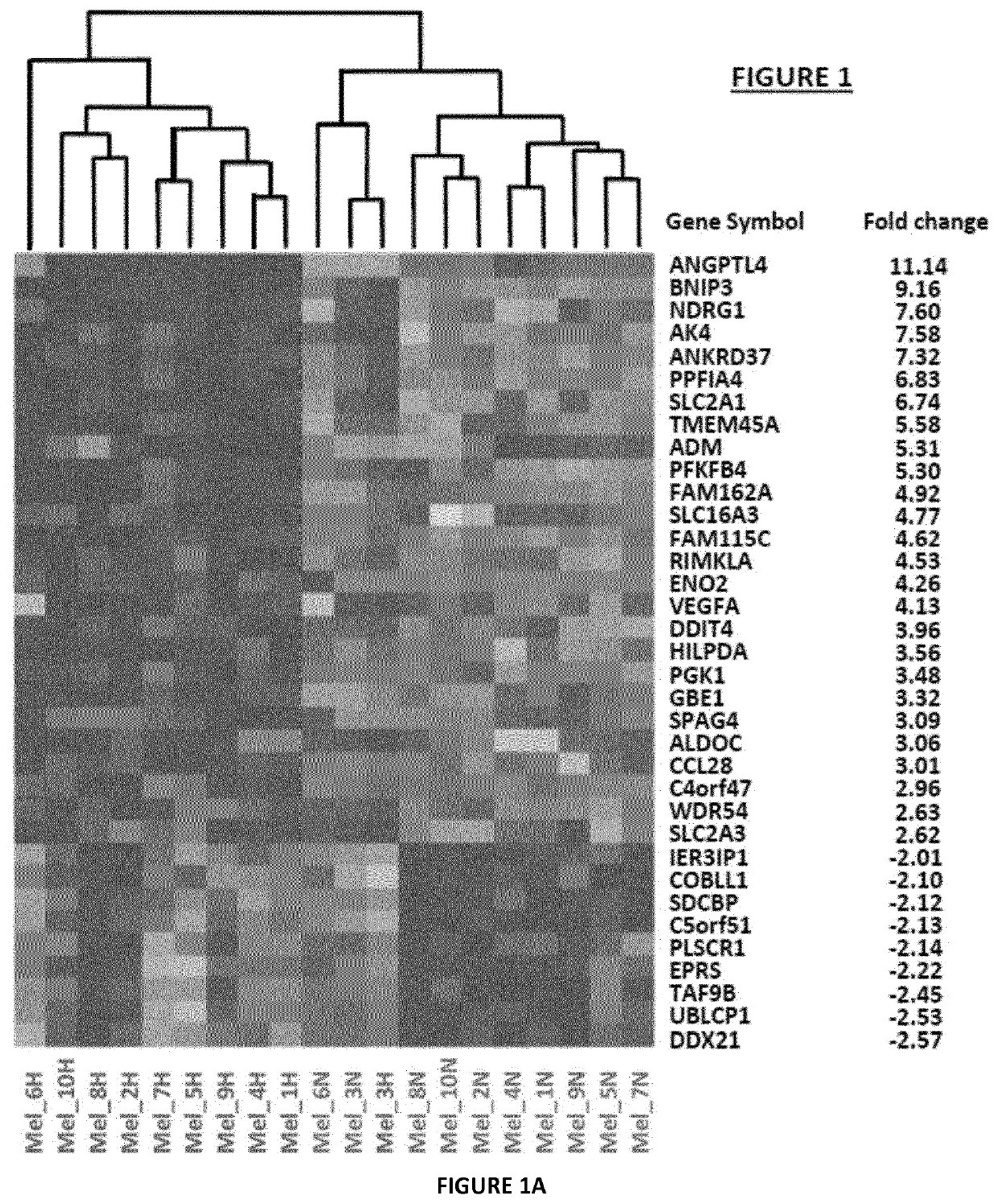
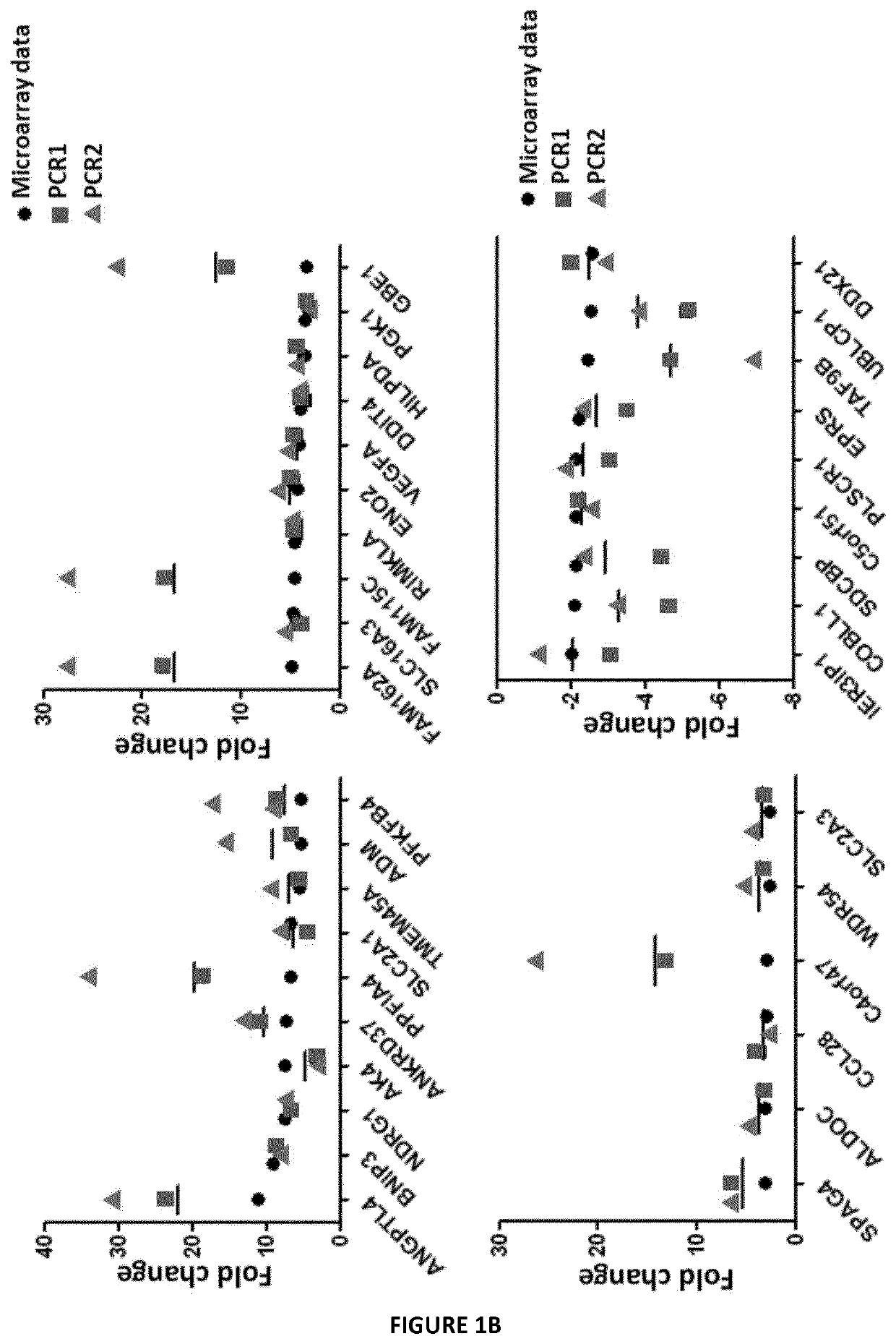
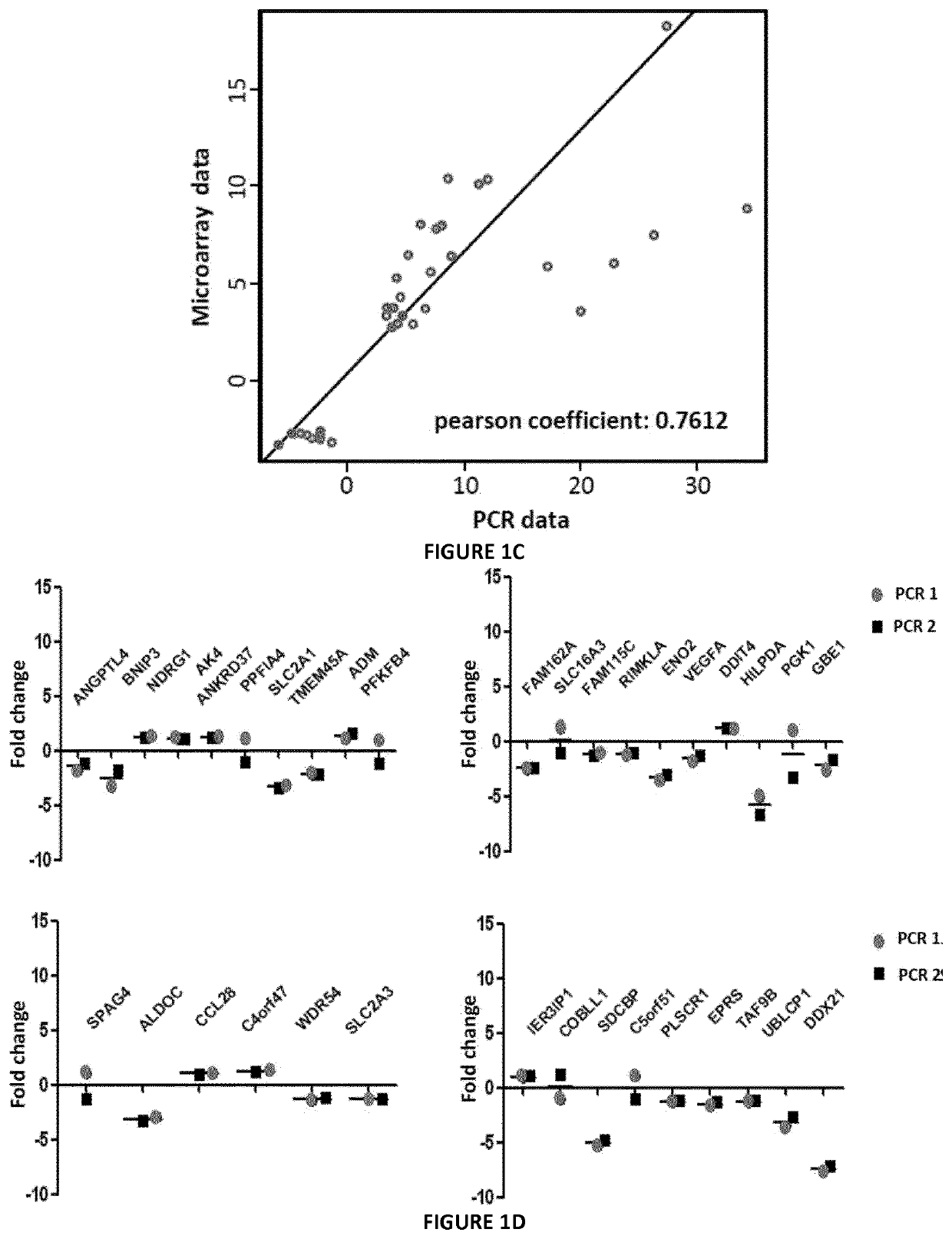
[0124]The inventors analyzed the changes in global transcript level in response to hypoxia stress. For this purpose, they used DNA microarrays to examine the gene expression program in response to hypoxia (1% O2) in different melanoma cell lines established from melanoma patients. They profiled global mRNA levels at a time point (24 h). The different mRNA samples were analyzed by hybridisation to DNA microarrays. Analysis with microarray assay (Agilent® SurePrint G3 Human GE 8×60K Microarray, Agilent Technologies, AMADID 28004) of gene expression profile of human primary cell lines of melanoma cultured at 1% oxygen versus 21% oxygen, permitted to establish a signature of 35 genes (FIG. 1A). 26 genes up regulated (fold-change≥2.5) and 9 genes down regulated under hypoxic conditions (fold change≤−2) and an adjusted p-value (FDR)<0.05. Cluster data analysis indicates that these genes belong to different pat...
PUM
| Property | Measurement | Unit |
|---|---|---|
| real time quantitative RT- | aaaaa | aaaaa |
| Nanostring technology | aaaaa | aaaaa |
| Nanostring technology PCR | aaaaa | aaaaa |
Abstract
Description
Claims
Application Information
 Login to View More