Encryption/decryption engine for multiple isochronous data streams

a data stream and encryption technology, applied in the field of encryption/decryption devices, can solve the problems of difficult circuit design that can meet all the requirements of digital video, inability to interleave the processing of encryption frames, and inability to interleave encryption frames

US6876746B2Inactive Publication Date: 2005-04-05SONY CORP +1
5 Cites 2 Cited by

Patent Information

Authority / Receiving Office
US · United States
Patent Type
Patents(United States)
Current Assignee / Owner
Publication Date
2005-04-05
Estimated Expiration
Not applicable · inactive patent

Smart Images

  • Figure 1
    Figure 1
  • Figure 2
    Figure 2
  • Figure 3
    Figure 3
Patent Text Reader

Abstract

Buffers, or registers, are used at one or more places between processing stages in a device for decrypting a data stream. The device has multiple processing stages arranged in a circular manner so that data is repeatedly passed from a prior stage to a next stage, and from a last stage back to a first stage, until processing is completed. The use of one or more registers at one or more positions allows data to be stored so that the stream associated with the stored data can effectively be suspended. This allows data from another stream to be processed while the suspended stream is in a wait state.
Need to check novelty before this filing date? Find Prior Art

Description

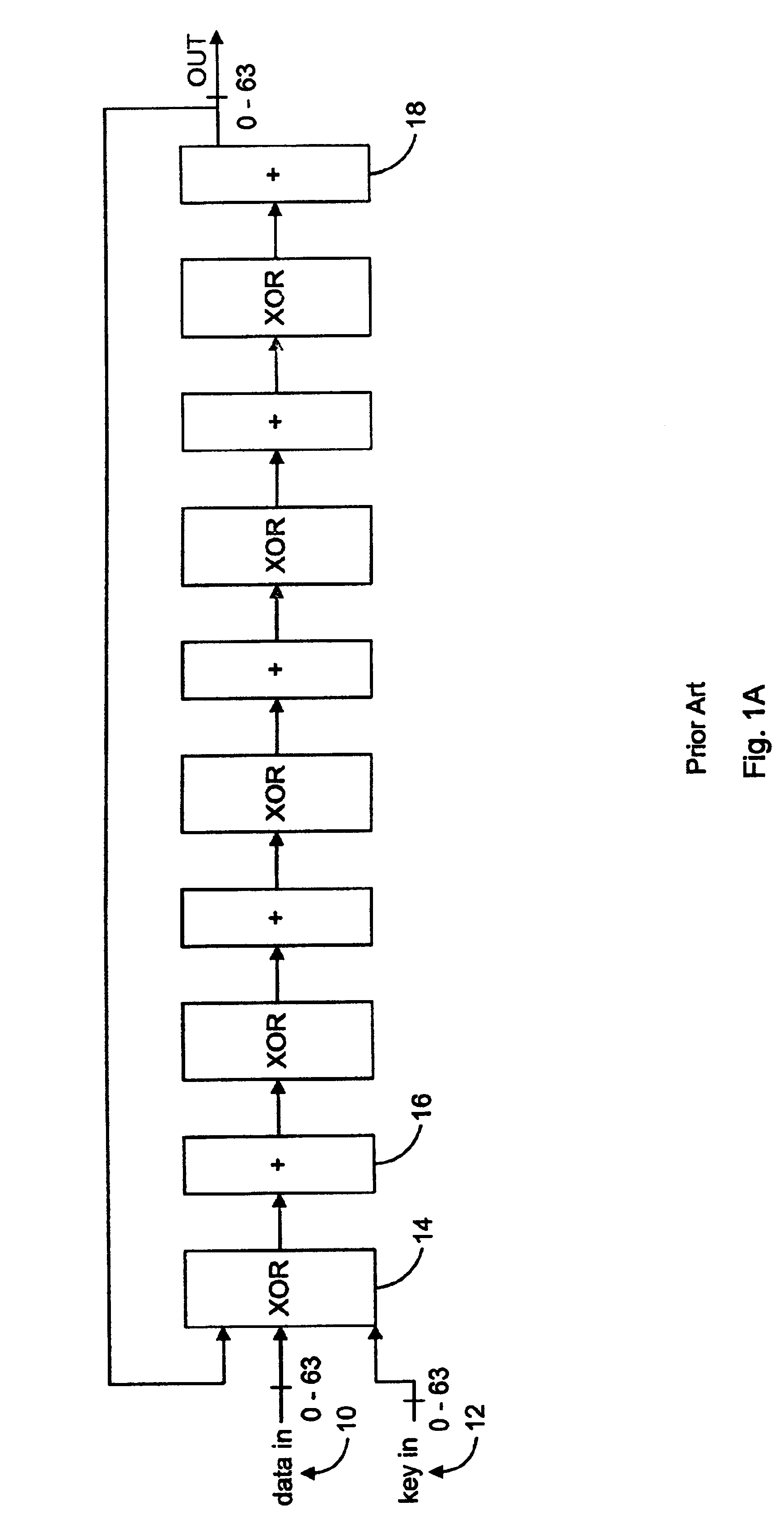
BACKGROUND OF THE INVENTIONThis invention relates in general to encryption / decryption devices and more specifically to a decryption device capable of handling multiple independent data streams in a time-multiplexed fashion.As information is increasingly handled in digital formats it becomes ever more important to provide security safeguards for these formats. For example, digital video has very demanding requirements in the need to restrict access. Formats such as the IEEE 1394 Standard for isochronous data transfer, Motion Picture Experts Group (MPEG) standards and high-definition television (HDTV) standards along with access, transfer and processing standards as promulgated by such organizations as Digital Transmission Licensing Administrator (DTLA—see, e.g., www.dtca.com) have imposed performance levels for devices using encryption and decryption on standardized digital formats. Because of the complex nature of encryption and decryption processing, and the extremely high bandwidt...

Examples

Embodiment Construction

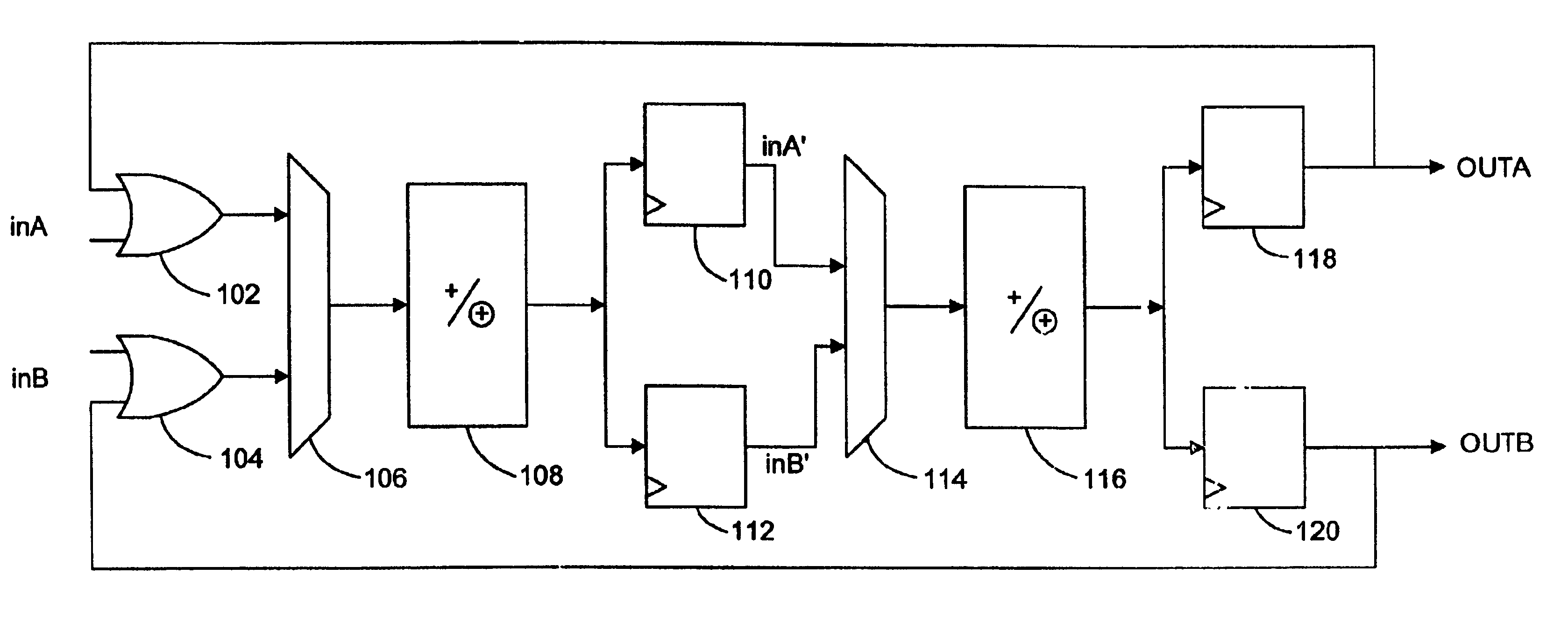
FIG. 2A shows a block diagram of the generalized concept of the present invention.

In FIG. 2A, a multiple-stage digital processor is shown with the stages arranged in a circular manner. Stages 108 and 116 represent any type of digital processing stage. As will be apparent, any number of stages can be represented by stages 108 and 116.

Input is received at the left of the diagram at either of inputs inA and inB feeding XOR gates 102 and 104. The inputs are fed into multiplexer 106, which selectively applies one of the inputs to processing stage 108.

The output of processing stage 108 is selectively fed to one of two registers, or buffers, 110 and 112. Register 110 serves to store, and output, a value corresponding to inA which is referred to as inA′ while register 112 receives, stores, and outputs inB′.

Both outputs from registers 110 and 112 are fed to multiplexer 114. Multiplexer 114 selectively applies either inA′ or inB′ to processing stage 116. The output from processing stage 116 i...