
Support and method for cell based assays
a cell-based assay and support technology, applied in the direction of material analysis through optical means, material analysis using wave/particle radiation, instruments, etc., can solve the problems of more stringent requirements and a much higher level of complexity of secondary screening assays
- Summary
- Abstract
- Description
- Claims
- Application Information
AI Technical Summary
Benefits of technology
Problems solved by technology
Method used
Image

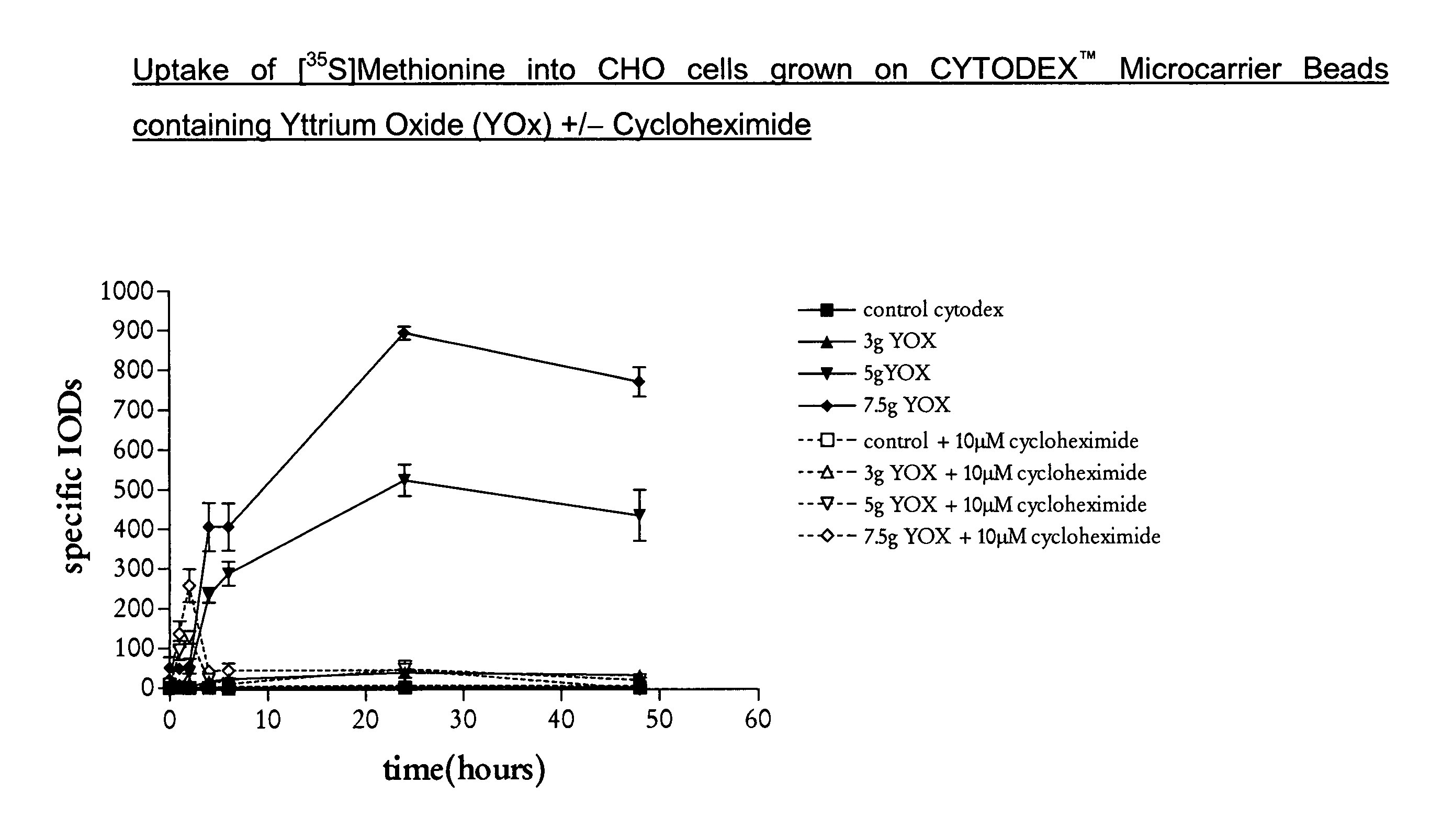
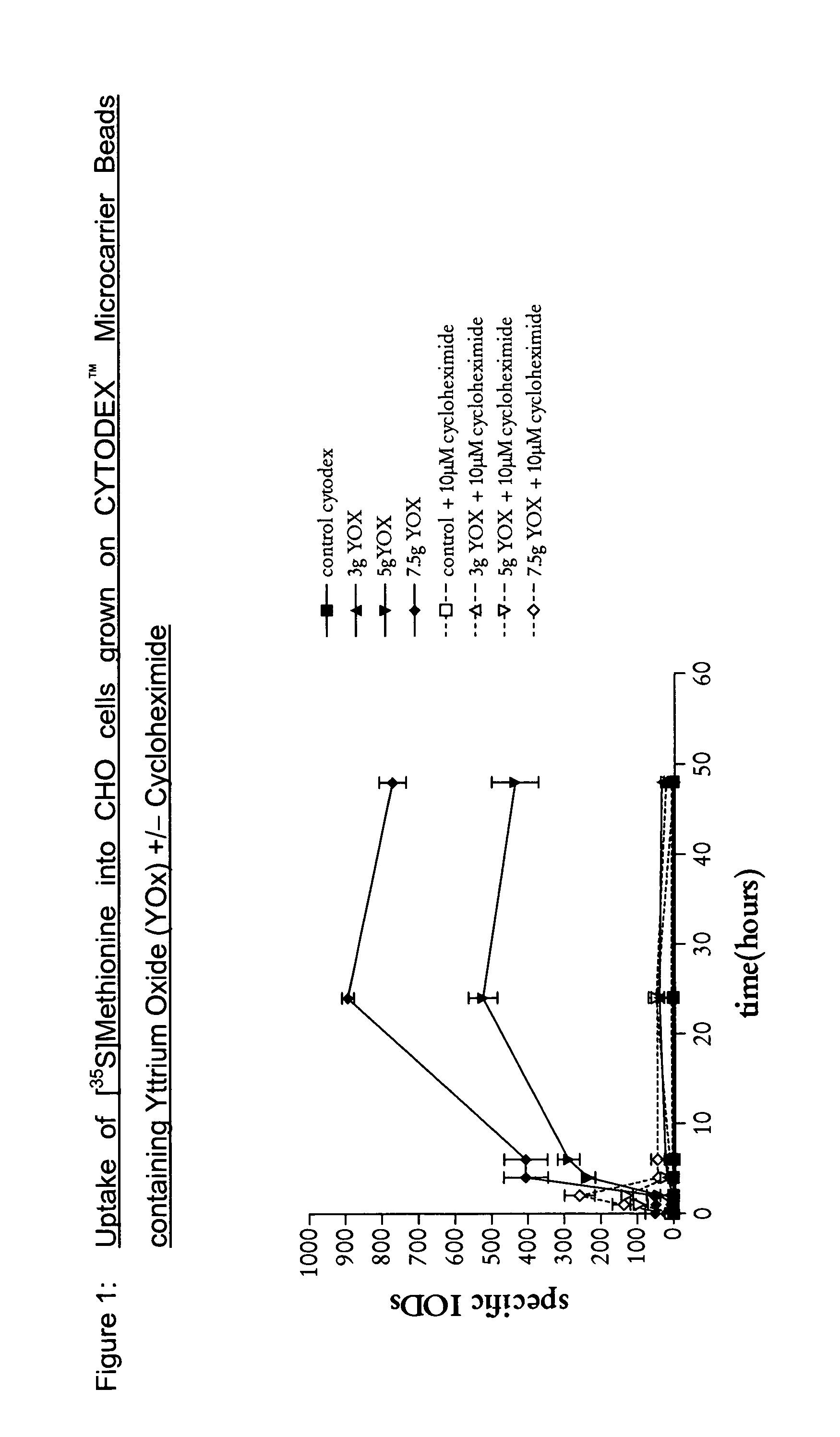
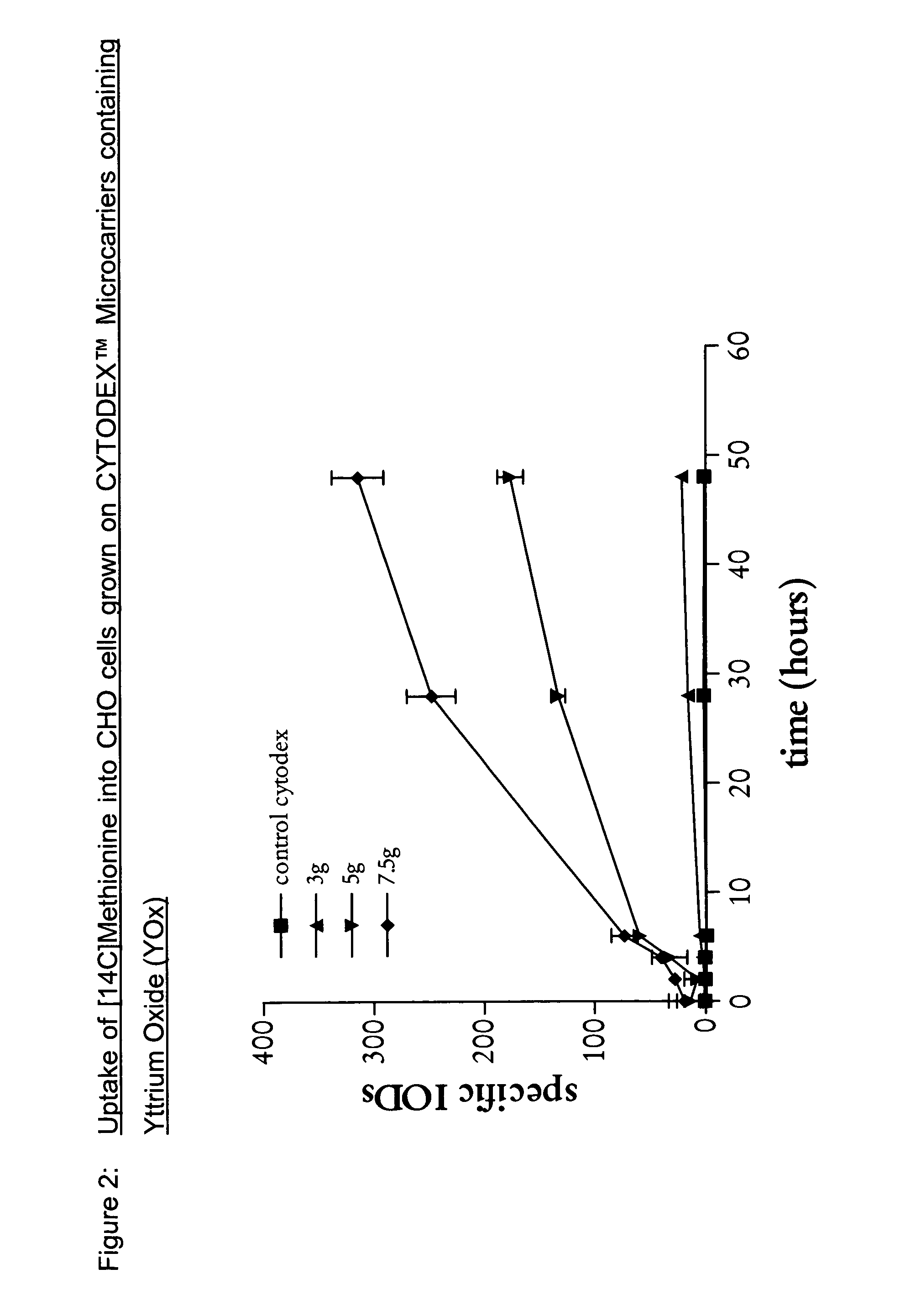
Examples
examples
[0043]The invention is further illustrated by reference to the following examples which present certain preferred embodiments of the invention but are not illustrative of all embodiments.
1. Preparation of Yttrium Oxide (YOx) Loaded CYTODEX ™ Microcarrier Beads
i) Preparation of Dextran Solution
[0044]In a 500 ml beaker with stirring 14 g Dextran TF (MW 200,000) was dissolved in water (33 ml). To this solution was added 50% NaOH (1.8 ml, 2.7 g) and NaBH4 (0.06 g) followed by yttrium oxide (7.5 g).
ii) Preparation of Emulsion Media
[0045]A 1000 ml reactor with an anchor-type stirrer was placed into a waterbath at a temperature of 50° C. Emulgator (6 g) was dissolved in ethylene dichloride (100 ml).
iii) Preparation of Dextran-YOx Beads (SEPHADEX ™ Gel Filtration Media)
[0046]The dextran solution prepared above was poured into the emulsion media from step ii) with stirring (100 rpm). Dextran beads containing YOx are formed. Epichlorhydrin (2.1 ml) was added and the crosslinking reaction star...
PUM
| Property | Measurement | Unit |
|---|---|---|
| Electrical conductance | aaaaa | aaaaa |
| Dynamic viscosity | aaaaa | aaaaa |
| Dynamic viscosity | aaaaa | aaaaa |
Abstract
Description
Claims
Application Information
 Login to View More