Zoom lens system having variable power element

a power element and zoom lens technology, applied in the field of zoom lens systems, can solve the problems of liquid crystal lenses with minimal adjustment through electrode modification, added cost, complexity, and size to the lens system, and affecting the design of lenses

US7265911B2Active Publication Date: 2007-09-04MONUMENT PEAK VENTURES LLC
20 Cites 31 Cited by

Patent Information

Authority / Receiving Office
US · United States
Patent Type
Patents(United States)
Current Assignee / Owner
Publication Date
2007-09-04

Smart Images

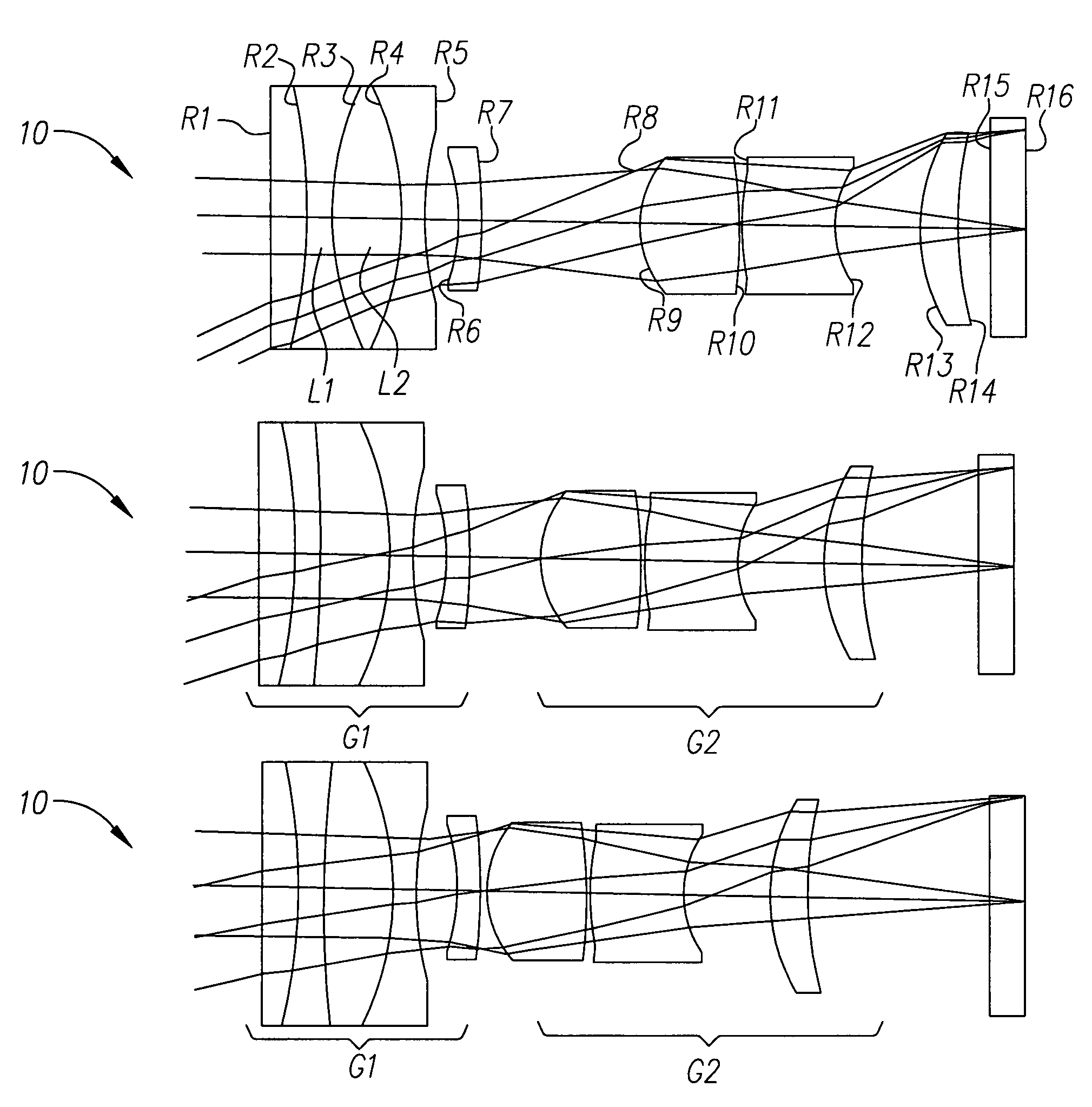
  • Figure 1
    Figure 1
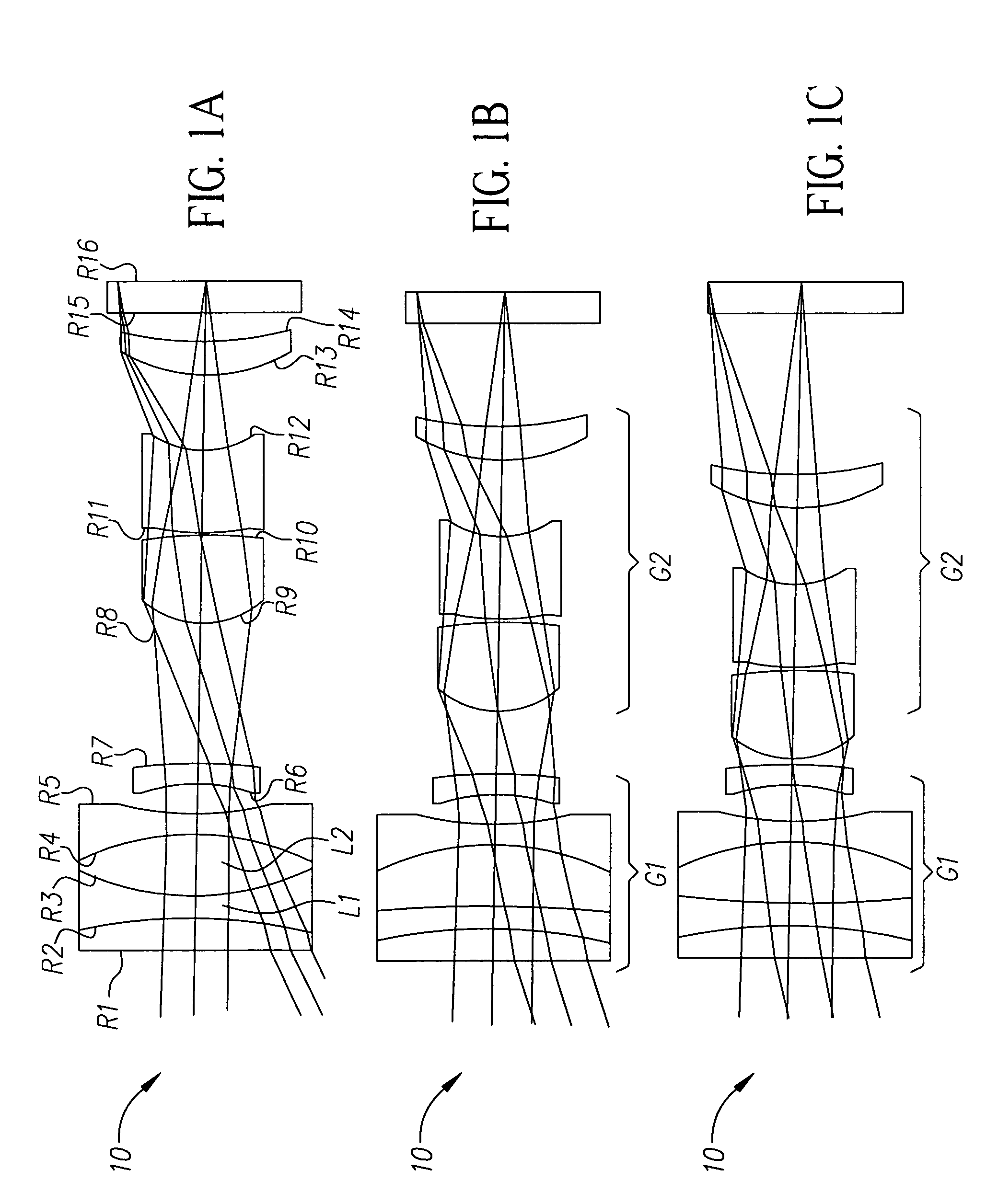
  • Figure 2
    Figure 2
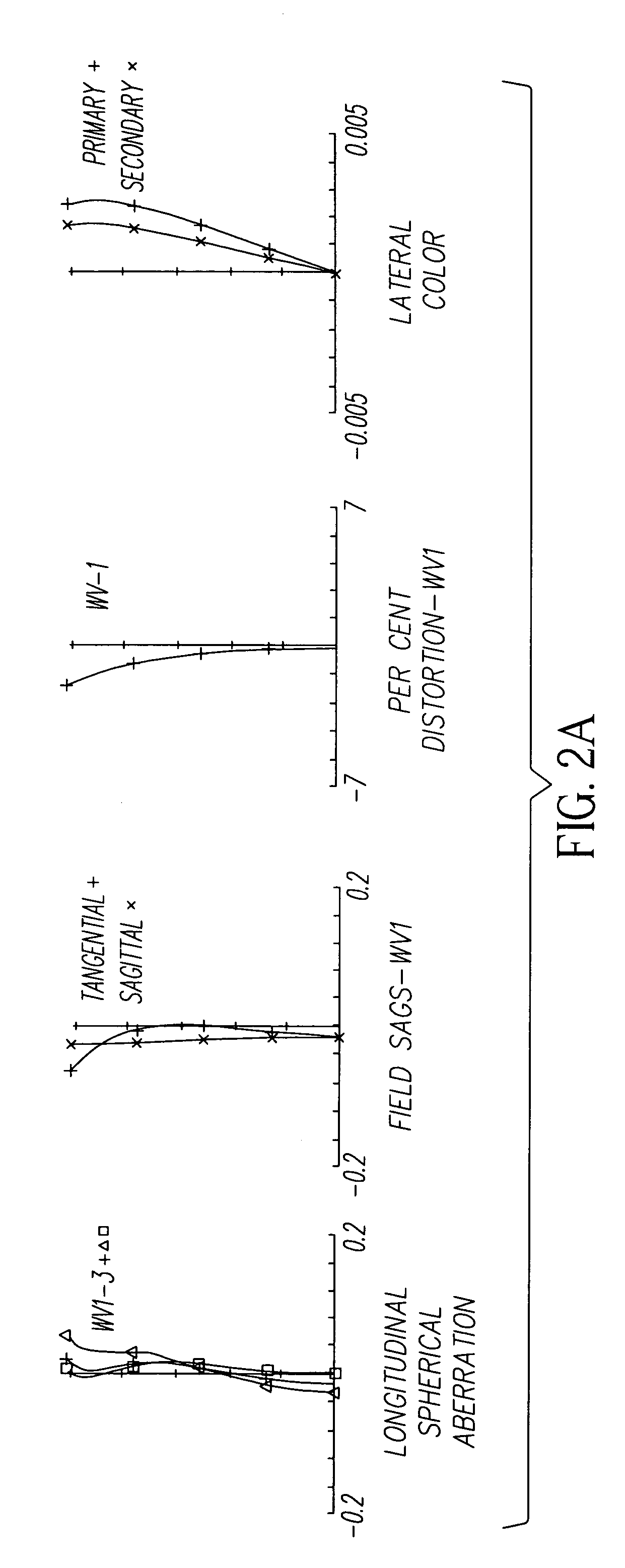
  • Figure 3
    Figure 3
Patent Text Reader

Abstract

A multiple group variable focal length lens is provided. The lens has a first lens group including a variable power lens element and is positioned in a stationary manner along an optical axis. The lens also has a second lens group moveably positioned along the optical axis. The variable power lens element can be an electrically controllable liquid lens having a surface with a variable radius of curvature created by two liquids having distinct indices of refraction with one of the liquids having an index of refraction greater than 1.60. Alternatively or additionally, at least one of the liquids used in the liquid lens can include nanoscale particles.
Need to check novelty before this filing date? Find Prior Art

Description

FIELD OF THE INVENTION

[0001] This invention relates generally to lens design, and in particular to variable focal length lens systems having at least one variable power element.BACKGROUND OF THE INVENTION

[0002] Conventional variable focal length lens systems, for example, zoom lens systems, typically include at least one group of lenses that is moved along an optical axis in order to change the focal length of the system resulting in variable magnification of an object at an image plane of the system. Zoom lens systems can include multiple moving groups or a combination of fixed lens groups and moving lens groups. These types of lens systems have various design forms with each design form having its own set of strengths in terms of size, performance, cost, mechanical complexity, etc. Conventional variable focal length lens systems mechanically move lens groups to achieve variable focal length. This movement adds cost, complexity, and size to the lens system. In consumer camera applica...

Examples

Embodiment Construction

[0025]The present description will be directed in particular to elements forming part of, or cooperating more directly with, apparatus in accordance with the present invention. It is to be understood that elements not specifically shown or described may take various forms well known to those skilled in the art.

[0026]Referring generally to FIGS. 1A-8C, the present invention incorporates at least one variable optical power lens element in a variable focal length lens system 10, 20. When compared to lens systems that do not incorporate at least one variable optical power lens element, this results in the reduction of at least one moving group of the variable focal length lens system and reduces the overall length of the variable focal length lens system 10, 20. Also, the diameter of the most object side lens element of the system can be reduced depending on the specific application contemplated.

[0027]When a beam of light is obliquely incident on a refracting surface, astigmatism is evi...