
Pressure cleaner brush for washing surfaces
a technology for cleaning brushes and surfaces, applied in the direction of brushes, cleaning processes and apparatuses, applications, etc., can solve the problems of brush inconvenient use, inability to adjust the introduction and dissolving of detergent substances, and the known types of pressure cleaning brushes are not free from drawbacks. , to achieve the effect of avoiding unnecessary consumption
- Summary
- Abstract
- Description
- Claims
- Application Information
AI Technical Summary
Benefits of technology
Problems solved by technology
Method used
Image

Examples
Embodiment Construction
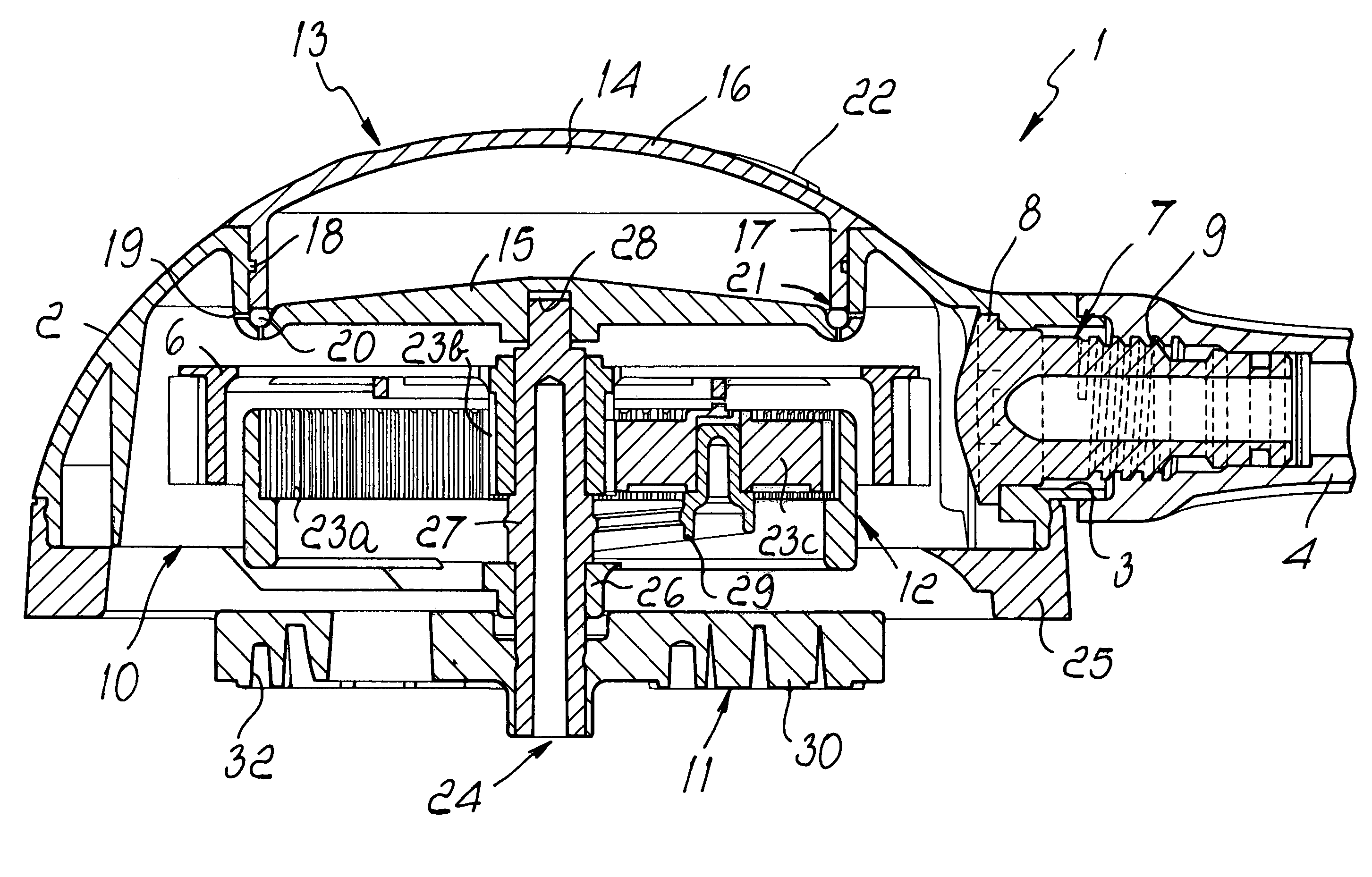
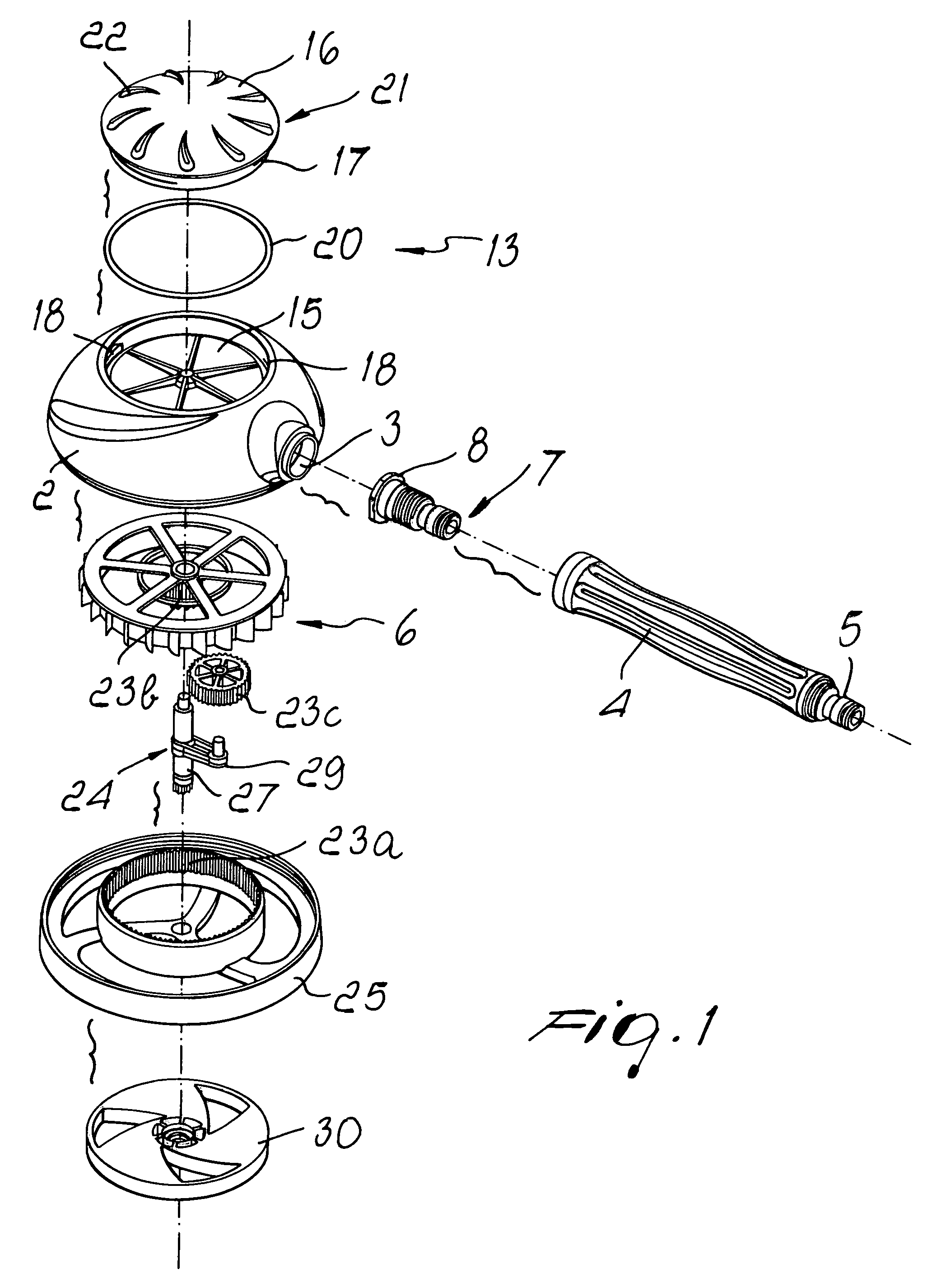
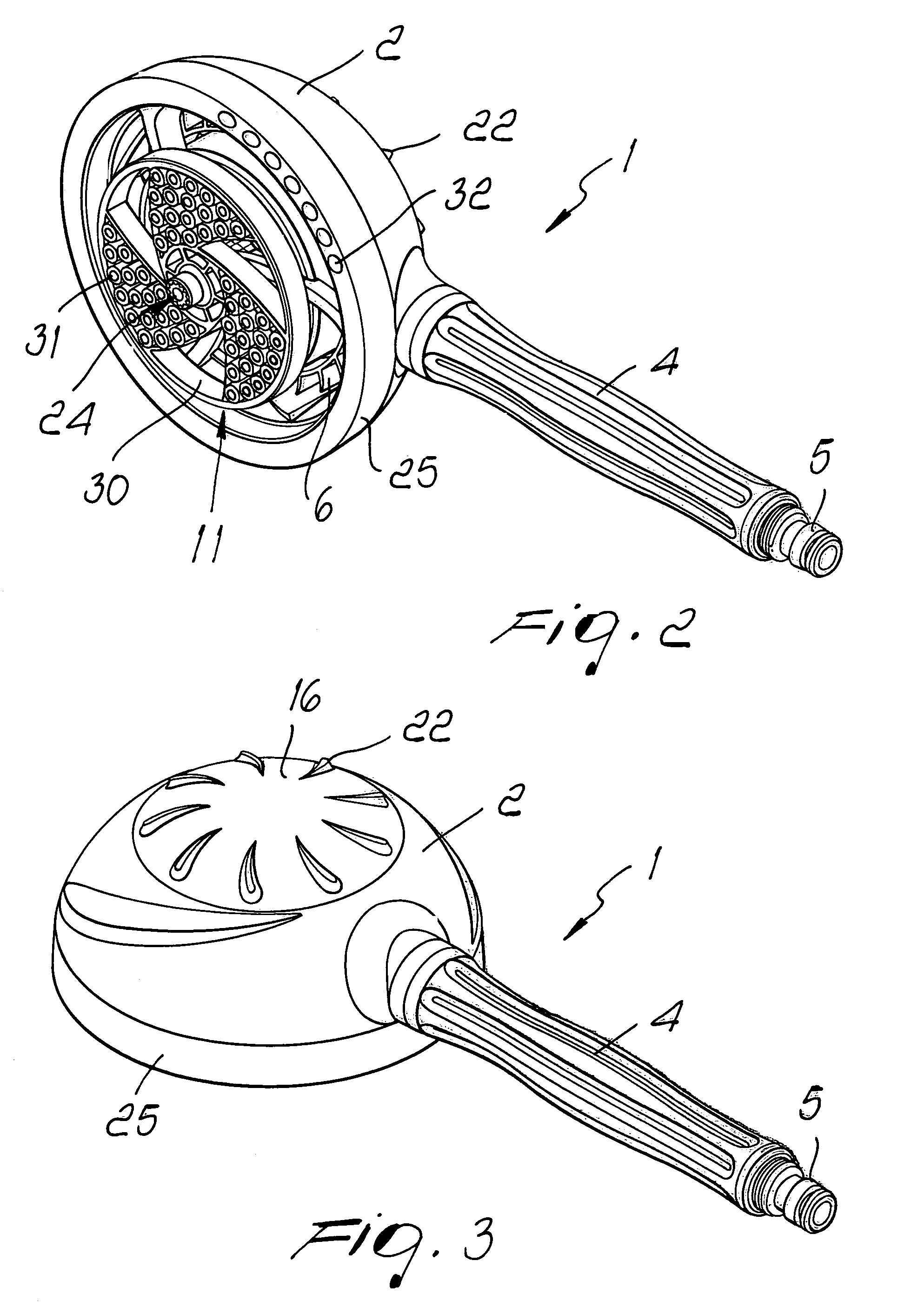
[0028]With reference to the figures, the reference numeral 1 designates a pressure cleaner brush for washing surfaces.
[0029]The brush 1 comprises a body 2, which is shaped like a half-shell and whose outer wall is crossed by a hole 3, which is connected to a rigid tube 4 that acts as a handle.
[0030]The free end of the rigid tube 4 is provided with a connecting element 5, which allows to connect the brush 1 to a water supply system, such as for example the ordinary water mains, a surge tank, a pump or the like.
[0031]A vaned or bladed impeller 6 is rotatably supported inside the body 2 and can be turned, during use, by means of a jet of water that arrives from a nozzle 7, which is tangent with respect to said impeller and is associated with the body 2.
[0032]Said nozzle is elongated and crosses the hole 3 from end to end, mutually connecting the rigid tube 4 and the body 2; it is in fact provided, at one end, with a head 8 that abuts against the internal surface of the body 2, and is a...
PUM
 Login to View More
 Abstract
Description
Claims
Application Information
 Login to View More