
Method for a virtual pregnancy experience
- Summary
- Abstract
- Description
- Claims
- Application Information
AI Technical Summary
Benefits of technology
Problems solved by technology
Method used
Image

Examples
Embodiment Construction
[0016]As shown in the drawings for purposes of illustration, the present invention pertains to a system for the delivery of a virtual pregnancy experience via a computer network and the generation of a virtual offspring.
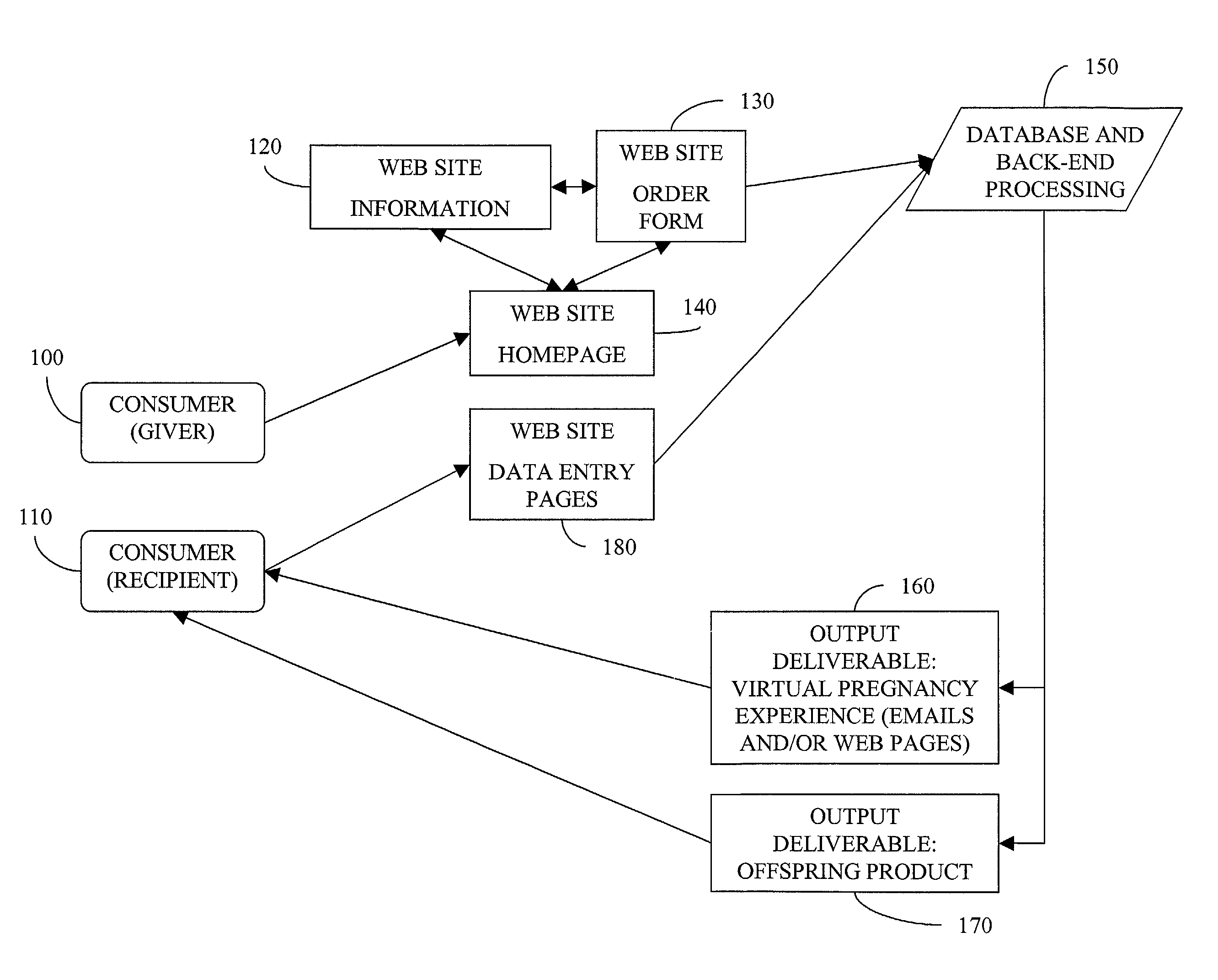
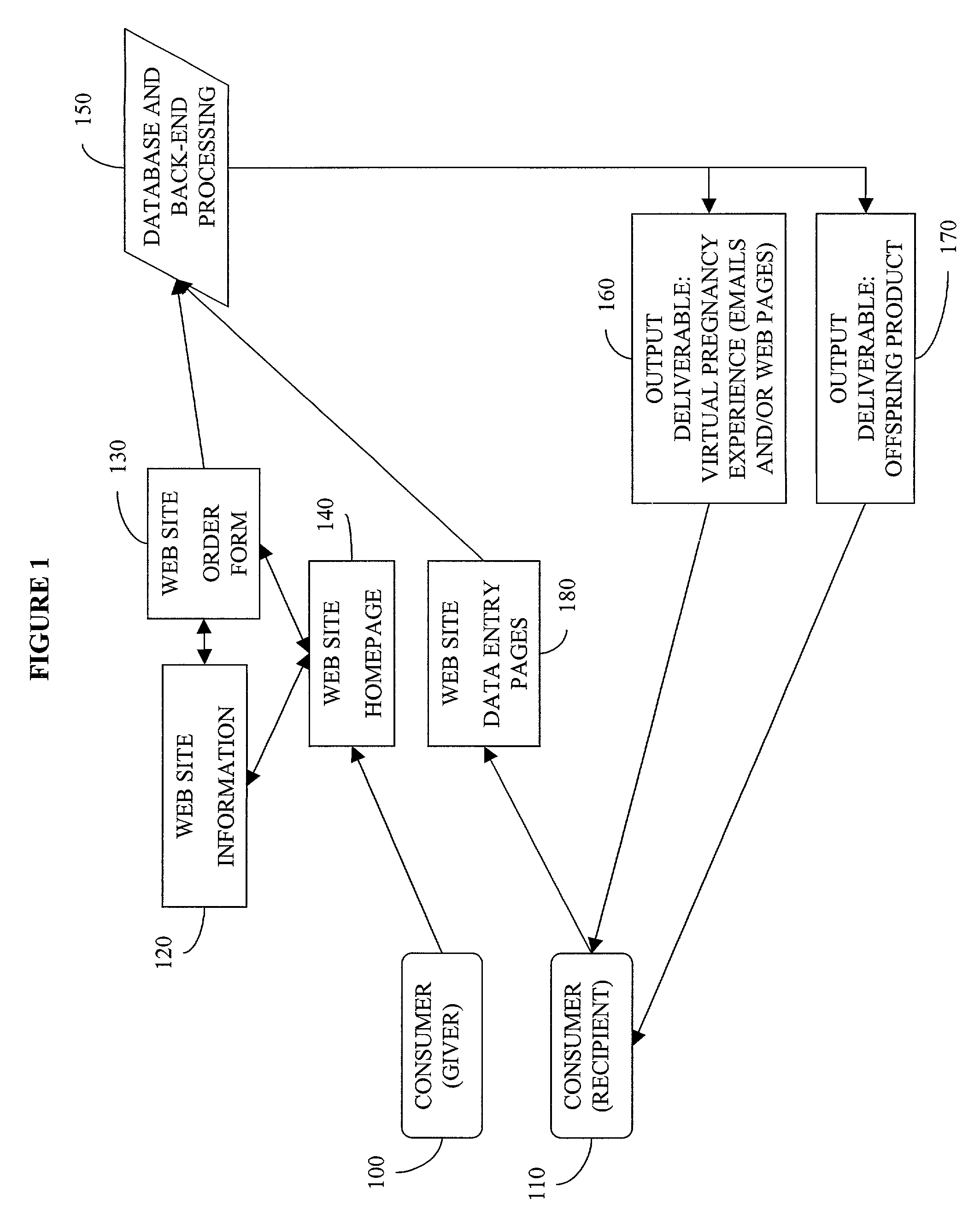
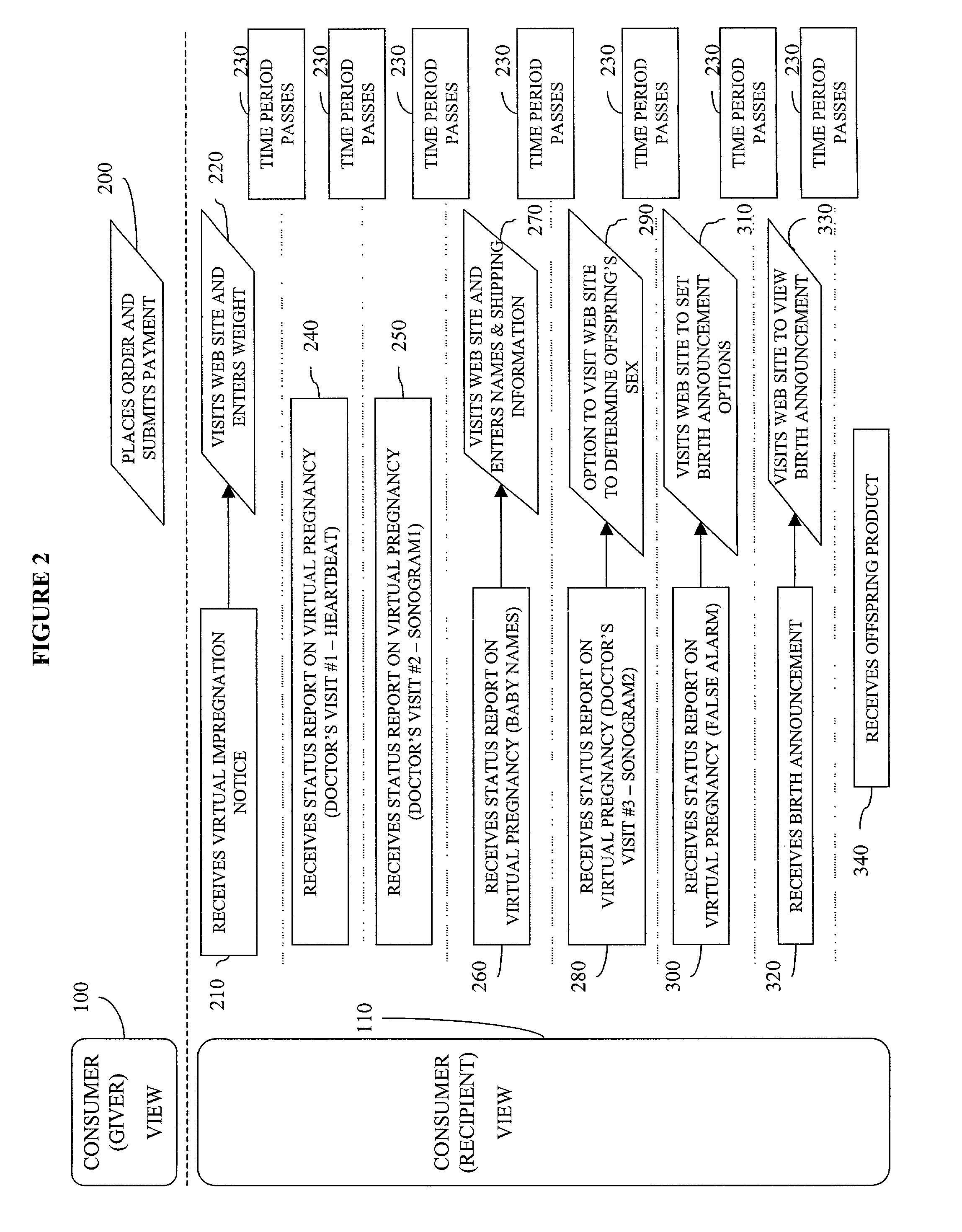
[0017]FIG. 1 provides an overview of the invention through a process block diagram. The Consumer (Giver) (100) visits the company web site through a computer connected to the Internet. The web site home page (140) provides a brief overview of the service and product and contains link to other web pages that contain additional and more detailed information content. The web site information (120) consists of a variety of web pages that allow the Consumer (Giver) to easily navigate in order to find information about the company, product, how the service works, and answers to anticipated questions. When a Consumer (Giver) decides to purchase the service, the individual visits the order form web page (130). The Consumer (Giver) is required to fill out information and subm...
PUM
 Login to View More
 Abstract
Description
Claims
Application Information
 Login to View More