
Surgical clip
a surgical clip and clip technology, applied in the field of surgical clips, can solve the problems of excessive blood loss and/or unnecessary damage to the vessel, difficult preloading of known ligation clips into clip appliers, and excessive leg separation of clips, etc., to achieve less plastic deformation, less plastic deformation, and less plastic deformation
- Summary
- Abstract
- Description
- Claims
- Application Information
AI Technical Summary
Benefits of technology
Problems solved by technology
Method used
Image

Examples
Embodiment Construction
[0029]Certain exemplary embodiments will now be described to provide an overall understanding of the principles of the structure, function, manufacture, and use of the devices and methods disclosed herein. One or more examples of these embodiments are illustrated in the accompanying drawings. Those skilled in the art will understand that the devices and methods specifically described herein and illustrated in the accompanying drawings are non-limiting exemplary embodiments and that the scope of the present invention is defined solely by the claims. The features illustrated or described in connection with one exemplary embodiment may be combined with the features of other embodiments. Such modifications and variations are intended to be included within the scope of the present invention.
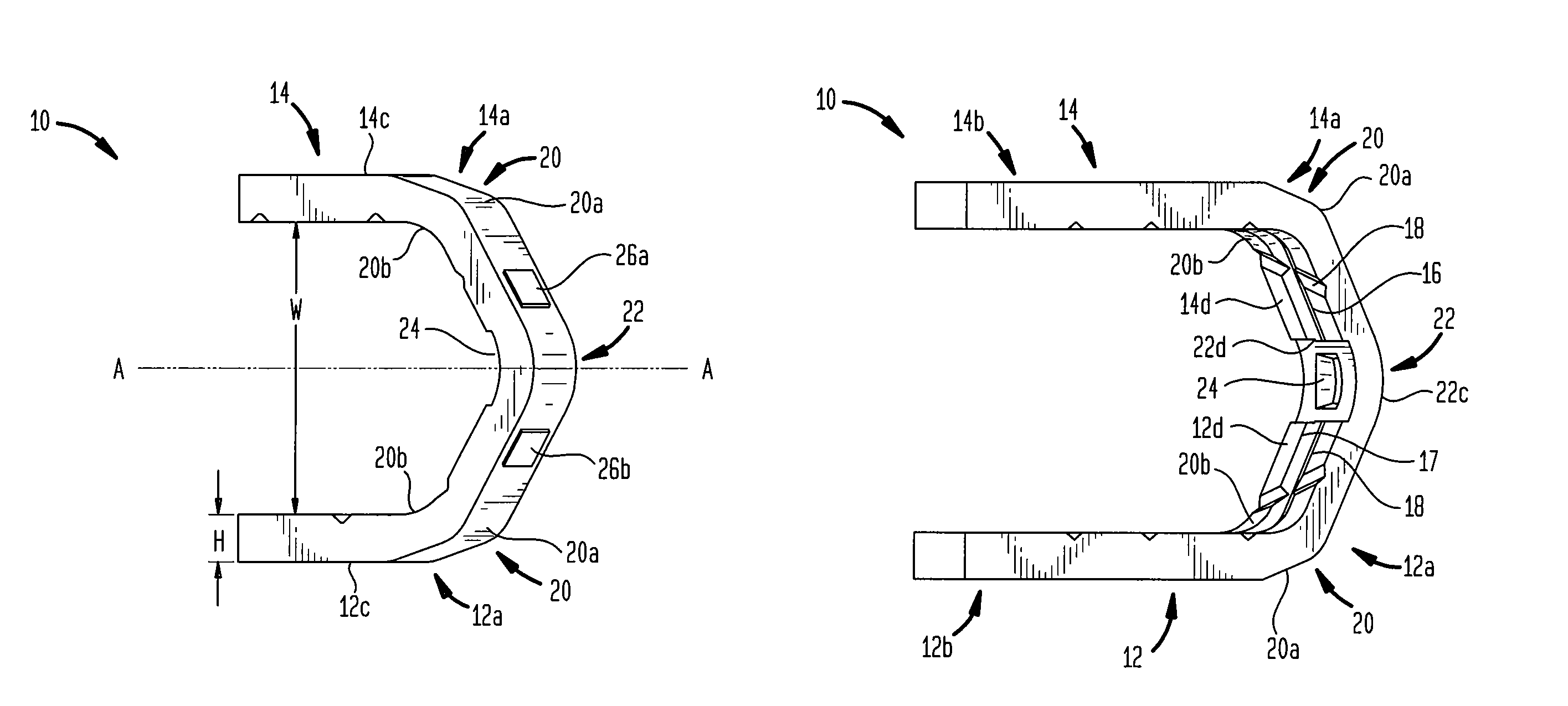
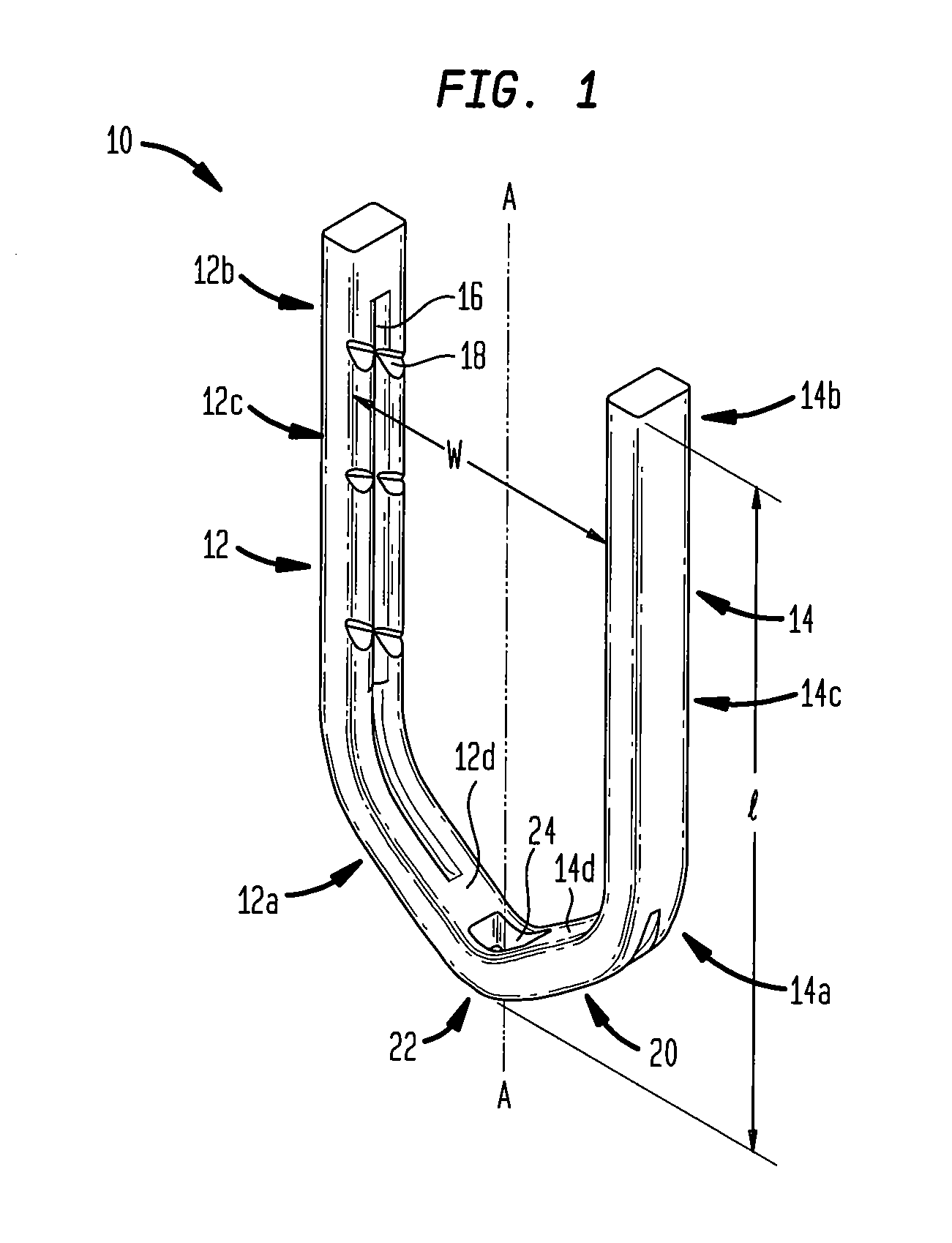
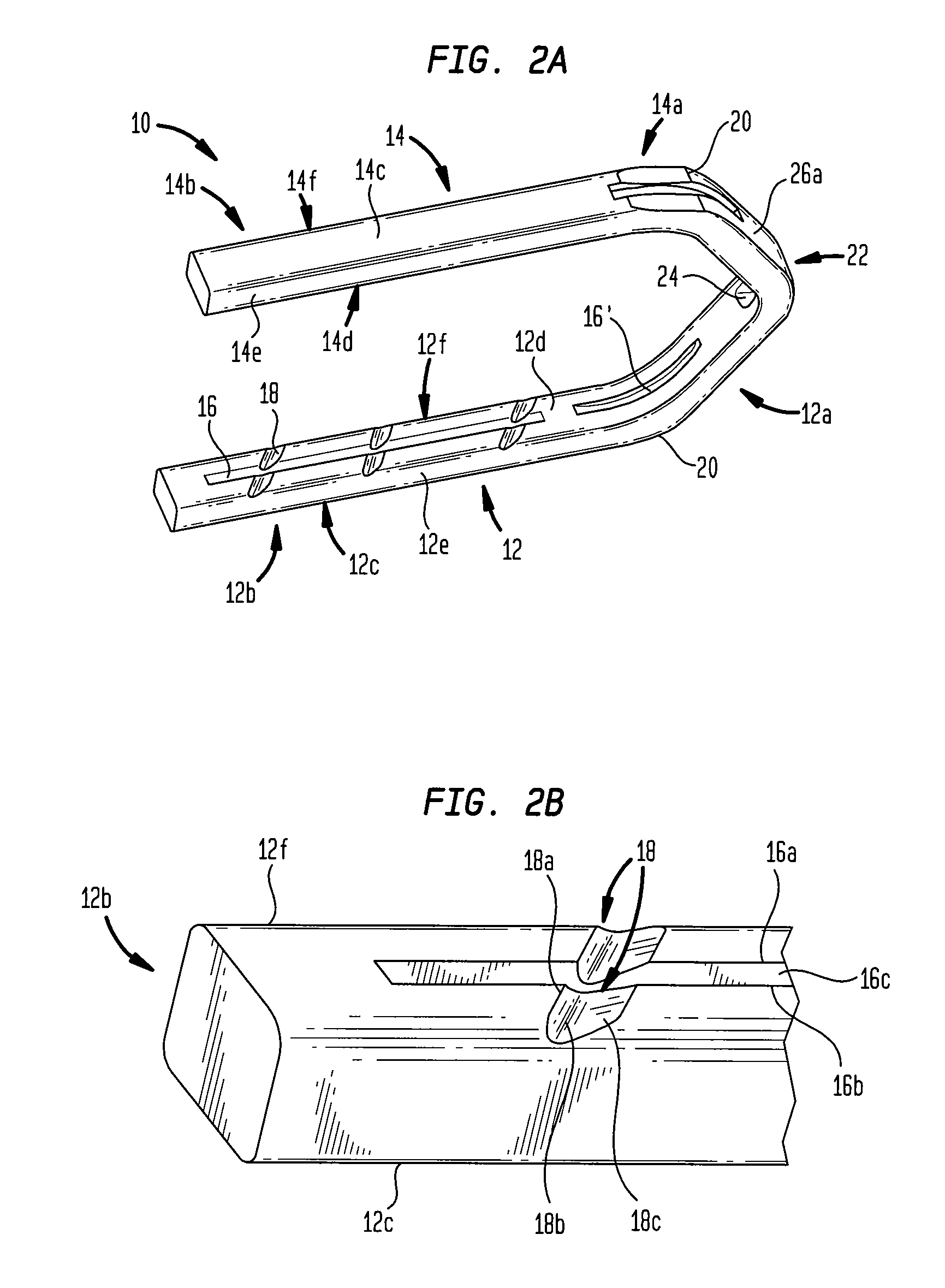
[0030]The present invention provides various devices for ligating tissue, such as vessels, other tubular ducts, and the like. FIGS. 1-4C illustrate exemplary embodiments of a clip disclosed herein in ...
PUM
 Login to View More
 Abstract
Description
Claims
Application Information
 Login to View More