
Determining distribution for planning an infusion
a technology of distribution and infusion agent, applied in the field of planning an infusion, can solve problems such as not achieving the desired effect, and achieve the effect of increasing control over the distribution of infusion agents
- Summary
- Abstract
- Description
- Claims
- Application Information
AI Technical Summary
Benefits of technology
Problems solved by technology
Method used
Image

Examples
Embodiment Construction
[0021]It is to be appreciated that the term “infusion”, as used herein is intended to include the administering of, for example, any fluid or gaseous or solid substance or infusion agent, such as for example medicines, cells, genes, enzymes, proteins, antibodies, hormones, viruses or the like.
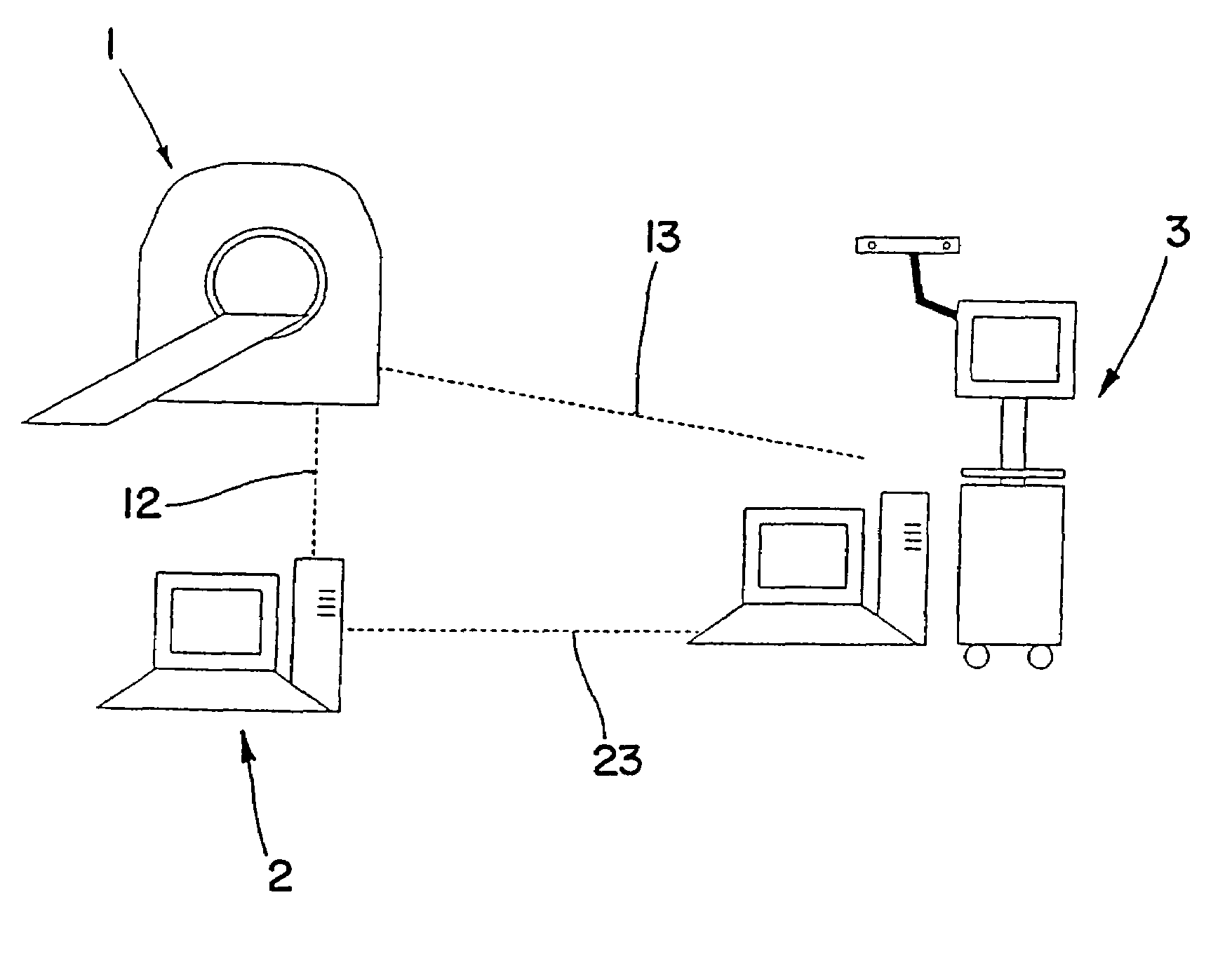
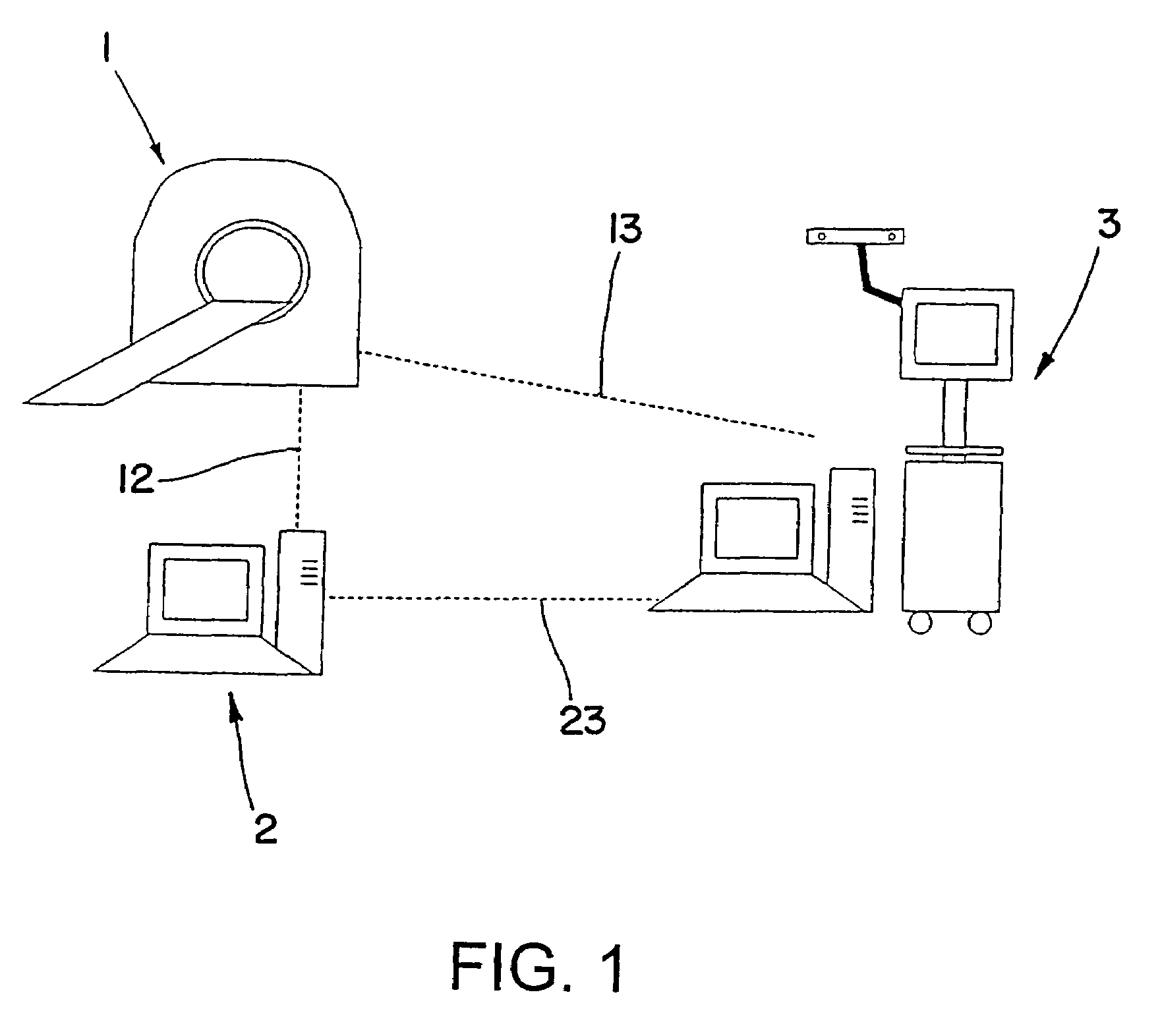
[0022]With reference to FIG. 1, a device or system for identifying advantageous and non-advantageous infusion regions and / or for assisting planning for introducing a fluid is provided. The system includes an imaging device 1, such as a nuclear spin tomograph with a patient couch. A patient can be introduced into the nuclear spin tomograph, for example, via the head, and structural and / or functional anatomical data can be captured. The captured structural and / or functional anatomical data can be used to determine the structure of the head, for example, the brain. Once the recorded images have been processed, which can simply be performed in a processor in the nuclear spin tomograph, information ...
PUM
 Login to View More
 Abstract
Description
Claims
Application Information
 Login to View More