
Method for treatment of castration-resistant prostate cancer
a prostate cancer and castration-resistant technology, applied in the direction of sugar derivatives, organic chemistry, drug compositions, etc., can solve the problems of androgen-independent cells emergence, relapse and progression of the disease, and achieve the effects of reducing the selective pressure towards resistance, and reducing the expression of igfbp-2
- Summary
- Abstract
- Description
- Claims
- Application Information
AI Technical Summary
Benefits of technology
Problems solved by technology
Method used
Image

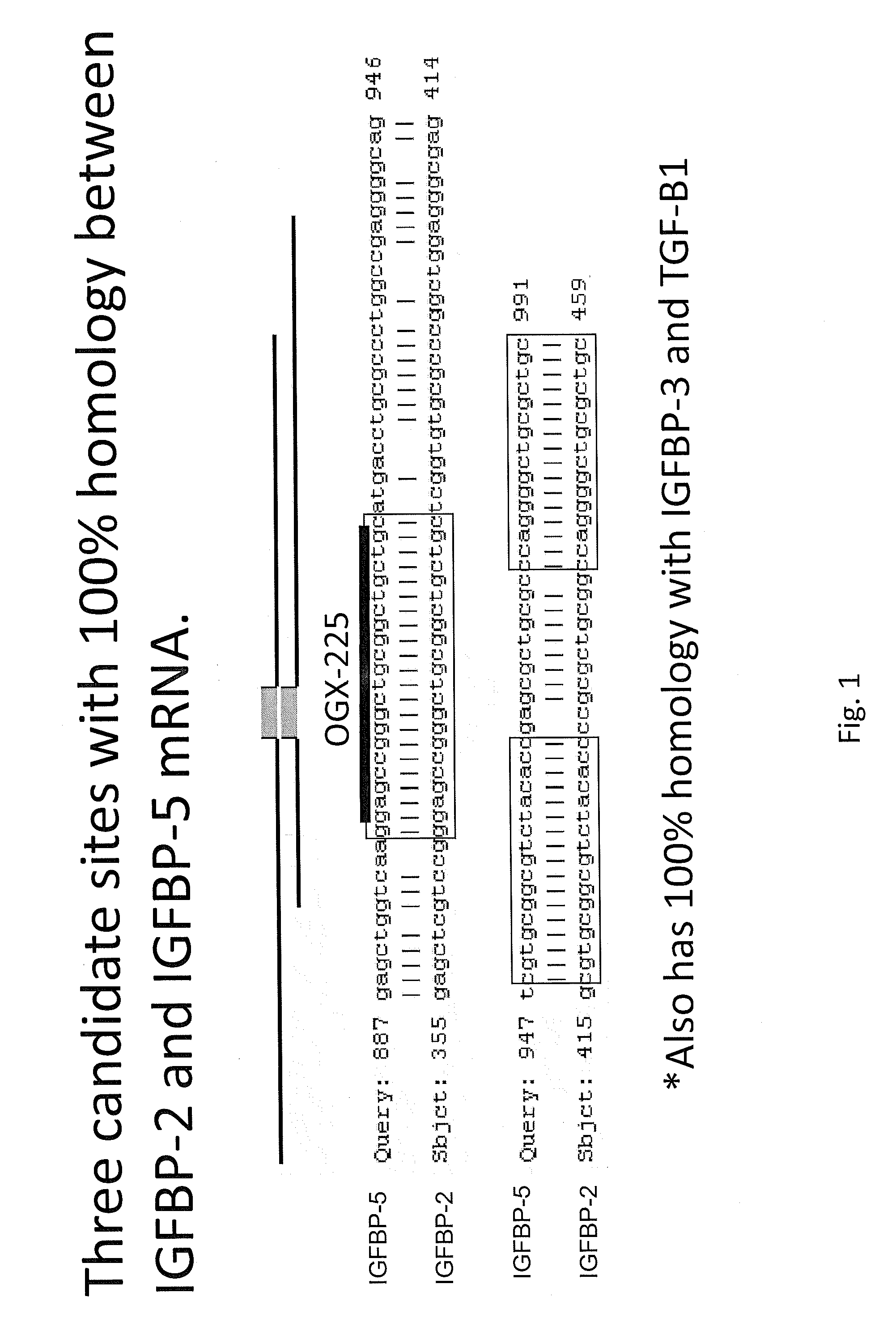
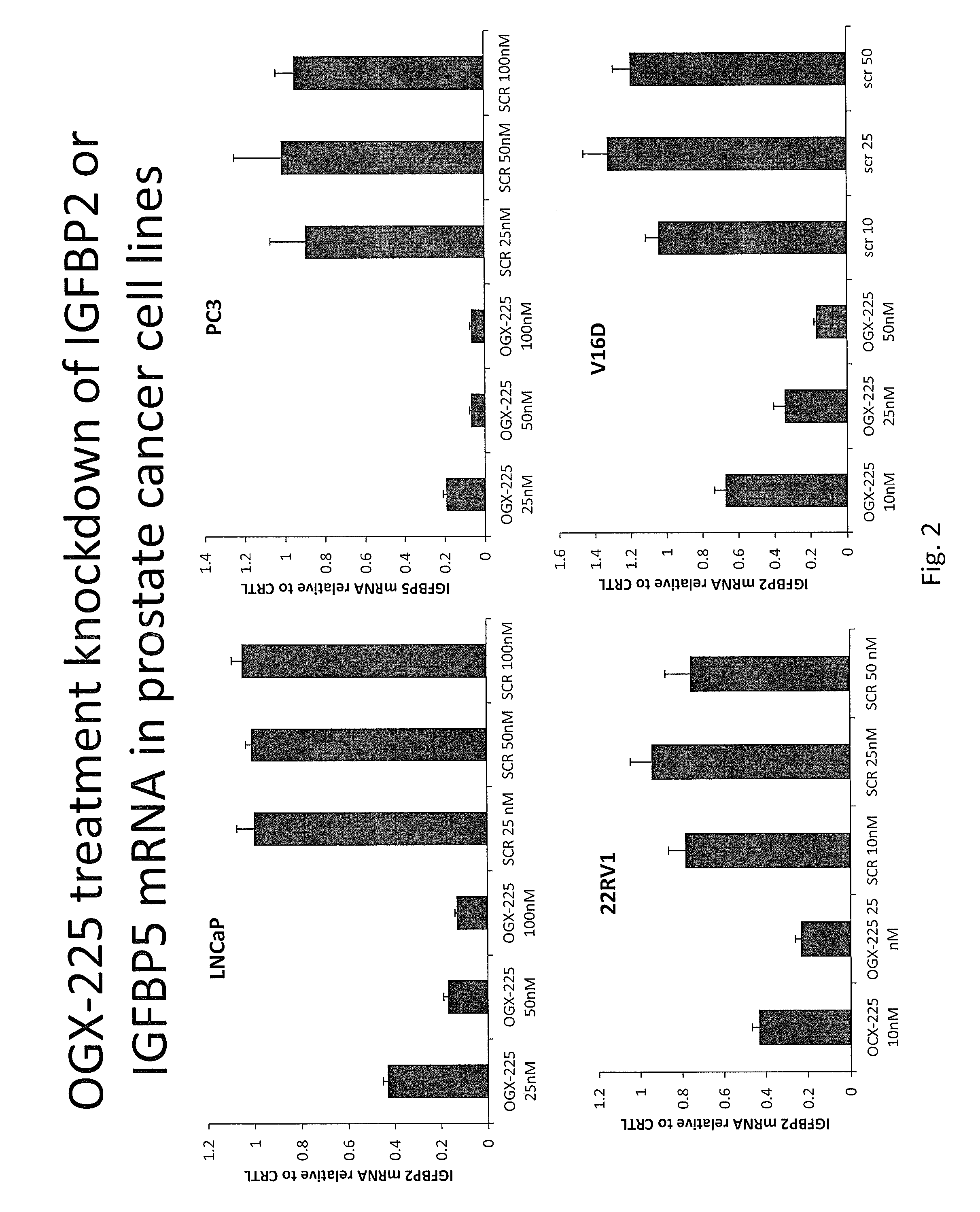
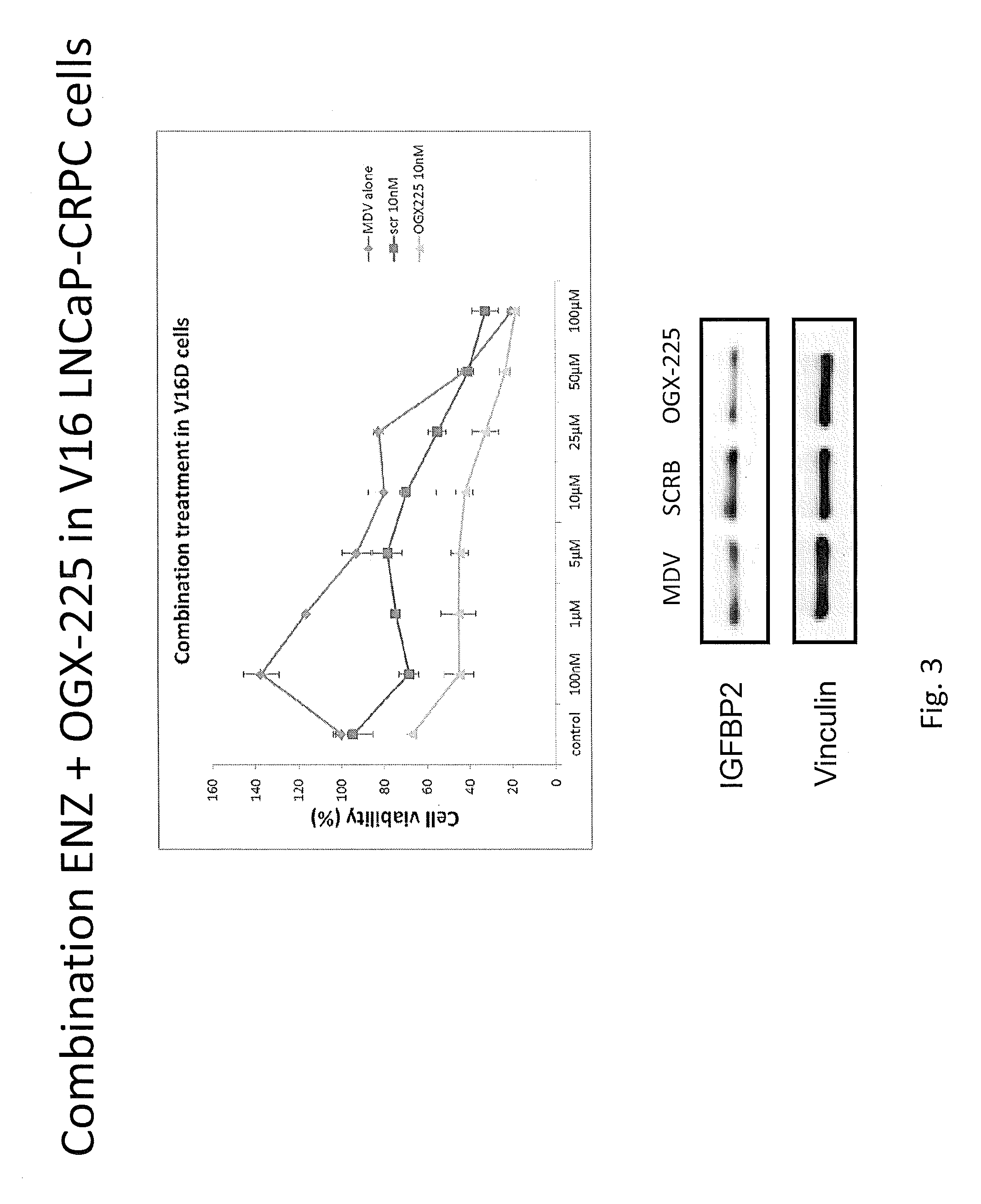
Examples
Embodiment Construction
Definitions
[0018]As used in the present application, the term CRPC refers to castrate-resistant prostate cancer and encompasses metastatic CRPC (or mCRPC).
[0019]As used in the present application, the term “patient” refers to a human patient.
[0020]The term “therapeutic agent” refers to a composition that is administered to the patient in an amount sufficient to achieve a therapeutic effect in non-resistant patients. There is no requirement implied that the agent will be or remain therapeutically effective in any particular patient.
[0021]The phrase “effective to reduce expression of IGFBP-2 and IGFBP-5” refers to the ability of an agent to produce a statistically significant reduction in the amount of IGFBP-2 and IGFBP-5 when IGFBP-2 and IGFBP-5 are expressed by treated cells, in this case prostate cancer cells. As discussed below, some resistant cell lines express only one of the two IGFBP's or express them to significantly different extents.
[0022]The phrase “concurrently administer...
PUM
| Property | Measurement | Unit |
|---|---|---|
| resistance | aaaaa | aaaaa |
| time period | aaaaa | aaaaa |
| total length | aaaaa | aaaaa |
Abstract
Description
Claims
Application Information
 Login to View More