
Eimeria tenella apical membrane antigen 1 (AMA 1) gene and application thereof
A technology of Eimeria tenella and tenderness, applied in the fields of application, gene therapy, genetic engineering, etc., which can solve the problems that there is no research report on Eimeria tenella AMA1 gene
Patent Information
- Authority / Receiving Office
- CN · China
- Patent Type
- Applications(China)
- Current Assignee / Owner
- Publication Date
- 2011-11-16
- Estimated Expiration
- Not applicable · inactive patent
Smart Images
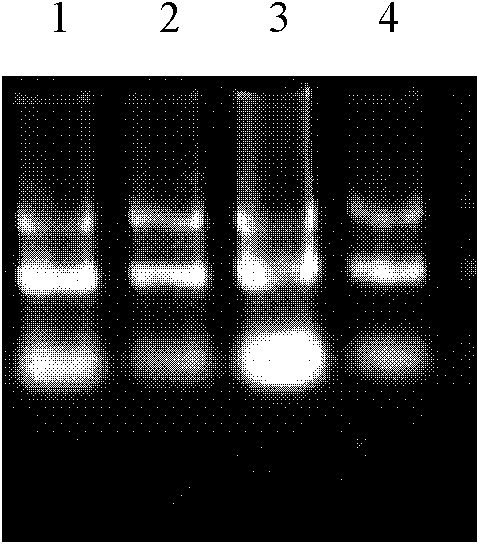
Figure 1 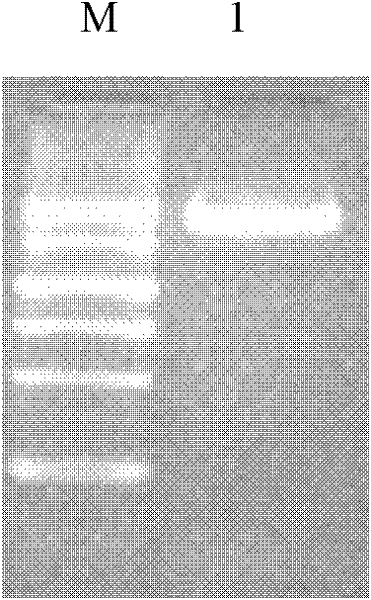
Figure 2 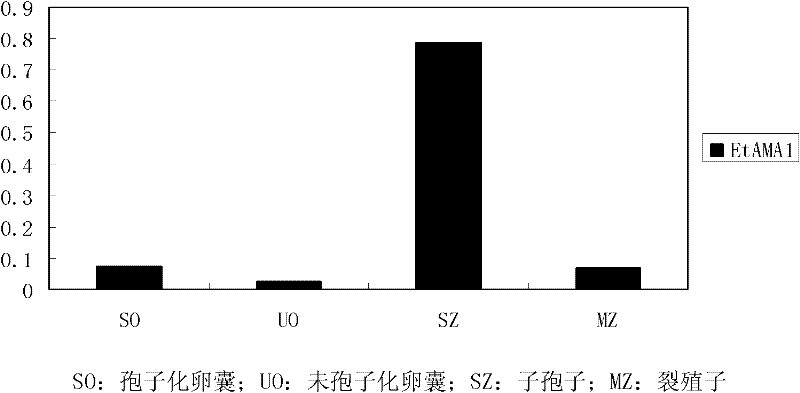
Figure 3
Abstract
Description
technical field
[0001] The invention relates to the technical field of bioengineering, in particular to an Eimeria tenella acrosomal membrane antigen-1 (Apical membrane antigen 1, AMA1) gene and its application. Background technique
[0002] Chicken coccidiosis is a protozoan disease caused by coccidia of Eimeriaceae and Eimeria parasitizing in chicken intestinal epithelial cells. Among them, Eimeria tenella is the most pathogenic and harmful. It mainly parasitizes the cecum and its surrounding areas, can cause hemorrhagic enteritis, and is the most harmful to chicks. In severe cases, it can cause higher Mortality causes huge economic losses to the aquaculture industry all over the world. At present, the control of coccidiosis mainly relies on the use of anticoccidiosis drugs, but due to the long-term use of anticoccidiosis drugs, the emergence of drug resistance of chicken coccidiosis is inevitable, which makes the control of coccidiosis with drugs a major challenge. [0...
Examples
Embodiment 1
[0048] Example 1 Cloning and analysis of full-length cDNA of Eimeria tenella AMA1 gene
[0049] Using the difference between the Eimeria tenella sporozoite gene expression library and the merozoite gene expression library, EST sequences highly expressed in the sporozoite stage and merozoite stage were obtained, and the EST sequences with high homology to the acrosomal membrane protein were selected The sequence BG589 was used to amplify the full-length gene, and the amplified full-length gene was the Eimeria tenella acrosomal membrane antigen-1 gene, named EtAMA1.
[0050] The full-length cDNA of the EtAMA1 gene was amplified by RACE technology, and the specific steps were as follows:
[0051] 1. Collection of Eimeria tenella sporozoites
[0052] 1.1 Collection and sporulation of Eimeria tenella unsporulated oocysts
[0053] Take the sporulated oocysts of Eimeria tenella stored at 4°C, centrifuge at 3000r / min for 10min, add an appropriate amount of distilled water to the pre...
Embodiment 2
[0076] Example 2 Analysis of expression differences of EtAMA1 gene in different developmental stages of Eimeria tenella
[0077]The total RNA of four developmental stages of Eimeria tenella (spored oocysts, unsporulated oocysts, sporozoites, and second-generation merozoites) were extracted, and the unsporulated eggs of Eimeria tenella The first strand of cDNA of cysts, sporulated oocysts, sporozoites, and second-generation merozoites was used as a template, and the housekeeping gene 18S rRNA was selected as an internal reference by real-time fluorescent quantitative PCR to observe the differences of EtAMA1 gene in Eimeria tenella. mRNA transcription in developmental stage worms. The experimental results show that the EtAMA1 gene is highly expressed in the sporozoite development stage of Eimeria tenella (see image 3 ). Table 3 is the real-time fluorescence quantitative PCR amplification primer sequence.
[0078] Table 3 real-time quantitative PCR amplification primer sequen...
Embodiment 3
[0080] The prokaryotic expression of embodiment 3EtAMA1 gene
[0081] 1. Extraction of prokaryotic expression vector pGEX-6P-1 plasmid
[0082] The plasmid DNA miniprep kit was used to extract the empty vector plasmid pGEX-6P-1 and the plasmid pGEM-T-BG589 containing the full-length sequence of the AMA1 gene, and stored at -20°C for future use.
[0083] 2. Cloning of the EtAMA1 gene sequence containing restriction sites
[0084] Sequence analysis was performed on the full-length sequence of the AMA1 gene. After removing the signal peptide and the transmembrane region of the AMA1 gene, primers were designed for the sequence of the extracellular region for sequence amplification. The upstream and downstream primers were SPA1 and SPA2 respectively (Table 4). BamH I and EcoRI were added to the primers, and the cloning plasmid pGEM-T-BG589 containing the full-length sequence of the AMA1 gene was used as a template to amplify the expression sequence of the AMA1 gene by PCR, thereby...