
New lecanicillium bacteria genus fungi specie providing pathogenicity for diaphorina citri
A technology of citrus psyllids and wax scale bacteria, applied in the field of microorganisms, to achieve the effects of no pollution resistance, high lethality, and strong effect
Patent Information
- Authority / Receiving Office
- CN · China
- Current Assignee / Owner
- Publication Date
- 2013-12-25
Smart Images

Figure 1 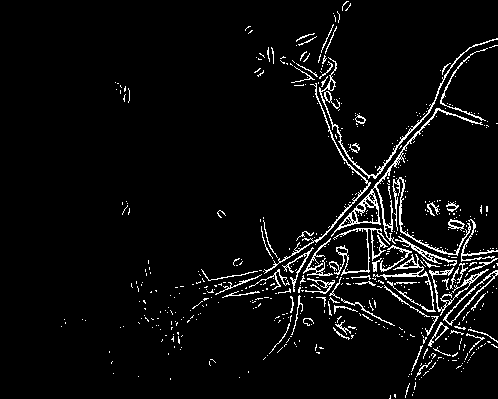
Figure 2 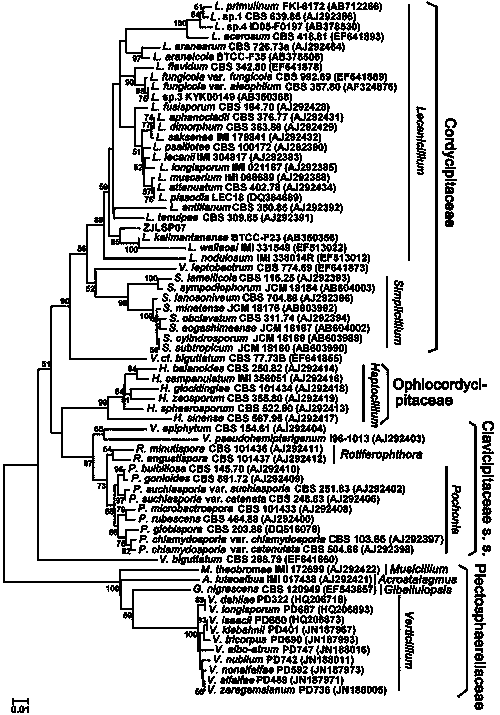
Figure 3
Abstract
Description
technical field
[0001] The invention belongs to the technical field of microbes, and in particular relates to a Lecanococcus sp. ( Lecanicillium ) new species of fungi. Background technique
[0002] Citrus Huanglongbing (HLB) is currently the most difficult and threatening destructive disease in citrus production. It is widely distributed in many countries and regions such as Asia, Africa and America. The rampant occurrence and spread of the disease has brought huge economic losses to people and has become a major obstacle to the stable development of the citrus industry. Although it has been more than 100 years since the disease was discovered, there is still a lack of effective control agents and ideal disease-resistant varieties. Popularity. The causative agent of the disease is Phloembacterium ( Candidatus Liberibacter) bacteria, mainly through citrus psyllids ( Diaphorina citri ) spread out. Citrus psyllid is not only the only natural insect vector to spread Hu...
Examples
Embodiment 1
[0033] Example 1: Isolation and Screening of Entomopathogenic Bacteria
[0034] 1. Isolation and purification of pathogens: Collect citrus psyllid carcasses from the citrus orchard in Huangyan District, Taizhou City, Zhejiang Province, and perform the following operations in the ultra-clean workbench of the laboratory: first soak the carcasses in 70% ethanol for 30 s, and then After soaking in 0.1% mercuric chloride for 3 minutes, rinse with sterile water for 3 times. Use sterile filter paper to dry the water on the worm body, and then put it on the potato dextrose agar (PDA) medium (preparation method: weigh 200 g potatoes, wash, peel and chop them, add 1000 mL of water and boil for half an hour , filter with gauze, add 20 g of glucose and 20 g of agar, fully dissolve, then filter with gauze while hot, and dispense into Erlenmeyer flasks or glass test tubes, sterilize under high pressure at 121°C for 20 min). Place the petri dish in a microbial incubator and incubate at a co...
Embodiment 2
[0038] Embodiment 2: Identification of bacterial strain ZJLSP07
[0039] 1. Morphological characteristics of the strain ZJLSP07: Inoculate the isolated and purified strain ZJLSP07 into the center of the PDA medium plate, place it in a constant temperature culture at 25°C, observe the growth of the colony every day and record the color and shape of the colony. Inoculate the strain ZJLSP07 into the center of another PDA medium plate, insert the sterilized cover glass (1 cm×1 cm) obliquely into the medium about 1 cm away from the inoculation point, and place it in a constant temperature culture at 25 °C After the hyphae climbed onto the cover glass at about 7 days, the cover glass was taken out and placed under an optical microscope to observe the hyphae and spore morphology of the strain ZJLSP07.
[0040] figure 1 It is the morphological characteristics of the strain ZJLSP07 cultured on PDA medium at 25 ℃ for 7 days. It can be seen that the colony of the strain ZJLSP07 is roun...
Embodiment 3
[0050] Embodiment 3: Biological characteristics of Lexococcus sp. ZJLSP07
[0051] 1. Effects of different temperatures on the growth of Lecanococcus spp. ZJLSP07: Use a sterile puncher to punch 5 mm-sized fungus cakes around the colonies of Lecanococcus spp. Place them in the center of several freshly prepared PDA plates (9 cm in diameter), and culture them upside down in microbial incubators at 5°C, 10°C, 15°C, 20°C, 25°C, 30°C, 35°C and 40°C, There were 3 replicates at each temperature. After culturing for 14 days, the growth of the colony was observed every 24 h and the diameter of the colony was recorded by the cross method.
[0052] The results are shown in Table 3. It can be seen that the fungus ZJLSP07 can grow on the PDA medium at a temperature of 10°C to 35°C, and the growth rate of mycelia at 25°C and 30°C is significantly higher than that at other temperatures, and at 10°C Lecanococcus ZJLSP07 grows very slowly, and colonies do not grow at low temperature of 5°C ...