

Au/TiO2 nanocrystalline catalysts and application thereof
A nano-catalyst and nano-crystal technology, applied in the field of nano-materials, can solve the problems of low conversion rate of propylene oxide, low rate of propylene oxide, environmental pollution, etc.
Patent Information
- Authority / Receiving Office
- CN · China
- Patent Type
- Applications(China)
- Current Assignee / Owner
- Publication Date
- 2014-10-29
Smart Images
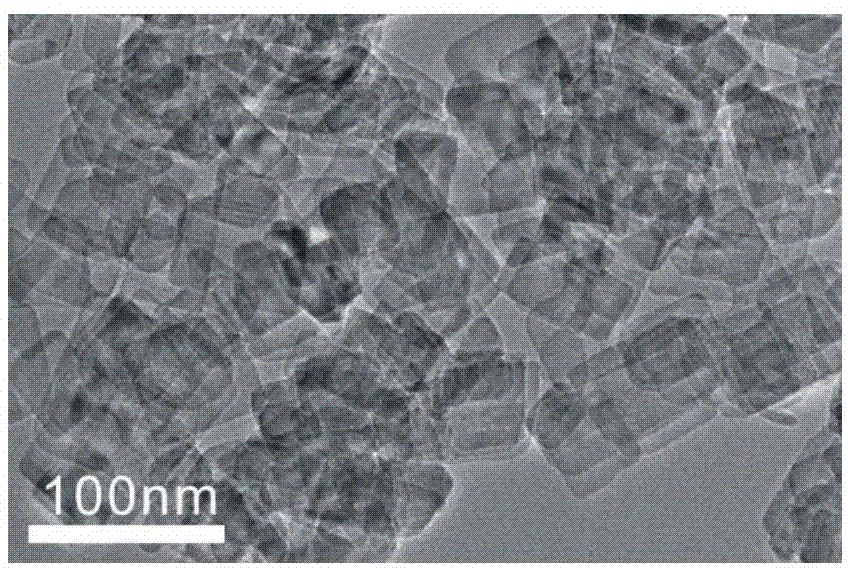
Figure 1 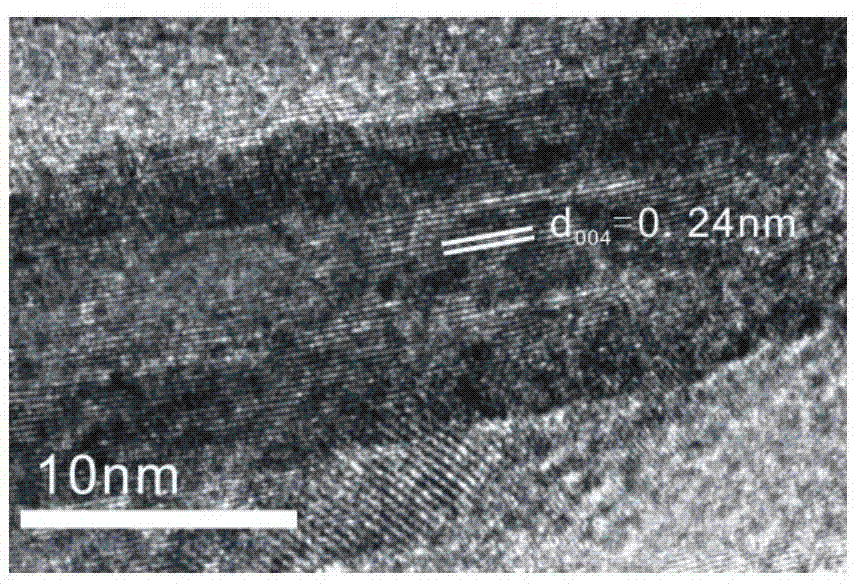
Figure 2 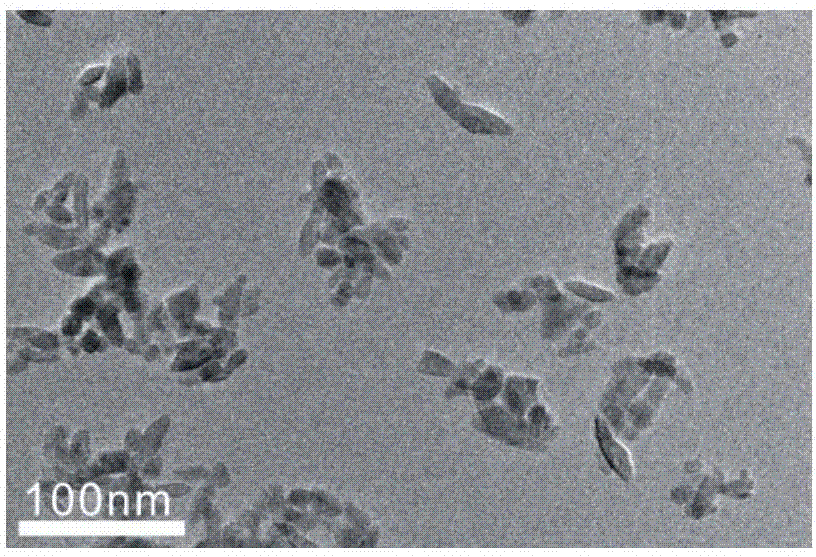
Figure 3
Abstract
Description
technical field
[0001] The invention belongs to the field of nanomaterials, in particular to an application of a nanomaterial in propylene epoxidation and a preparation method thereof, in particular to an Au / TiO with a morphology effect 2 Nanocrystalline catalyst, its preparation method, and its catalytic reaction in the preparation of propylene oxide by propylene epoxidation. Background technique
[0002] Gold is an environmentally friendly noble metal with high catalytic activity and comprehensive excellent properties such as high temperature resistance, oxidation resistance, and corrosion resistance. It has become the most important catalyst material and is currently widely used. The vast majority of heterogeneous reaction catalysts are supported by noble metals, such as Au / Al 2 o 3 , Au / TS-1, Au / CeO 2 Wait. Due to its high catalytic activity and selectivity, gold catalysts play an extremely important role in petroleum, chemical, energy and other fields.
[0003] In ...
Examples
Embodiment 1
[0029] The main exposed (001) surface of TiO 2 (001) Preparation of nanocrystals:
[0030] Take 25ml of tetra-n-butyl titanate and 3ml of hydrofluoric acid in 50ml of polytetrafluoroethylene inner village and stir at room temperature for half an hour, then put it into a stainless steel jacket, keep it at 180°C for 24h, and centrifuge the obtained product after the reaction , washed repeatedly with ethanol and ultrapure water to obtain white TiO 2 (001) solid powder, and dried at 80°C for 12 hours, and then washed with 700ml 0.1M NaOH to obtain TiO 2 (001) solid powder, and then repeatedly washed with ethanol and ultrapure water, and finally a clean white TiO 2 (001) Solid powder.
[0031] Preparation of TiO as above 2 The method of (001) nanocrystals refers to the method provided by Xie Zhaoxiong et al. Materials such as tetra-n-butyl titanate, hydrofluoric acid, absolute ethanol and ultrapure water used in the preparation process are all purchased from the market.
Embodiment 2
[0033] The main exposed (100) facet of TiO 2 (100) Preparation of nanocrystals:
[0034] First synthesize Ti(OH) 4 , first prepare 0.43mol / L HCl solution, 5.5% and 4% ammonia solution by mass fraction, then take 20ml HCl solution in ice-water bath, then add 6.6ml TiCl dropwise 4 , to obtain clarified TiCl 4 solution. These clarified TiCl 4 The solution was added dropwise to 50ml of 5.5% ammonia solution to produce a white precipitate, and the pH of the reactant was adjusted to 6-7 with 4% ammonia solution. Then it was stirred for 2 h, and the resulting white precipitate was washed with ultrapure water until the AgNO 3 Solution detection No Cl in filtrate -1 . Then vacuum dry at 60°C for 12 hours to obtain white Ti(OH) 4 .
[0035] Using Ti(OH) 4 as a precursor to synthesize TiO 2 (100), 0.5g (NH 4 ) 2 SO 4 Dissolve in 15ml ultrapure water and 15ml isopropanol mixture, add 2g Ti(OH) 4 , and put it into a 50ml polytetrafluoroethylene inner village and stir at room...
Embodiment 3
[0038] Au / TiO loaded with Au mass fraction of 1% 2 (001) Preparation of nanocrystalline catalyst, and its activity in the reaction of propene epoxidation to propylene oxide:
[0039] With the TiO that 1g embodiment 1 makes 2 (001) nanocrystals are placed in a three-necked flask, then add 50ml of deionized water, and add Au and TiO 2 A gold precursor solution with a mass ratio of 1%, adjust the pH of the solution to 7-10, and stir at 60° C. for 1 h. Then the obtained product was filtered and washed until the filtrate was washed with AgNO 3 Solution until no precipitate can be detected. Finally, dry at 60°C for 12h in vacuum, and bake at 400°C for 2h in an air atmosphere.
[0040] The relevant catalytic performance test is done to the product obtained in the present embodiment below:
[0041] The propylene epoxidation reaction is carried out in a quartz reaction tube. 250mg of catalyst is added to the quartz reaction tube with quartz wool. The gas used is a mixture of propy...