
Desloratadine nitric oxide donor, and preparation method and application thereof
A compound and pharmaceutical technology, applied in the field of medicine, can solve problems such as damage, mutagenesis, and side effects
Patent Information
- Authority / Receiving Office
- CN · China
- Patent Type
- Applications(China)
- Current Assignee / Owner
- Publication Date
- 2015-01-21
- Estimated Expiration
- Not applicable · inactive patent
Smart Images
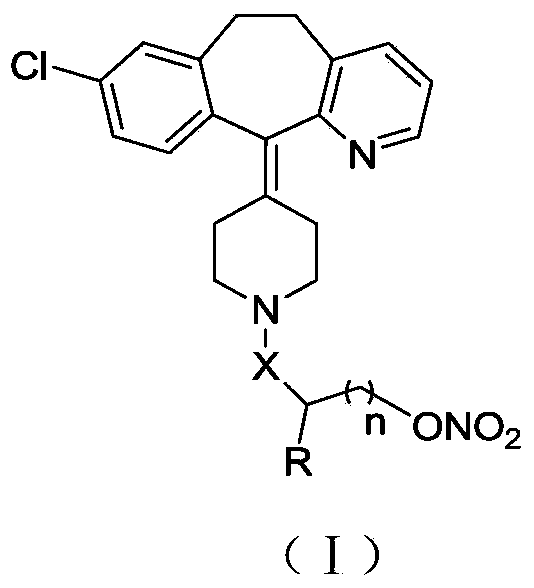
Figure 1 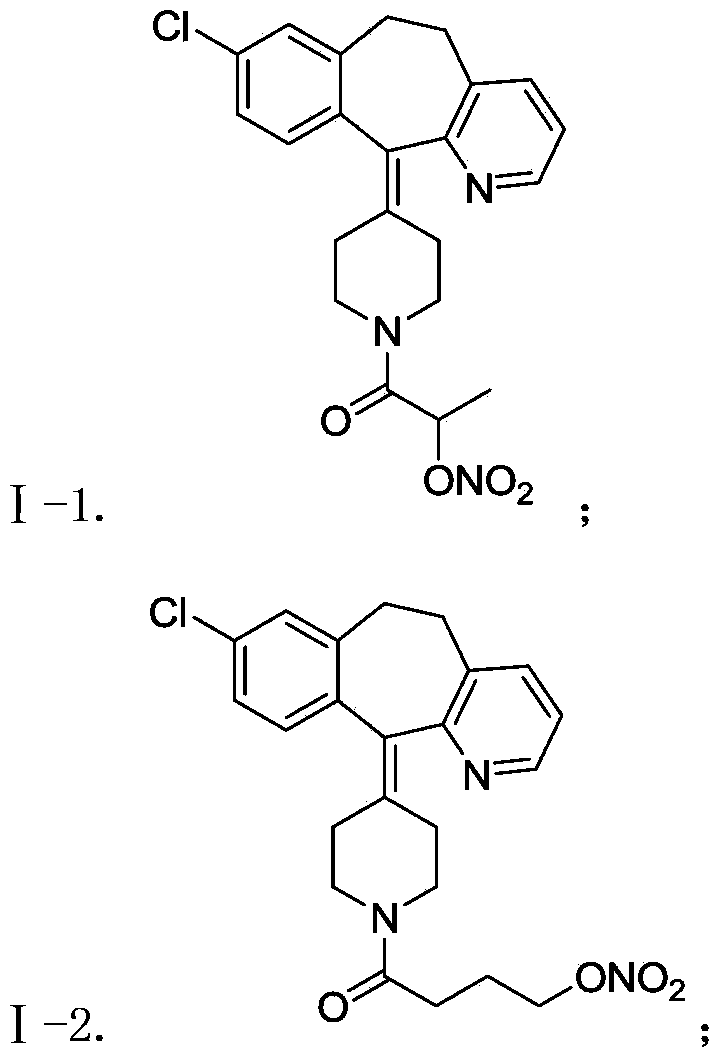
Figure 2 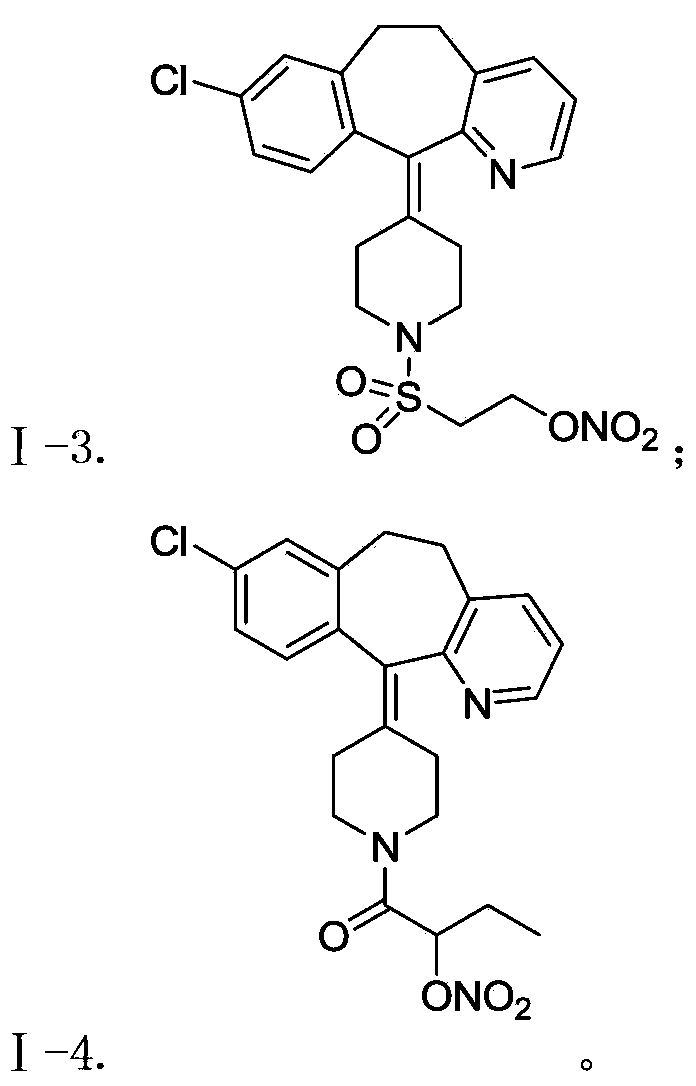
Figure 3
Abstract
Description
technical field
[0001] The invention belongs to the technical field of medicine, more specifically, relates to a class of compounds with anti-tumor effect and their preparation method and application. Background technique
[0002] Cancer has become a major chronic disease that seriously endangers human health. According to statistics, there are 9 million people who suffer from cancer every year in the world, and 6 million patients die from cancer. Almost one cancer patient dies every second. The annual incidence of cancer in my country is about 1.2 million, the number of cancer deaths is as high as more than 900,000, and the number of patients waiting for treatment exceeds 1.5 million, and there is an increasing trend year by year. Therefore, cancer has become the second largest killer after cardiovascular disease. Clinically, tumors are treated in three major ways: surgery, radiotherapy, and chemotherapy. Although the chemotherapy method is quicker, the cure rate is very...
Examples
Embodiment 1
[0037] Preparation of intermediate Ⅲ-1
[0038]
[0039] Add desloratadine (II, 10g, 32mmol) into the reaction flask equipped with stirring, thermometer and condenser, add toluene (50mL) and stir to make it dissolve, add sodium bicarbonate (5.4g, 64mmol), and keep at 20°C Stir under low pressure, add 2-chloropropionyl chloride (Ⅲ-1, 4.8g, 38mmol) dropwise, keep the temperature and stir for 2h, TLC detection shows that the reaction is complete (developing agent ethyl acetate:petroleum ether=1:3).
[0040] Filter the reaction solution to remove solid insoluble matter, pour the filtrate into 100ml of cold water, shake and separate the layers, separate the organic layer, and wash with water three times in succession. The organic layer was dried over anhydrous sodium sulfate and left overnight. After filtration, the solvent was evaporated to dryness under reduced pressure to obtain a light yellow solid. The resulting product was purified by silica gel column chromatography to ...
Embodiment 2
[0042]
[0043] Add desloratadine (II, 10g, 32mmol) into a reaction flask equipped with stirring, thermometer and condenser, add acetone (50mL) and stir to make it dissolve, add sodium hydroxide (2.6g, 64mmol), 0°C Stir under low pressure, add dropwise 4-chlorobutyryl chloride (Ⅲ-2, 5.1g, 36mmol), keep the temperature and stir for 2h, TLC detection shows that the reaction is complete (developing agent ethyl acetate:petroleum ether=1:3).
[0044] The reaction solution was filtered to remove solid insolubles, and the filtrate was poured into 200ml of cold water, stirred, and solids were precipitated. Filter, wash the filter cake with water, and dry to obtain a crude yellow solid. The crude product was recrystallized from ethanol to obtain 9.7 g of white solid. The purity is 96.9% (HPLC normalization method), and the yield is 72.7%. ESI-MS (m / z): 415.1.
Embodiment 3
[0046]
[0047] Add desloratadine (II, 10g, 32mmol) into the reaction flask equipped with stirring, thermometer and condenser, add pyridine (50mL), stir to dissolve, stir at 0°C, add 2-chloroethyl Sulfonyl chloride (Ⅲ-3, 5.9g, 36mmol), keep the temperature and stir for 3h, TLC detection shows that the reaction is complete (developer ethyl acetate:petroleum ether=1:3).
[0048] The reaction solution was poured into 200ml of cold water, stirred, and solids were precipitated. After filtering, the filter cake was washed with water and dried to obtain a brownish yellow solid crude product. The crude product was recrystallized from ethanol to obtain 8.9 g of off-white solid. The purity is 98.2% (HPLC normalization method), and the yield is 63.8%. ESI-MS (m / z): 437.1.