
Carbon aerogel material for reducing and treating Cr (VI) in waste water and preparation method thereof
A carbon aerogel and wastewater treatment technology, which is applied in the fields of energy wastewater treatment, chemical instruments and methods, special compound water treatment, etc., can solve the problems of low catalyst reuse efficiency, catalyst loss, etc. Accelerated conversion rate, good elasticity
Patent Information
- Authority / Receiving Office
- CN · China
- Patent Type
- Applications(China)
- Current Assignee / Owner
- Publication Date
- 2017-04-26
- Estimated Expiration
- Not applicable · inactive patent
Smart Images
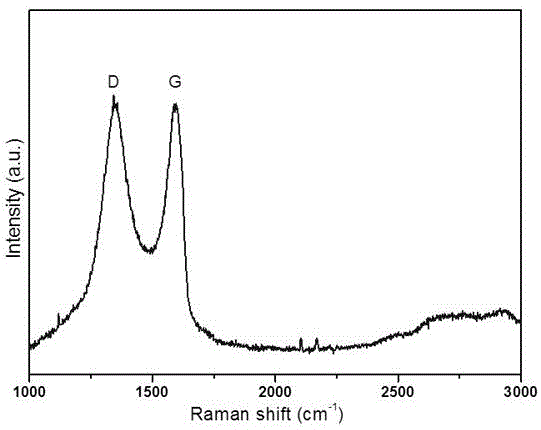
Figure 1 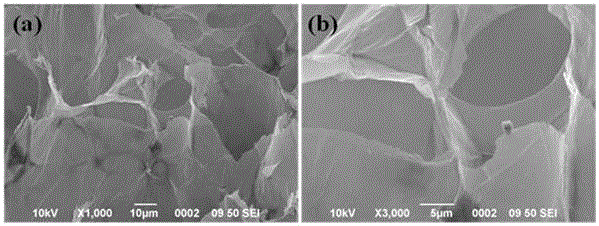
Figure 2
Abstract
Description
technical field
[0001] The invention belongs to the technical field of synthesis of photocatalytic materials, and in particular relates to a carbon airgel material used for reducing and treating Cr(VI) in wastewater and a preparation method thereof. Background technique
[0002] Chromium is a hard metal with silver-white metallic luster, good ductility, high melting point and corrosion resistance. It is often used as decorative coating and anti-corrosion and wear-resistant materials. Therefore, chromium and its compounds are widely used in industry, and chromium-containing wastewater mainly comes from industries such as metallurgy, electroplating, tanning, chromium salt and chromium compound production. Among the types of heavy metal pollution, chromium pollution ranks second, second only to lead. All chromium compounds are toxic, among which Cr(VI) is the most toxic. Cr(VI) is an ingestion poison / inhalation poison, skin contact may cause sensitivity; it is more likely to ...
Examples
Embodiment 1
[0015] First, graphene oxide was prepared from graphite powder by the improved Hummers’ method (S. Y. Dong, J. Y. Sun, Y. K. Li, C. F. Yu, Y. H. Li, J. H. Sun, ZnSnO 3 hollow nanospheres / reduced graphene oxide nanocomposites as high-performance photocatalysts fordegradation of metronidazole, Appl. Catal. B Environ. 144 (2014) 386-393), and then the prepared graphene oxide was formulated into graphene oxide aqueous solutions with mass concentrations of 2mg / mL, 4mg / mL, 6mg / mL, 8mg / mL, and 10mg / mL to adjust the graphite oxide The pH value of the alkene aqueous solution is 10, and then placed in a microwave oven for reduction under the heating condition of 600W power, and freeze-dried after dialysis treatment to obtain a macroscopic monolithic carbon airgel material. After 8 hours of natural sunlight irradiation, the removal rates of Cr(VI) in chromium-containing wastewater were 80.5%, 92.65%, 99.89%, 99.5% and 99.62%, respectively.
Embodiment 2
[0017] Firstly, graphene oxide was prepared from graphite powder by the improved Hummers' method. In view of the catalyst recovery problem and reduction removal efficiency, this embodiment selects the graphene oxide aqueous solution with a mass concentration of 6 mg / mL as the optimal graphene oxide concentration, and adjusts the pH values of the graphene oxide aqueous solution to 2, 5, 8, 10 and 13, and then placed in a microwave oven for reduction under 600W power heating conditions, after dialysis treatment and then freeze-dried to obtain a macroscopic monolithic carbon airgel material. After 8 hours of natural sunlight irradiation, the removal rates of Cr(VI) in chromium-containing wastewater were 68.95%, 81.89%, 92.66%, 99.89% and 99.97%, respectively.
Embodiment 3
[0019] Firstly, graphene oxide was prepared from graphite powder by the improved Hummers' method. In view of the catalyst recovery problem and reduction removal efficiency, this embodiment selects the graphene oxide aqueous solution with a mass concentration of 6 mg / mL as the optimal graphene oxide concentration, adjusts the pH value of the graphene oxide aqueous solution to 10, and then places them in a microwave oven. Reduction under 400W, 600W and 800W power heating conditions, freeze-drying after dialysis treatment to obtain a macroscopic monolithic carbon airgel material. After being irradiated by natural sunlight for 8 hours, the removal rates of Cr(VI) in chromium-containing wastewater were 78.26%, 99.89% and 99.09%, respectively.
[0020] figure 1 It is the Raman spectrum of the macroscopic monolithic carbon airgel material prepared under optimal conditions. It can be seen from the figure that two typical characteristic peaks of graphene were detected in the sample, r...