
A kind of fluorinated perylene imide derivative and its application
A technology of fluorinated peryleneimide and substituted peryleneimide, which is applied in the field of fluorinated peryleneimide derivatives and its application in organic solar cells, and can solve the problem of long energy repayment time and inappropriate Preparation of flexible devices and other issues to achieve the effect of increasing charge mobility, reducing recombination energy, and large electron affinity
Patent Information
- Authority / Receiving Office
- CN · China
- Patent Type
- Patents(China)
- Current Assignee / Owner
- Publication Date
- 2019-07-23
Smart Images
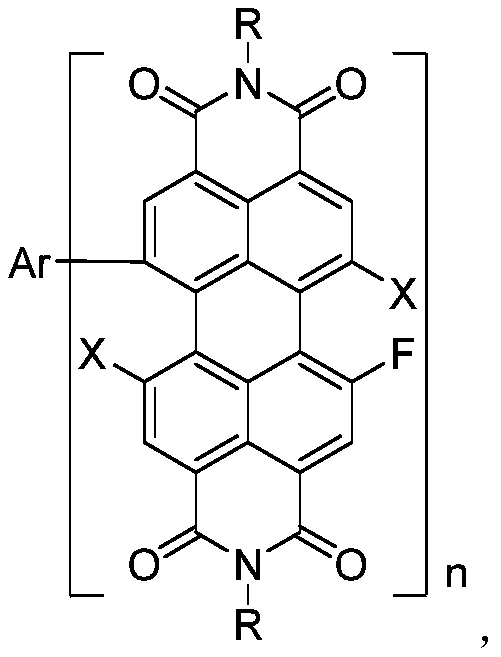
Figure 1 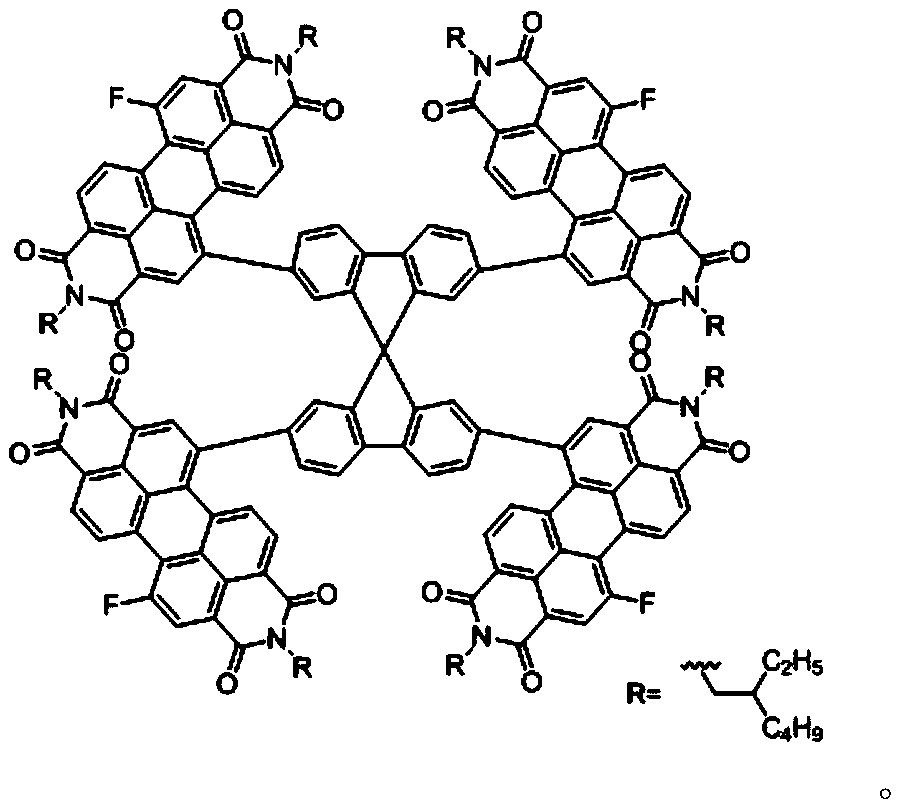
Figure 2 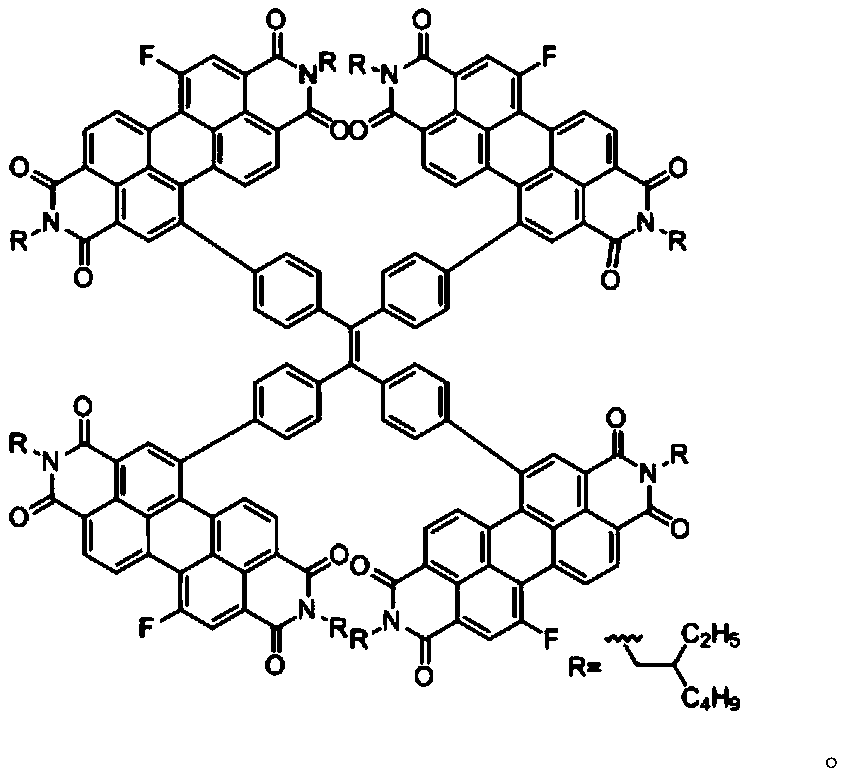
Figure 3
Abstract
Description
technical field
[0001] The invention relates to the technical field of organic semiconductors, in particular to a fluorinated perylene imide derivative and its application in organic solar cells. Background technique
[0002] The energy problem is an urgent problem to be solved in the world, and people have been trying to efficiently use clean and abundant solar energy resources. At present, solar cells based on inorganic materials such as monocrystalline silicon have been commercialized, but inorganic solar cells have disadvantages such as long energy repayment time and not suitable for the preparation of flexible devices. People are gradually turning their attention to organic solar cells. Organic solar cells have the advantages of light weight, low cost, and large-area devices. As a typical organic electron transport material, perylene imide and its derivatives have the advantages of large conjugated structure, high electron mobility, and good photochemical stability. C...
Examples
preparation example Construction
[0017] The preparation process of fluorinated perylene imide derivatives of the present invention is as follows:
[0018] (a) under protective atmosphere, join the compound with formula (I) structure and cesium fluoride in dioxane, then add octadecyl-crown ether-6 and reflux overnight reaction (the moles of corresponding three kinds of reaction raw materials Ratio 1:20-40:1-2), after washing, extracting, drying and column chromatography, the bisfluoroperyleneimide having the structure of formula (II) is obtained,
[0019]
[0020] (b) Under a protective atmosphere, add bisfluoroperyleneimide having the structure of formula (II) and lithium bromide (molar ratio 1:1) into 1-methyl-2-pyrrolidone, at 200-250°C After reacting for 4-8h, the reaction was quenched with water, the organic phase was combined after washing and extraction and spin-dried, and finally the compound with the structure of formula (III) was obtained after separation by column chromatography,
[0021]
[...
Embodiment 1
[0026] Under the protective atmosphere of argon, N,N'-diisooctyl-1,7-dibromo-perylene diimide (1g, 1.83mmol, 1eq) and cesium fluoride (8.34g, 54.93mmol, 30eq ) was added to 15ml of dioxane, then 18-crown-6 (968mg, 3.66mmol, 2eq) was added, and the reaction was refluxed overnight. After the product was washed with water, it was extracted three times with dichloromethane. After drying, the solvent was removed by rotary evaporation, and silica gel column chromatography was performed with dichloromethane as the eluent to obtain N,N'-diisooctyl-1,7-difluoro-perylenediimide.
[0027] Under an argon atmosphere, N,N'-diisooctyl-1,7-difluoro-perylene diimide (1g, 2.36mmol, 1eq) and lithium bromide (205mg, 2.36mmol, 1eq) were added to In 20ml of 1-methyl-2-pyrrolidone, react at 220°C for 5h, then quench the reaction with water, wash the reactant with water, then extract three times with chloroform, combine the organic phases and dry them with anhydrous sodium sulfate, and remove the sol...
Embodiment 2
[0031] Under the protective atmosphere of argon, tetraphenylethylene units (1g, 1.2mmol, 1eq) connected with four borate esters and N,N'-diisooctyl-1-bromo-7-fluoro-perylenediyl Imine (4.25g, 5.98mmol, 5eq) was added to tetrahydrofuran / water (20ml / 5ml) mixed solvent, and then Pd(PPh 3 ) 4 (53.4mg, 0.060mmol, 0.05eq) and potassium carbonate (1.65g, 12.0mmol, 10eq), reacted at 80°C for 2 days, washed the reactant with water after the reaction, extracted three times with dichloromethane, combined the organic phases, no After the organic phase was dried with sodium sulfate, the solvent was removed by rotary evaporation, and silica gel column chromatography was performed with dichloromethane as eluent to obtain the target compound 5b.
[0032]