
Polymer and preparation method thereof, organic polymer solar cell
A polymer and compound technology, applied in circuits, photovoltaic power generation, electrical components, etc., can solve problems such as low utilization rate, ineffective use of solar spectrum, and low hole mobility of conjugated polymers
Patent Information
- Authority / Receiving Office
- CN · China
- Patent Type
- Patents(China)
- Current Assignee / Owner
- Publication Date
- 2016-06-01
Smart Images
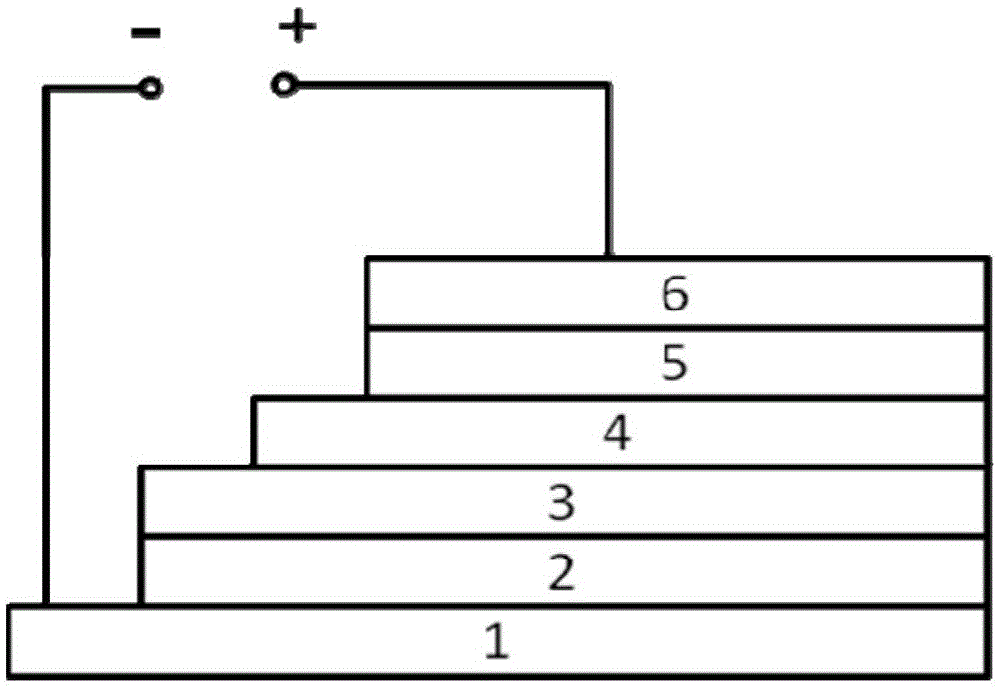
Figure 1 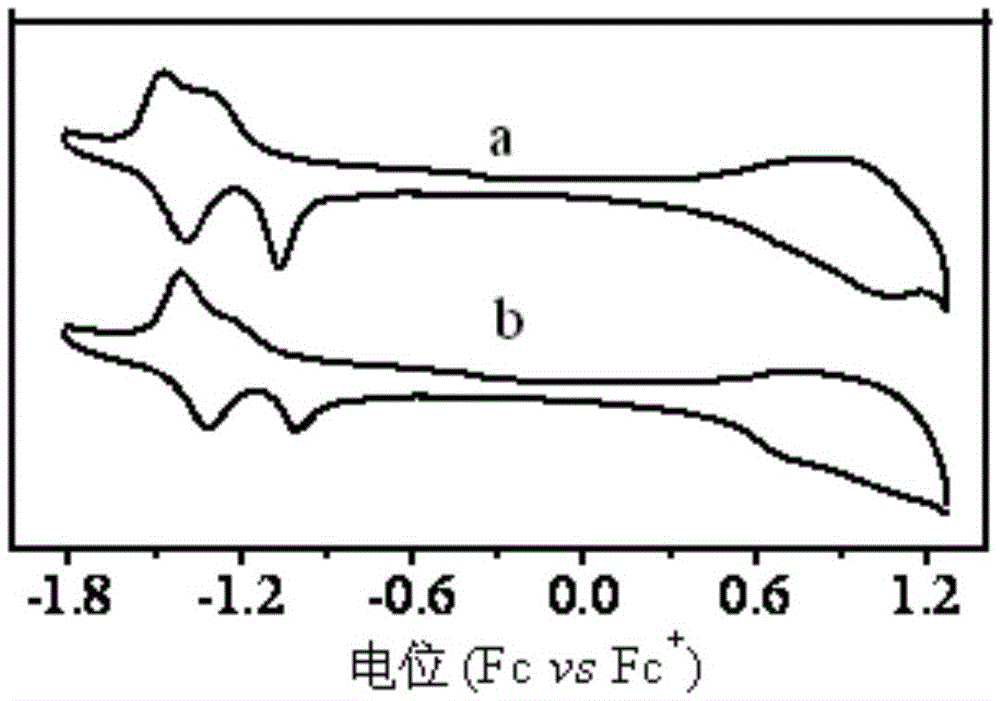
Figure 2 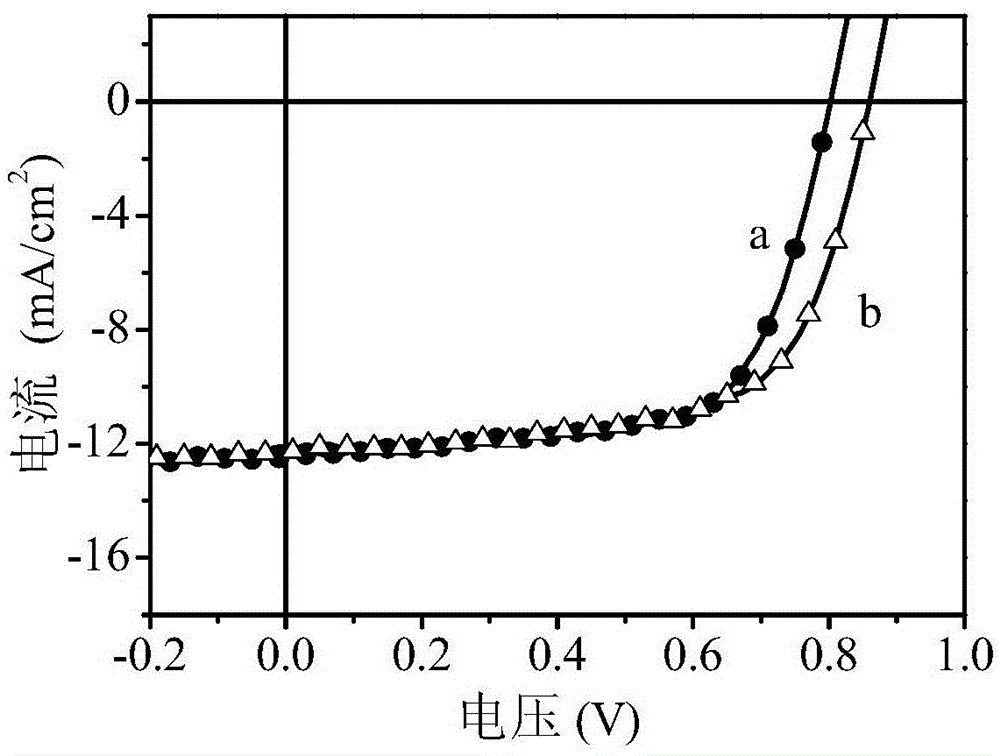
Figure 3
Abstract
Description
technical field
[0001] The invention belongs to the technical field of semiconductor materials, and in particular relates to a polymer, a preparation method thereof, and an organic polymer solar cell. Background technique
[0002] Compared with traditional silicon solar cells, organic polymer solar cells have attracted much attention due to their advantages of light weight, low cost, large-area processing and flexible devices.
[0003] Organic polymer solar cells are usually composed of positive and negative electrodes and a thin photoactive layer between them. The photoactive thin layer is generally a bulk heterojunction (BHJ) structure composed of a donor (D) and an acceptor (A). . The currently used acceptor materials mainly include CdSe, n-type polymer, C60 and its derivative PCBM, among which PCBM is the most used. The positive and negative electrodes of the BHJ type solar cell are indium tin oxide (ITO) and a metal with a lower functional function, respectively, and ...
Examples
preparation example Construction
[0036] The present invention also provides a preparation method of a polymer represented by formula (I), comprising the following steps: under the condition of inert gas protection, combining a compound having a structure of formula (III-1) with a compound having a structure of formula (IV) The compound is mixed under the action of a catalyst and an auxiliary ligand, and reacted to obtain a polymer represented by formula (I);
[0037]
[0038] Among them, R 1 is an alkyl group; R 2 Is an alkyl group; X is H or a fluorine atom; n is the degree of polymerization.
[0039] In the present invention, the R 1 , R 2 , X and n are the same as above, and will not be repeated here.
[0040] The present invention has no special limitation on the sources of all raw materials, which can be commercially available or self-made.
[0041] The compound with the structure of formula (IV) is preferably prepared according to the following method: S1) The compound with the structure of form...
Embodiment 1
[0062] 1.1 Under argon atmosphere, add 16.39mmol 6-bromoindol-2-one and 16.39mmol 6-bromo-7-fluoroisatin into a 250ml three-necked flask, add 200ml glacial acetic acid and 1.2ml concentrated hydrochloric acid, and heat to 130°C for reaction After 24 hours, cool to room temperature, filter, and wash with water, ethanol, and ether in sequence. The dried red solid is 6,6′-dibromo-7-fluoroisoindigo, and the yield is 70%.
[0063] 1.2 Dissolve 2.28 mmol of 6,6′-dibromo-7-fluoroisoindigo and 9.13 mmol of potassium hydroxide in 40 ml of DMF, and add 9.13 mmol of 1-iodo-2- Octyldodecane and 40ml THF were slowly dropped into the reaction solution, and after reacting at room temperature for 24 hours, poured into water, extracted with chloroform, dried the organic layer with anhydrous magnesium sulfate, removed the solvent, and mixed with petroleum at a volume ratio of 8:1 After rinsing with ether and dichloromethane as the eluent, the red solid is N,N'-bis(2-octyldodecyl)-6,6'-dibromo-7...
Embodiment 2
[0073] 2.1 Under argon atmosphere, add 16.39mmol 6-bromoindol-2-one and 16.39mmol 6-bromo-7-fluoroisatin into a 250ml three-necked flask, add 200ml glacial acetic acid and 1.2ml concentrated hydrochloric acid, and heat to 130°C for reaction After 24 hours, cool to room temperature, filter, and wash with water, ethanol, and ether in sequence. The dried red solid is 6,6′-dibromo-7-fluoroisoindigo, and the yield is 70%.
[0074] 2.2 Dissolve 2.28 mmol of 6,6′-dibromo-7-fluoroisoindigo and 9.13 mmol of potassium hydroxide in 40 ml of DMF, and add 9.13 mmol of 1-iodo-2- Butyl octane and 40mlTHF were slowly dripped into the reaction solution, and after 24 hours of reaction at room temperature, poured into water, extracted with chloroform, dried the organic layer over anhydrous magnesium sulfate, and removed the solvent, and mixed petroleum ether with a volume ratio of 8:1 After rinsing with dichloromethane as eluent, the red solid is N,N'-bis(2-butyloctyl)-6,6'-dibromo-7-fluoroisoin...