
Electroless Copper Plating Solution And Electroless Copper Plating Method For Increasing Flatness Of Copper Coating
A technology of electroless copper plating and copper plating, applied in coating, liquid chemical plating, metal material coating process, etc., can solve problems such as inability to know, and achieve the effect of high flatness
Patent Information
- Authority / Receiving Office
- CN · China
- Current Assignee / Owner
- Publication Date
- 2017-08-11
- Estimated Expiration
- Not applicable · inactive patent
Smart Images
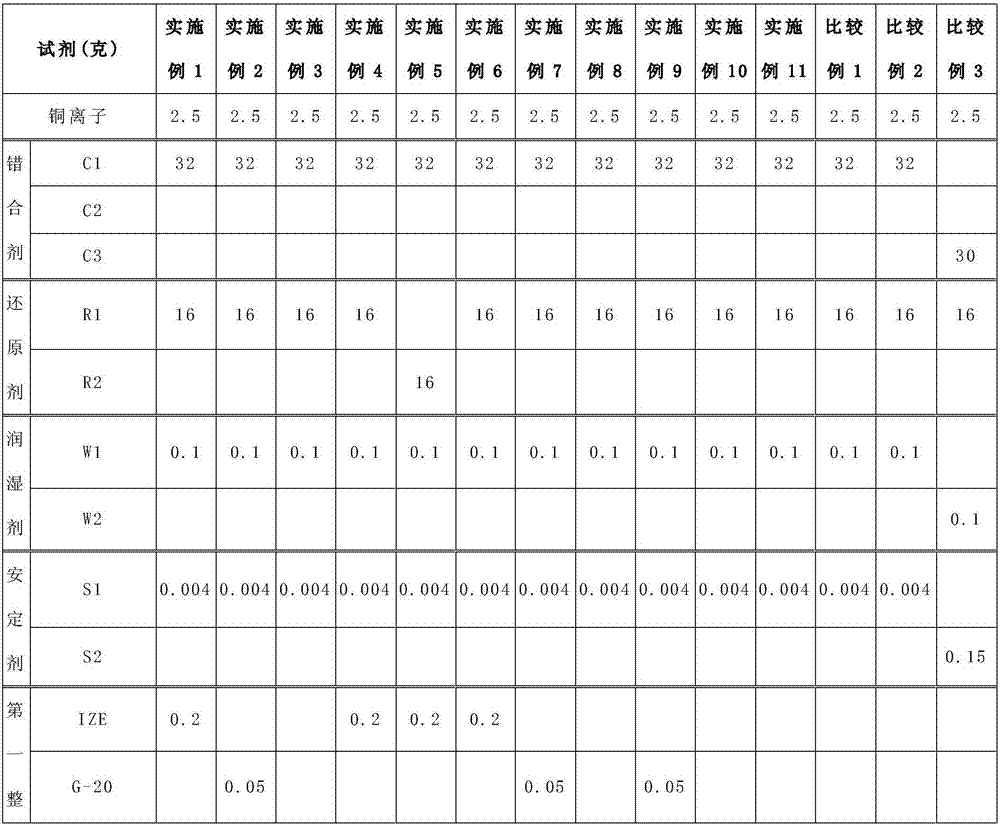
Figure 1 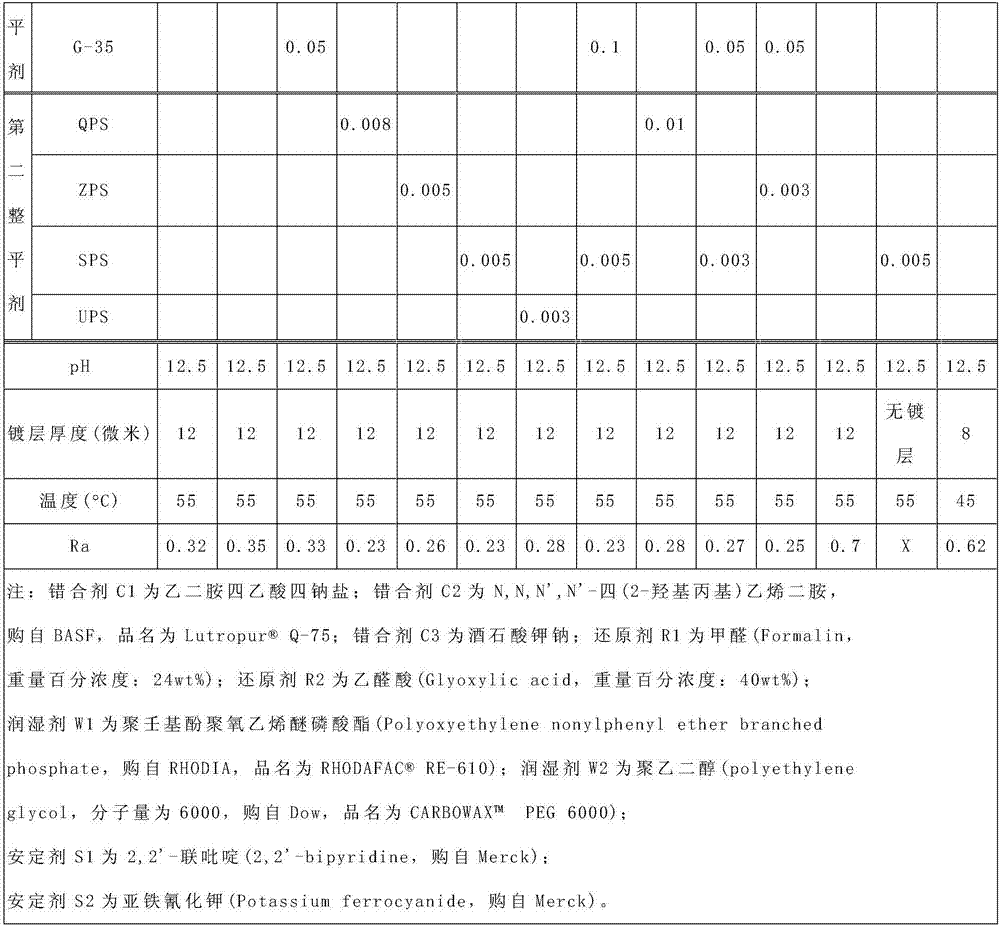
Figure 2 
Figure 3
Abstract
Description
technical field
[0001] The invention relates to a copper plating solution and a copper plating method, in particular to an electroless copper plating solution and an electroless copper plating method. Background technique
[0002] Electroless plating, also known as chemical plating or auto-catalytic plating, is to form a layer with a thickness of about 0.2 to The continuous metal layer of 2 microns enables the surface of non-conductor objects to be conducted to facilitate subsequent electroplating operations. This copper plating method has the advantages of uniform plating, low plating porosity, simple operation, and can be plated on non-conductors... etc. It is often carried out on plastics, or used for perforated plating of printed circuit boards (PCBs), and MIDs. (Molded InterconnectDevice) process.
[0003] The so-called MID process is to engrave 3D three-dimensional circuits on non-conductive substrates through laser engraving technology, and then directly plate over ...
Examples
Embodiment 1
[0027] Plating solution preparation
[0028] Take 5.29g of copper chloride (ie: containing 2.5g of copper ions) into a 1L beaker, and add 0.5L of water, after dissolving, add ethylenediaminetetraacetic acid tetrasodium salt (EDTA-4Na) as a complexing agent , stirred until dissolved, and added sodium hydroxide (NaOH) to adjust the pH value to above 12.5, then heated to 55 ° C, then added 0.1 g of polynonylphenol polyoxyethylene ether phosphate (purchased from RHODIA, product name RE-610) as a wetting agent, and 0.004g of 2,2'-bipyridine (purchased from Merck) as a stabilizer, then, add 0.2g (ie: 200ppm) of imidazole / epichlorohydrin copolymer ( purchased from BASF under the name IZE, hereinafter referred to as IZE) as the first leveling agent, after it is dissolved, then add 16g of formaldehyde (Formalin) with a weight percent concentration of 24wt% as a reducing agent, and add water to the plating solution to make the overall volume 1L , and finally put the copper foil fo...
Embodiment 2 to 3
[0038] Referring to Table 1, this series of examples is roughly the same as Example 1, the main difference is that the first leveling agent used in the preparation of the plating solution is polyethyleneimine, with molecular weights of 1400 and 200, respectively. Polyethyleneimine with a molecular weight of 1400 is available from BASF under the name G 20 (hereinafter referred to as G-20), polyethyleneimine with a molecular weight of 200 is also purchased from BASF, the product name is G 35 (hereinafter referred to as G-35). The addition amount of said embodiment is all 0.05g (ie: 50ppm). The measured surface roughness Ra values are 0.35 and 0.33 respectively.
Embodiment 4
[0043] Referring to Table 1, this embodiment is substantially the same as Example 1, and the main difference is that when the plating solution is prepared, after adding the first leveler IZE, add 0.008g (i.e.: 8ppm) of quinaldine propanesulfonate benzyl (purchased from HOPAX, the product name is QPS) as the second leveler, and then continue to add reducing agent, replenish water to 1L and test plating operation. The plated copper produced by this plating solution has a surface roughness Ra value of 0.23 after testing.