
A small molecule fluorescent probe for detecting hypochlorous acid and its preparation method and application
A technology for detecting hypochlorous acid and fluorescent probes, applied in fluorescence/phosphorescence, chemical instruments and methods, luminescent materials, etc., can solve the problems of poor selectivity and sensitivity, and achieve the effect of rapid reaction and good selectivity
Patent Information
- Authority / Receiving Office
- CN · China
- Patent Type
- Patents(China)
- Current Assignee / Owner
- Publication Date
- 2022-02-22
Smart Images
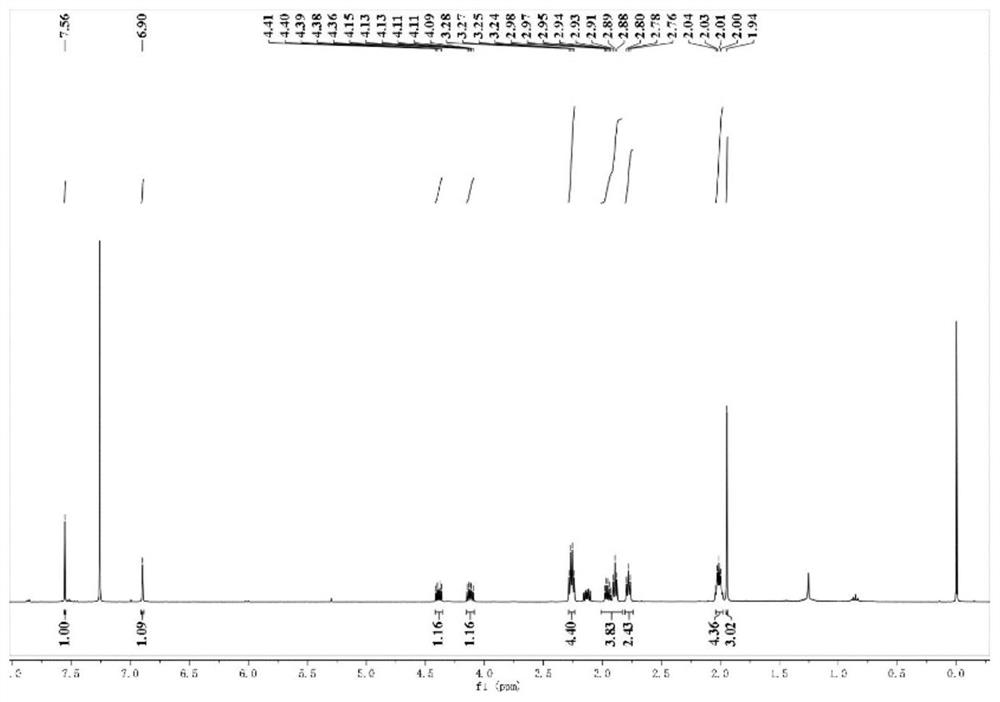
Figure 1 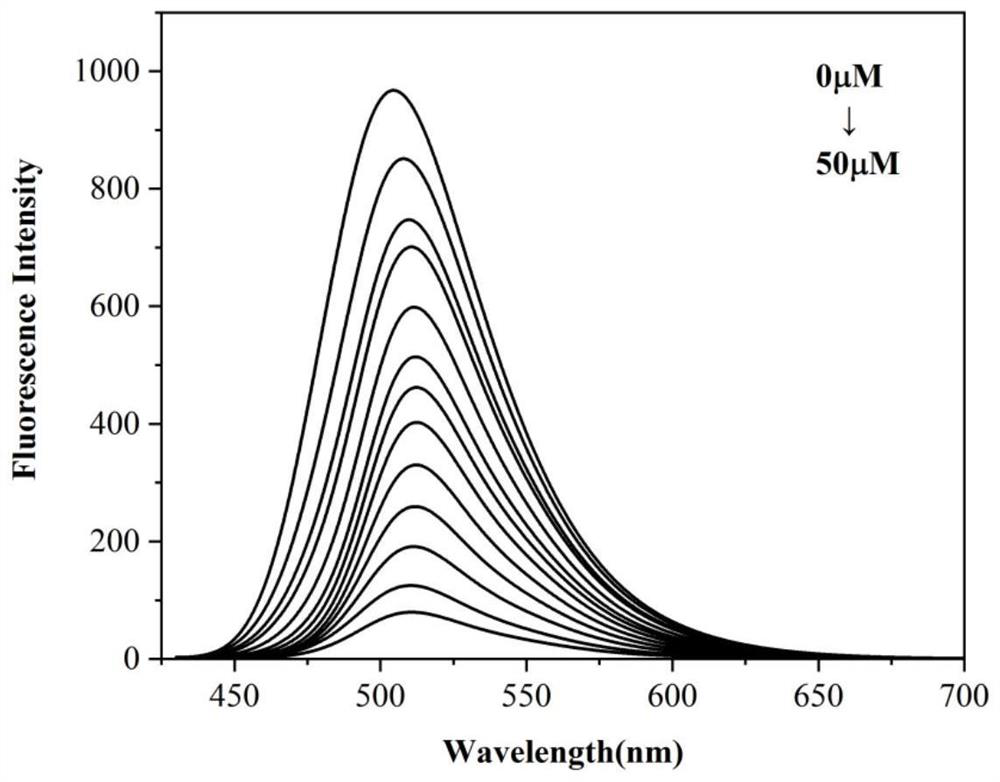
Figure 2 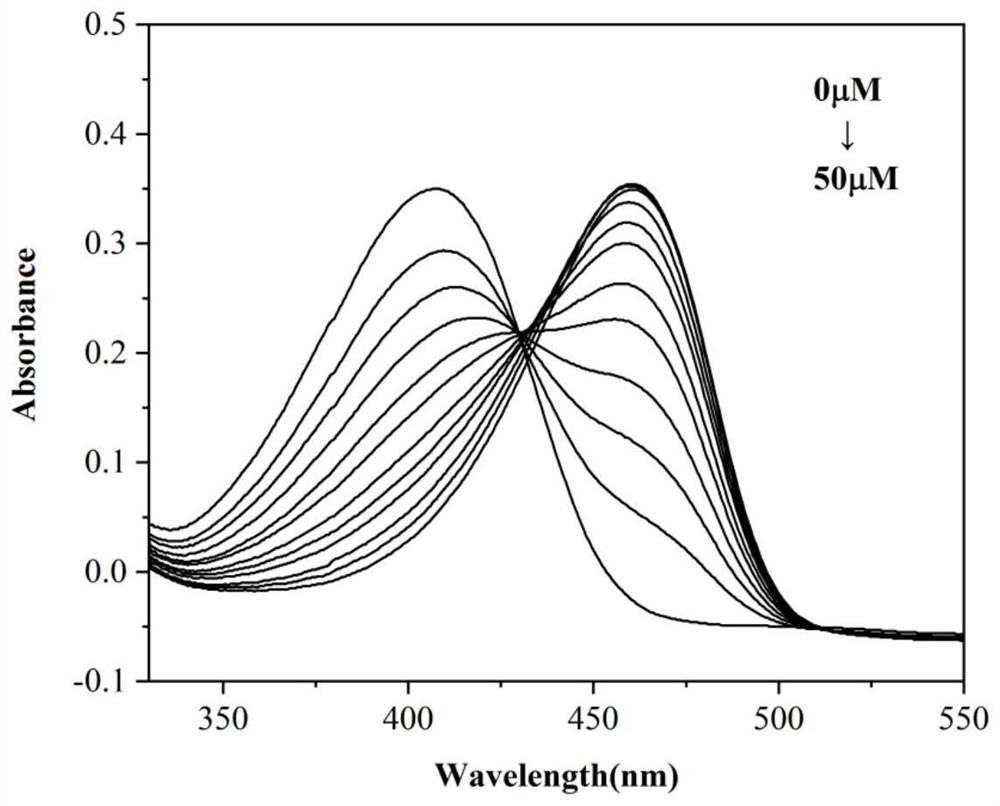
Figure 3
Abstract
Description
technical field
[0001] The invention relates to the technical field of biological detection, in particular to a small molecule fluorescent probe for detecting hypochlorous acid and its preparation method and application. Background technique
[0002] Hypochlorous acid (HOCl) is an essential reactive oxygen species (ROS) in organisms, and is closely related to various pathological and physiological processes in the organism, and has an important impact on organisms. Hypochlorous acid is mainly composed of macrophages, neutrophils and other inflammatory cells in the body, through hydrogen peroxide (H 2 o 2 ) and chloride ions (Cl _ ) is produced by the reaction catalyzed by myeloperoxidase (MPO). Hypochlorous acid is used inside cells to kill bacteria and is an effective tool against pathogens that invade the immune system. However, high concentrations of hypochlorous acid can cause oxidative stress leading to many diseases, including inflammation, cancer, cardiovascular d...
Examples
Embodiment 1
[0035] Embodiment 1: the synthesis of fluorescent probe molecule of the present invention:
[0036] The synthesis of the coumarin derivative shown in formula (III):
[0037] 8-hydroxyl-ninelonidine-9-formaldehyde (0.6518g, 3mmol), ethyl acetate (0.7748g, 3mmol) and piperidine (0.5ml, 3mmol) shown in formula (II) were dissolved in 24mL of anhydrous in ethanol. The mixture was heated and refluxed for 6 hours, then cooled to room temperature. The suspension was then collected by filtration and washed with cold absolute ethanol. Finally, the product was dried under vacuum to obtain orange crystals, and the coumarin derivative represented by formula (III) (0.6715 g, 79%) was obtained.
[0038] 1H NMR (400MHz, CDCl3-d1) δ (ppm): 8.31 (s, 1H), 6.94 (s, 1H), 3.33–3.30 (t, 4H), 2.86–2.84 (t, 2H) ),2.76–2.74(t,2H),2.64(s,3H),1.97–1.93(m,4H).13C NMR(CDCl3-d1,125MHZ)δ(ppm):196.08,161.33,153.85,148.82,147.87 ,127.84,119.60,114.96,108.13,105.70,50.01,30.70,27.49,21.20,20.12.HRMS(ESI+):...
Embodiment 2
[0042] Embodiment 2: In the present invention, measure the fluorescence spectrogram of organic molecule fluorescent probe:
[0043]The concentration gradient of hypochlorous acid is controlled by PBS buffer solution, and hypochlorous acid with a concentration gradient of 0-50 μM is sequentially added to a 10ml colorimetric tube, and then 10 μM probe is added, the solution is shaken, and after equilibrating at 37°C for 10 minutes, the above The mixed working solution was added to a fluorescent dish to measure the fluorescence spectrum. Under 470nm excitation, the fluorescence intensity curve changes with hypochlorous acid as figure 2 shown.
[0044] Depend on figure 2 It can be seen that as the concentration of hypochlorous acid increases, the fluorescence intensity of the reaction system decreases rapidly; when the concentration of hypochlorous acid reaches 50 μM, the fluorescence of the reaction system is almost completely quenched. Therefore, the probe has good responsi...
Embodiment 3
[0045] Embodiment 3: The ultraviolet-visible spectrometry of organic molecular fluorescent probe of the present invention and HOCl interaction:
[0046] The instrument used for the determination of ultraviolet-visible absorption spectrum is Shimadzu UV-2600 ultraviolet-visible spectrophotometer.
[0047] Configure hypochlorous acid (0-50 μmol / L) with different concentration gradients, add 10 μM probe to it, shake the solution, and measure its absorption peak by ultraviolet-visible spectrophotometer. The measurement results are as follows: image 3 shown.
[0048] From image 3 It can be seen that with the increase of hypochlorous acid concentration (0-50 μmol / L), the absorption peak of the probe at 470 nm gradually decreases, the absorption peak at 410 nm gradually increases, and an isosbestic point is formed at 430 nm. This indicates that the addition of hypochlorous acid generates new compounds.