
Degradable copolyester based on triethylene glycol, preparation and application
A technology of triethylene glycol and copolyester, which is applied in the field of polymer synthesis and can solve problems such as city landscape and ecological environment damage, white pollution, etc.
Patent Information
- Authority / Receiving Office
- CN · China
- Patent Type
- Applications(China)
- Current Assignee / Owner
- Publication Date
- 2021-11-12
Smart Images
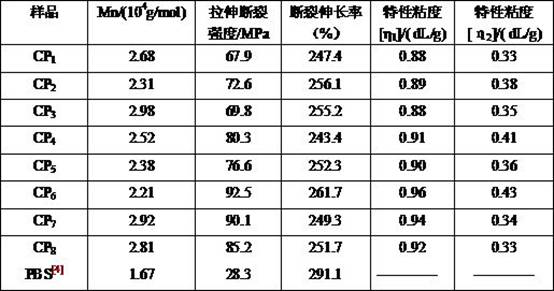
Figure 1 
Figure 2
Abstract
Description
technical field
[0001] The invention belongs to the field of polymer synthesis, and relates to a copolyester based on triethylene glycol, a preparation method and application. Using triethylene glycol, piperidine-1,4 dicarboxylic acid and 2,2-bicinchoninic acid as raw materials, a triethylene glycol-based copolyester was synthesized by melt polymerization, which can be used to prepare antibacterial plastic thin layers matrix. Background technique
[0002] Due to the advantages of low cost, easy processing, excellent mechanical properties and good chemical stability, polymer materials have developed rapidly since the 20th century, and their products are widely used in clothing, automobiles, tableware, electronic products and Daily necessities and other aspects play a very important role in human life. However, with the wide application of polymer materials in daily life, their products are easy to contact and breed many harmful microorganisms such as bacteria and viruses du...
Examples
Embodiment 1
[0035] Add 3.443g (10mmol) of 2,2-bicinchoninic acid, 2.442g (14mmol) of piperidine-1,4 dicarboxylic acid, 4.200g (28mmol) of triethylene glycol and 0.013g ( 0.042mmol) of antimony acetate. Nitrogen protection was introduced, and the reaction was stirred at 180°C for 3 h to obtain an esterified product. Continue to raise the temperature of the esterification product to 240°C, control the absolute pressure in the reaction system at about 80 Pa, and react for 4 hours to obtain the crude product of the polycondensation product. Add 30 mL of chloroform to the crude polyester, soak for 2 hours and then filter; take the clear liquid and add it dropwise to 50 ml of methanol to obtain a cloudy liquid, centrifuge and filter to obtain a solid, wash the obtained solid with ethanol, and filter again The solid was dried at 60°C for 2 h to obtain 8.268 g of copolyester CP 1 , and the yield was 87.38%.
[0036] Collect the copolyester CP of 100g 1 , mixed evenly with 1g chain extender ep...
Embodiment 2
[0040] Add 3.443g (10mmol) of 2,2-biscinchoninic acid, 2.791g (16mmol) of piperidine-1,4 dicarboxylic acid, 4.200g (28mmol) of triethylene glycol and 0.013g ( 0.042mmol) of antimony acetate. Nitrogen protection was introduced, and the reaction was stirred at 180°C for 3 h to obtain an esterified product. Continue to raise the temperature of the esterification product to 240°C, control the absolute pressure in the reaction system at about 80 Pa, and react for 4 hours to obtain the crude product of the polycondensation product. Add 30 mL of chloroform to the crude polyester, soak for 2 hours and then filter; take the clear liquid and add it dropwise to 50 ml of ethanol to obtain a cloudy liquid, centrifuge and filter to obtain a solid, wash the obtained solid with ethanol, and filter again The solid was dried at 60°C for 2 h to obtain 9.105 g of copolyester CP 2 , the yield is 90.05%.
[0041] Collect the copolyester CP of 100g 2 , mix uniformly with 1g chain extender epoxy ...
Embodiment 3
[0045] Add 3.787g (11mmol) of 2,2-bicinchoninic acid, 2.442g (14mmol) of piperidine-1,4 dicarboxylic acid, 4.200g (28mmol) of triethylene glycol and 0.013g ( 0.042mmol) of antimony acetate. Nitrogen protection was introduced, and the reaction was stirred at 180°C for 3 h to obtain an esterified product. Continue to raise the temperature of the esterification product to 240°C, control the absolute pressure in the reaction system at about 80 Pa, and react for 4 hours to obtain the crude product of the polycondensation product. Add 30 mL of chloroform to the crude polyester, soak for 2 hours and then filter; take the clear liquid and add it dropwise to 50 ml of isopropanol to obtain a cloudy liquid, centrifuge, filter to obtain a solid, wash the obtained solid with ethanol, and filter again The final solid was dried at 60°C for 2h to obtain 8.781g of copolyester CP 3 , and the yield was 88.17%.
[0046] Collect the copolyester CP of 100g 3 , mix uniformly with 1g chain extend...