A method of controlling power in a wcdma system

A wireless system, tolerance technology, applied in power management, transmission control/equalization, electrical components, etc., can solve problems such as power surge, instability, and scheduler unavailable time.

CN101536346AInactive Publication Date: 2009-09-16TELEFON AB LM ERICSSON (PUBL)
3 Cites 4 Cited by

Patent Information

Authority / Receiving Office
CN · China
Current Assignee / Owner
Publication Date
2009-09-16
Estimated Expiration
Not applicable · inactive patent

Smart Images

  • Figure 1
    Figure 1
  • Figure 2
    Figure 2
  • Figure 3
    Figure 3
Patent Text Reader

Abstract

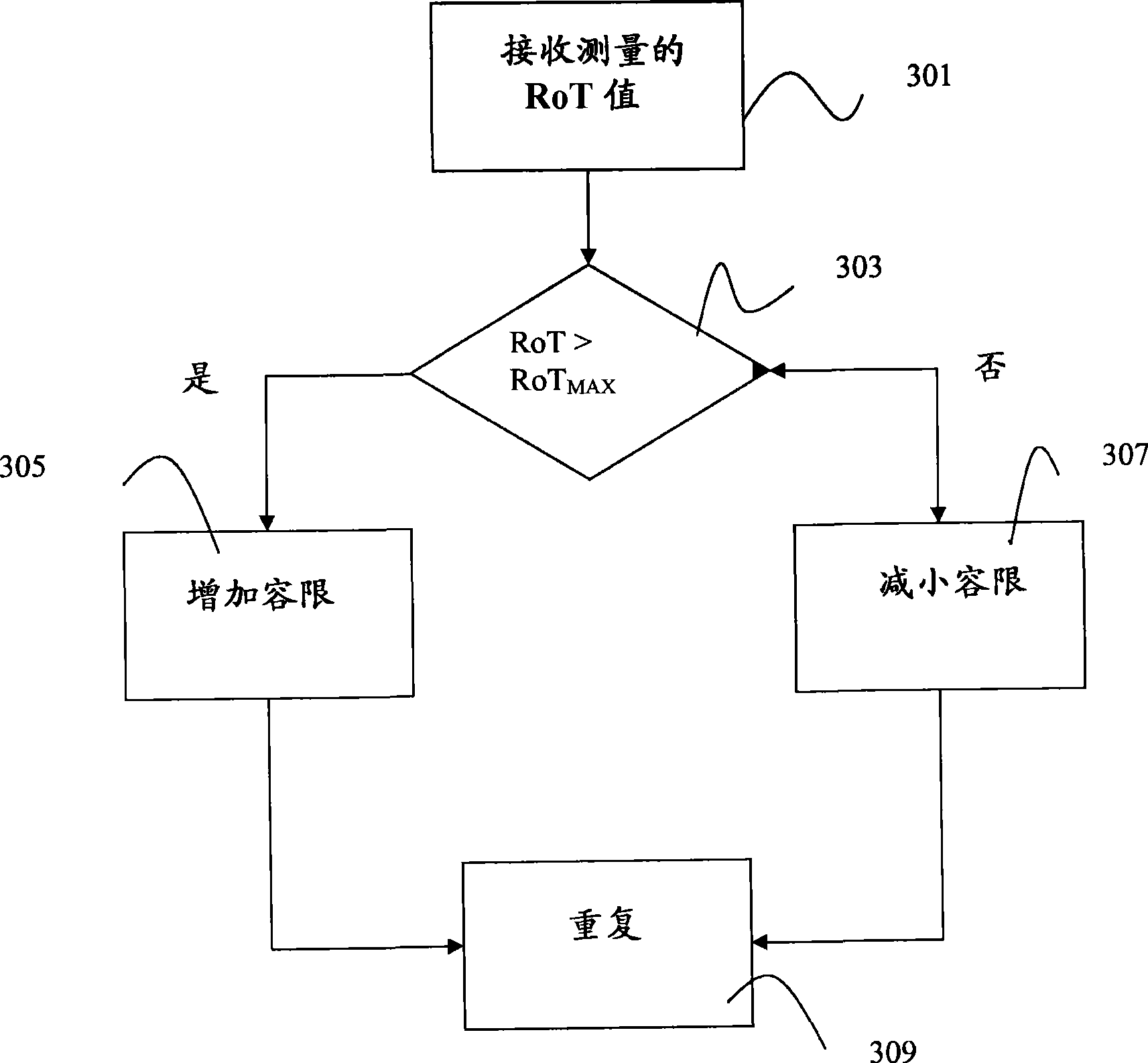
A method and a device relating to a scheduling mechanism in a base station in a WCDMA system are disclosed. The mechanism enables the base station to rapidly adapt to users momentary traffic demands and to interference variations, a dynamical adjustable margin is proposed in this invention. The adjustment is based on the RoT measurement in a cell. To fully use the resource in a cell, the RoT can be targeted to be as closer to the RoTmax as possible however without exceeding the limit. The scheduler is preferably set to schedule as high a rate or as many users as possible to fill up the available RoT. The margin which is reserved for the neighboring cell load and external interference is decreased step by step as long as the RoT measurement is below a threshold under RoTmax. Whenever the RoT measurement exceeds the threshold, the margin is increased by one step.
Need to check novelty before this filing date? Find Prior Art

Description

technical field

[0001] The present invention relates to methods and apparatus for controlling power in wireless network systems, especially WCDMA systems. Background technique

[0002] Wireless communication networks are currently in widespread use to allow mobile station users to communicate wirelessly with each other and with other network entities. In one type of network, multiple stations in a particular geographic area can simultaneously use the same frequency band to communicate with a hub or base station. This type of network is called a self-interfering network. Code Division Multiple Access (CDMA) networks and Wideband Code Division Multiple Access (WCDMA) are examples of self-interfering networks. Thus, the total signal function received by a base station in that frequency band may represent simultaneous transmissions from multiple stations in that area.

[0003] For optimal network performance, especially in self-interfering networks, the transmit power of the ...

Examples

Embodiment Construction

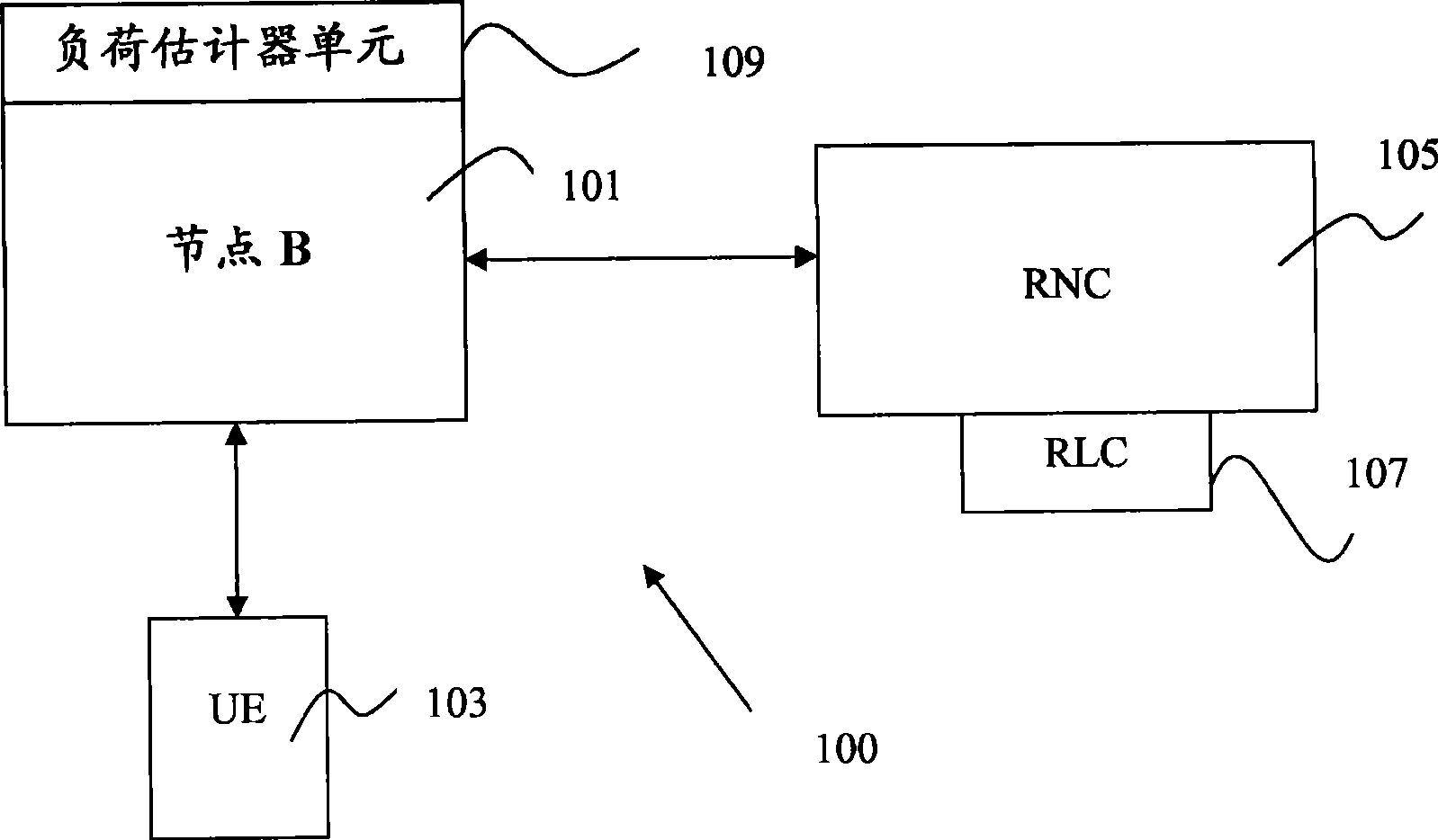
[0018] figure 1 A general diagram of WCDMA system 100 is shown in . System 100 includes a base station (Node B) 101 . The base station 101 serves a plurality of mobile terminals, generally referred to as user equipments (UEs) 103 , located in the area covered by the base station 101 . The base station 101 is in turn connected to a radio network controller node (RNC) 105 . RNC 105 also typically includes a Radio Link Controller node (RLC) 107 . RLC 107 is responsible for detecting errors, among other things. The system 100 also includes a load estimator and scheduler unit 109 co-located with the base station 101 or as an integral part of the base station 101 .

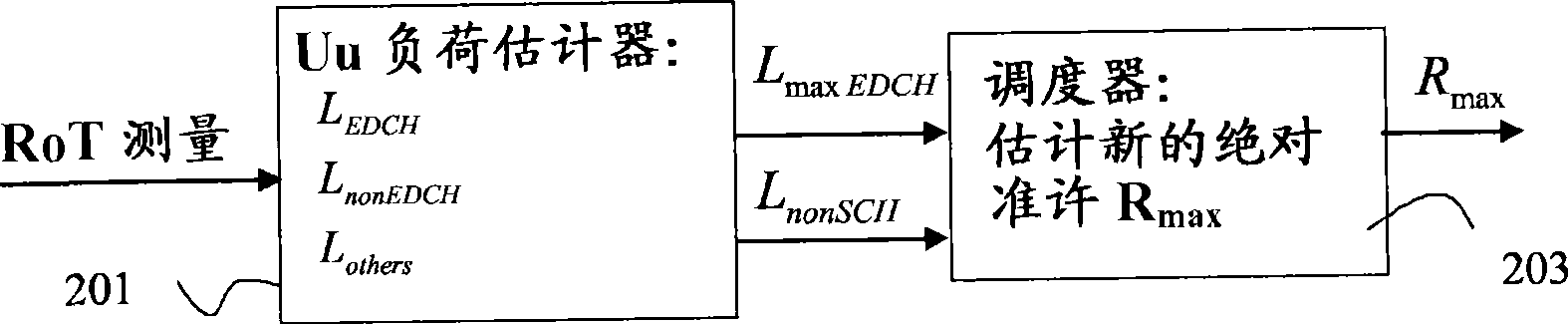
[0019] To support fast scheduling, rise over thermal noise RoT and C / I measurements are used to provide an estimate of the uplink cell load. RoT is calculated as the total received uplink power RTWP of the cell divided by the thermal noise floor power. RTWP is the sum of WCDMA wireless link power, external non-WCD...