
Parallel wire-array Z-pinch load
A wire array and pinch technology, used in X-ray tubes, discharge tubes, X-ray equipment, etc., can solve problems such as columnar load magnetohydrodynamic instability, reduce damage rate, ensure electrode contact, and facilitate installation. Effect
- Summary
- Abstract
- Description
- Claims
- Application Information
AI Technical Summary
Problems solved by technology
Method used
Image

Examples
Embodiment Construction
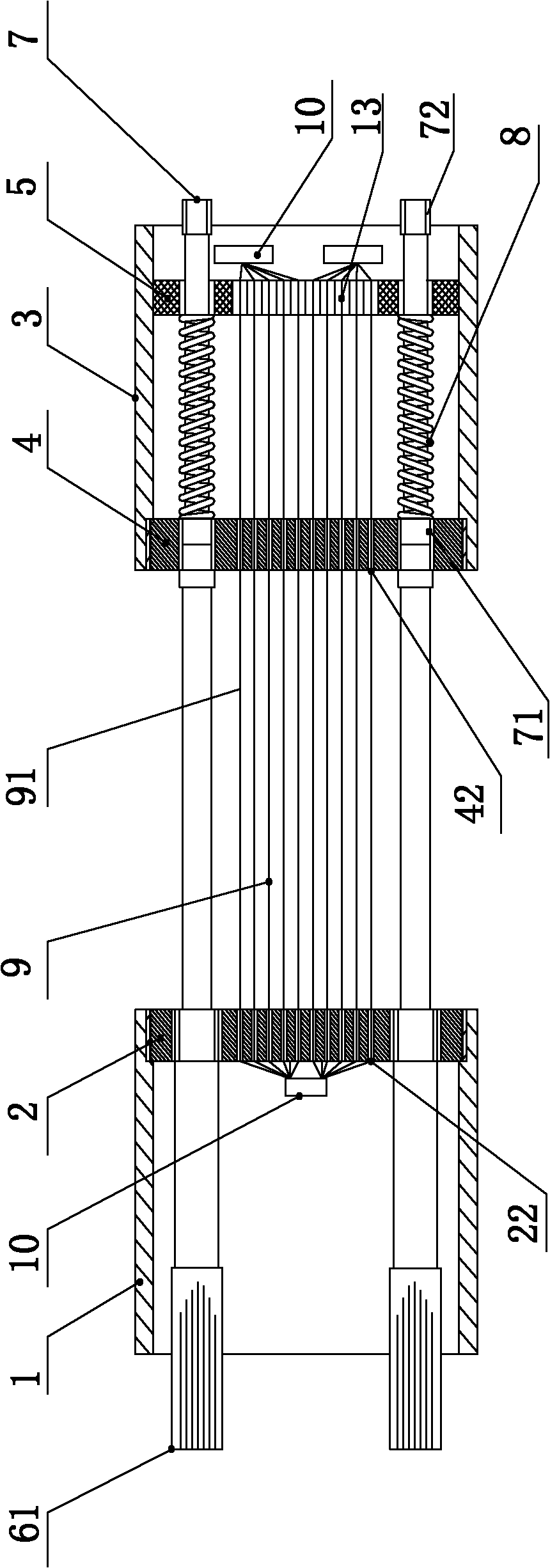
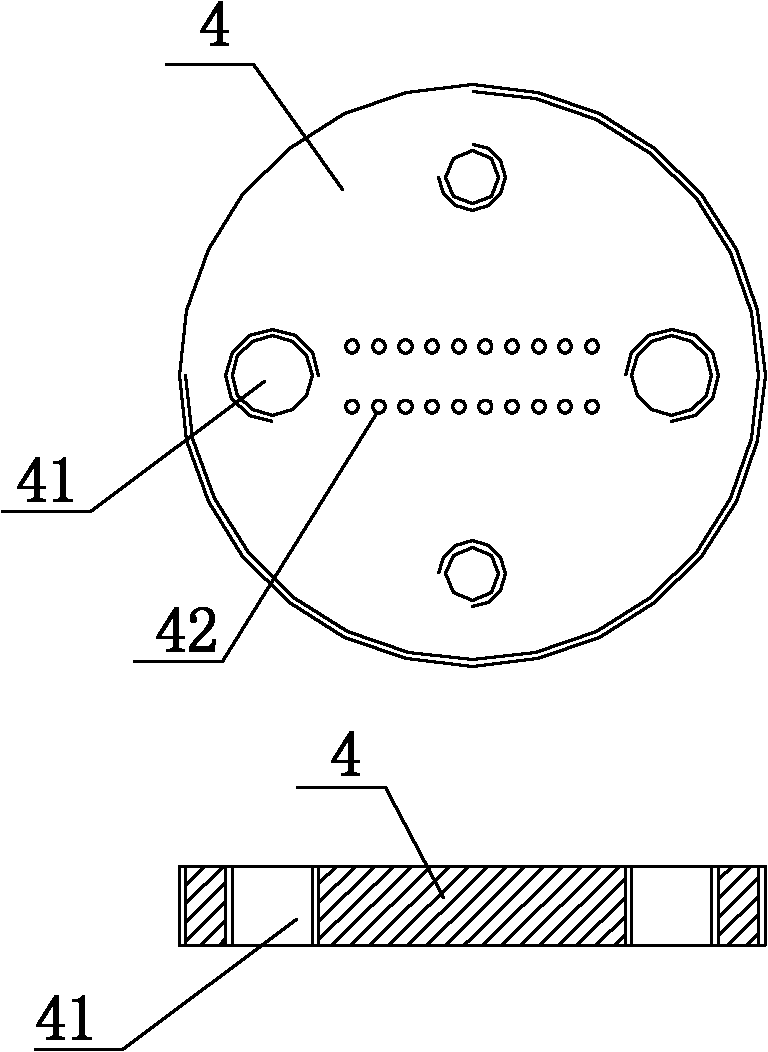
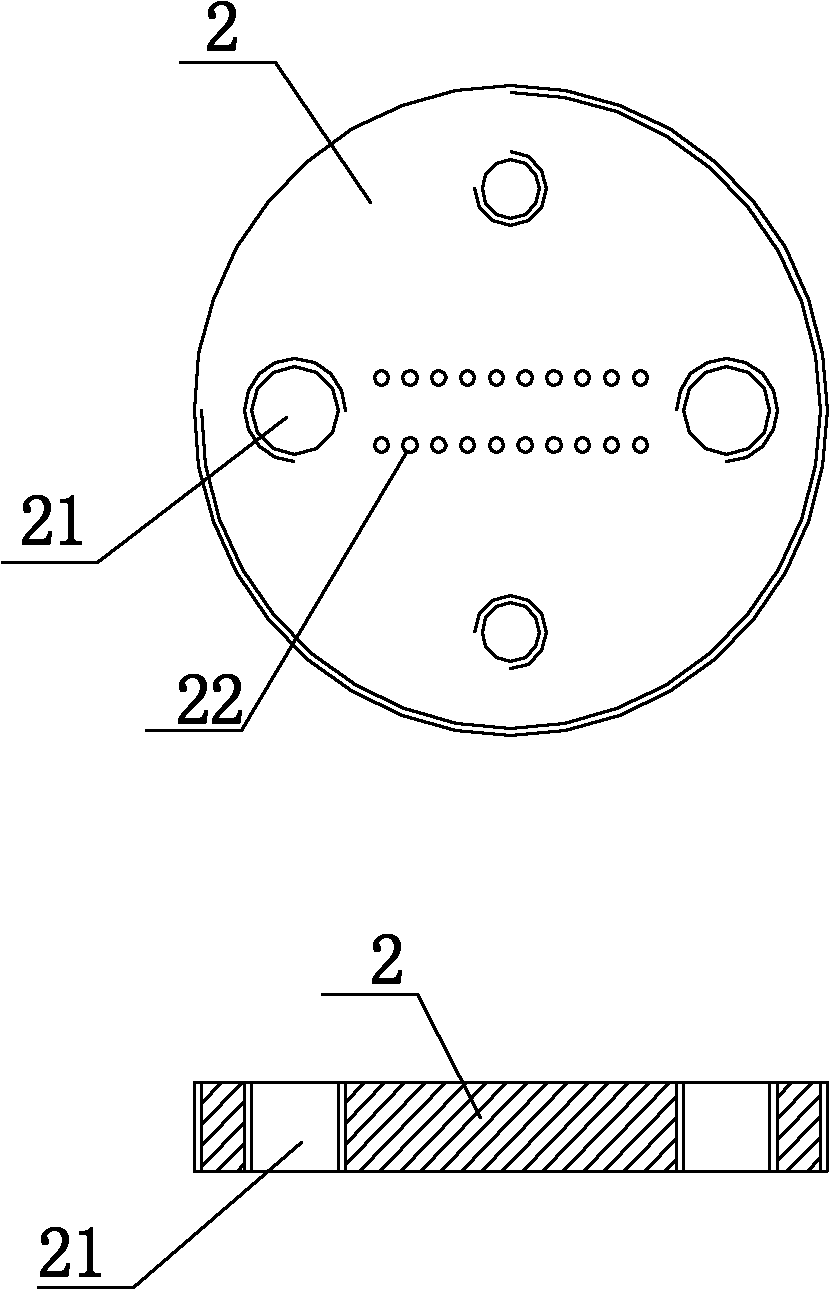
[0027] refer to figure 1 As shown, the assembly of the wire array load is completed in a clean room and transported to the experimental site for installation. During preparation, the cathode thread of the double-step positioning rod 6 passes through the threaded hole of the anode plate and is screwed into the threaded hole of the cathode plate, and the threaded end of the spring positioning rod passes through the limit hole of the insulating positioning piece and the spring 8, and then is screwed on the cathode plate In the threaded hole, fix the double-step positioning rod 6 and the spring positioning rod 7, and pre-compress the spring 8. The compression distance is greater than the shrinkage distance between the cathode and anode plates. After the preparation is completed, the metal parallel wire array is wound. The metal wire fixing column can fix each metal wire on the outer surface of the anode plate or the outer surface of the insulating positioning piece. The double-ste...
PUM
 Login to View More
 Abstract
Description
Claims
Application Information
 Login to View More