
Lithium ion secondary battery and electrolyte solution thereof
A secondary battery and electrolyte technology, applied in the direction of secondary batteries, circuits, electrical components, etc., can solve the problems of deterioration of battery cycle performance, increase of battery impedance, failure to meet the use requirements, etc., to improve storage performance and inhibit oxidation Decompose and improve the effect of the interface
- Summary
- Abstract
- Description
- Claims
- Application Information
AI Technical Summary
Problems solved by technology
Method used
Image

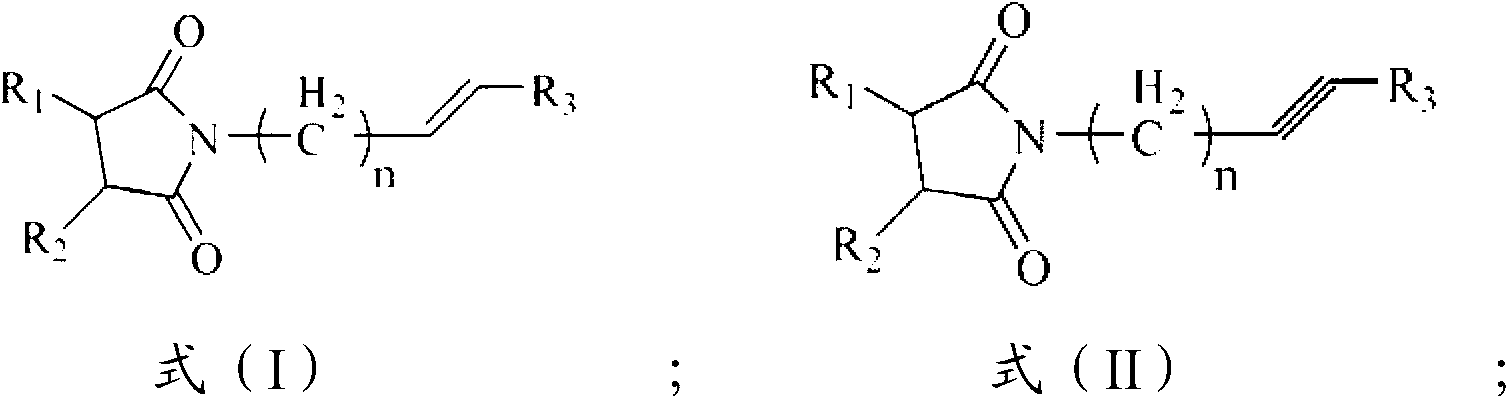
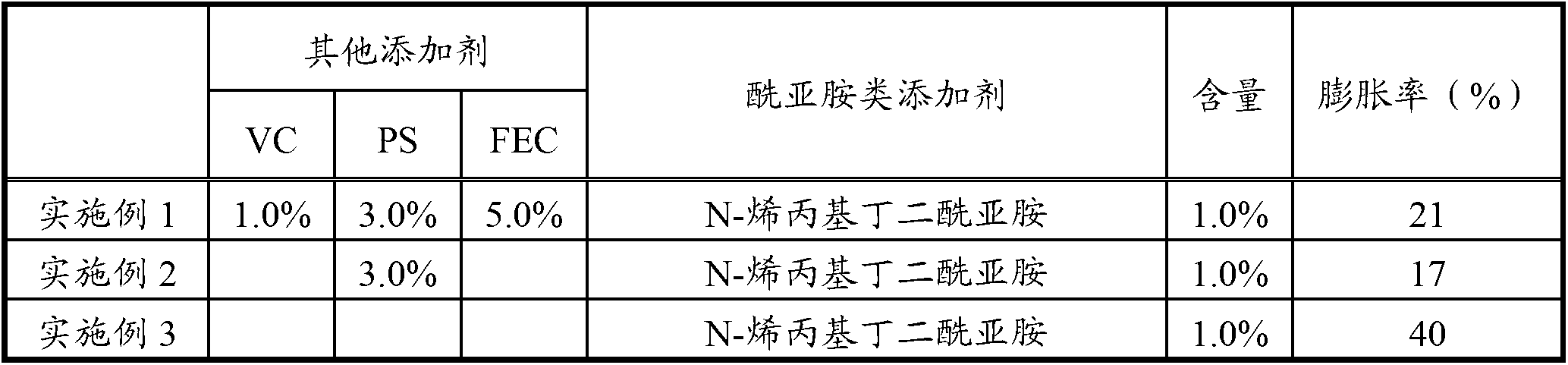
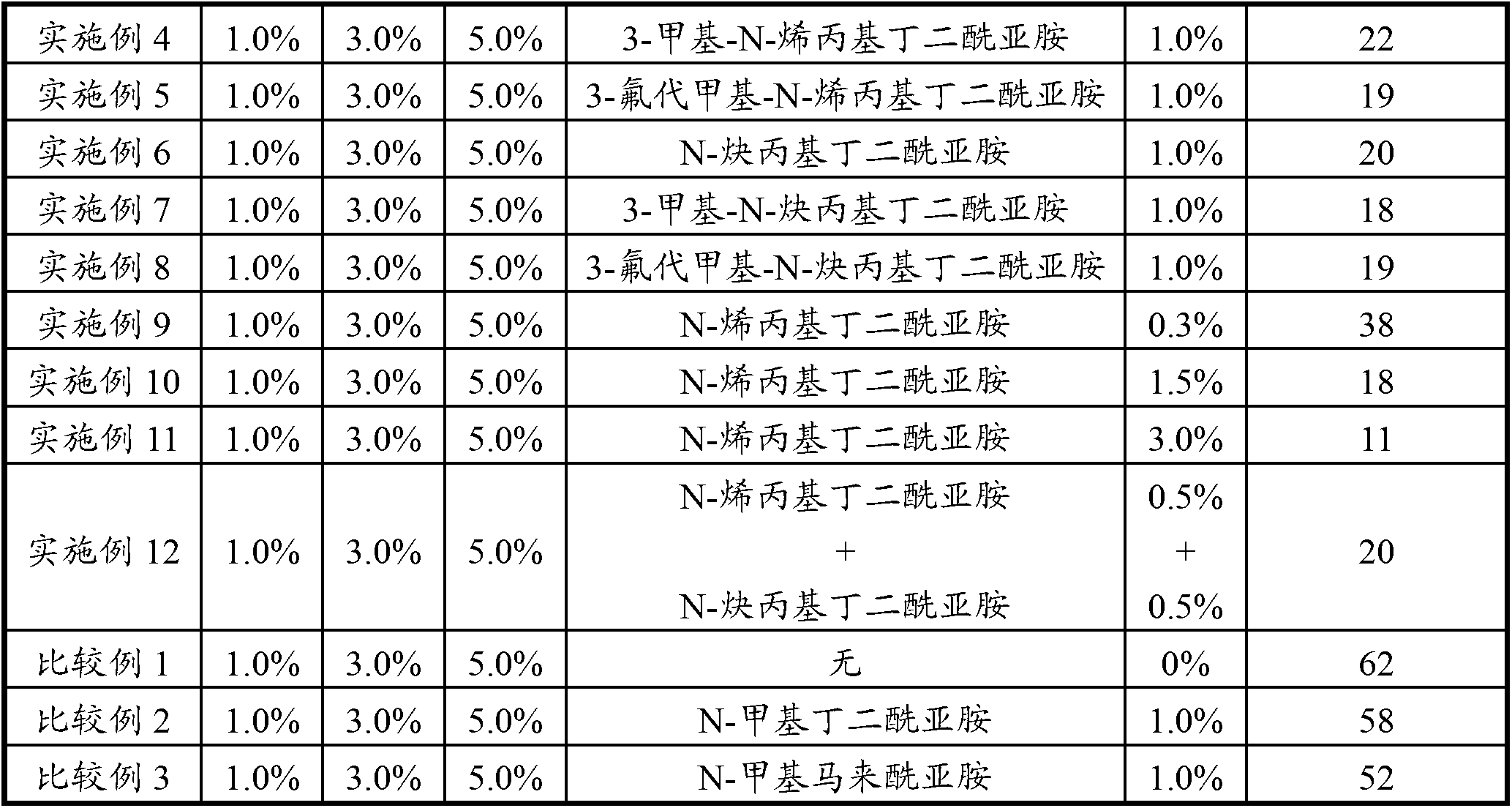
Examples
Embodiment 1
[0022] Preparation of lithium-ion secondary battery cathode sheet: Lithium cobalt oxide, conductive agent SuperP, and binder PVDF are mixed uniformly at a mass ratio of 96:2.0:2.0 to make a lithium-ion secondary battery cathode slurry with a certain viscosity, and coated On the current collector aluminum foil, the coating amount is 0.0194g / cm 2 , after drying at 85°C, cold pressing; then trimming, cutting, and slitting, drying at 85°C for 4 hours under vacuum conditions, welding the tabs, and making a lithium-ion secondary battery positive electrode that meets the requirements piece.
[0023] Preparation of lithium-ion secondary battery negative electrode sheet: graphite, conductive agent SuperP, thickener CMC, and adhesive SBR are prepared into a slurry at a mass ratio of 96.5:1.0:1.0:1.5, coated on the current collector copper foil and Dried at 85°C, the coating weight is 0.0089g / cm 2 ; After trimming, cutting, and slitting, dry at 110° C. for 4 hours under vacuum conditio...
Embodiment 2
[0027] The lithium ion secondary battery was prepared with reference to the method of Example 1, except that when preparing the lithium ion secondary battery electrolyte, the additives were: 1,3-propane sultone (PS) with a mass percentage content of 3% and mass The percentage content is 1% N-allyl succinimide.
Embodiment 3
[0029] The lithium ion secondary battery was prepared with reference to the method of Example 1, except that when preparing the electrolyte solution for the lithium ion secondary battery, the additive was: N-allyl succinimide with a mass percent content of 1%.
PUM
| Property | Measurement | Unit |
|---|---|---|
| thickness | aaaaa | aaaaa |
| width | aaaaa | aaaaa |
| length | aaaaa | aaaaa |
Abstract
Description
Claims
Application Information
 Login to View More