Time-varying orthogonal frequency division multiplexing (TV-OFDM) multi-carrier modulation system and modulation method

A multi-carrier modulation and orthogonal frequency division technology, applied in the direction of multi-frequency code system, etc., can solve the problems of large PAPR value, lack of time-frequency resolution, and increased power consumption of terminal equipment, so as to reduce PAPR value and improve time Frequency resolution, the effect of maintaining superiority

CN103297379AInactive Publication Date: 2013-09-11CHONGQING UNIV OF POSTS & TELECOMM
2 Cites 10 Cited by

Patent Information

Authority / Receiving Office
CN · China
Patent Type
Applications(China)
Current Assignee / Owner
Publication Date
2013-09-11
Estimated Expiration
Not applicable · inactive patent

Smart Images

  • Figure 1
    Figure 1
  • Figure 2
    Figure 2
  • Figure 3
    Figure 3
Patent Text Reader

Abstract

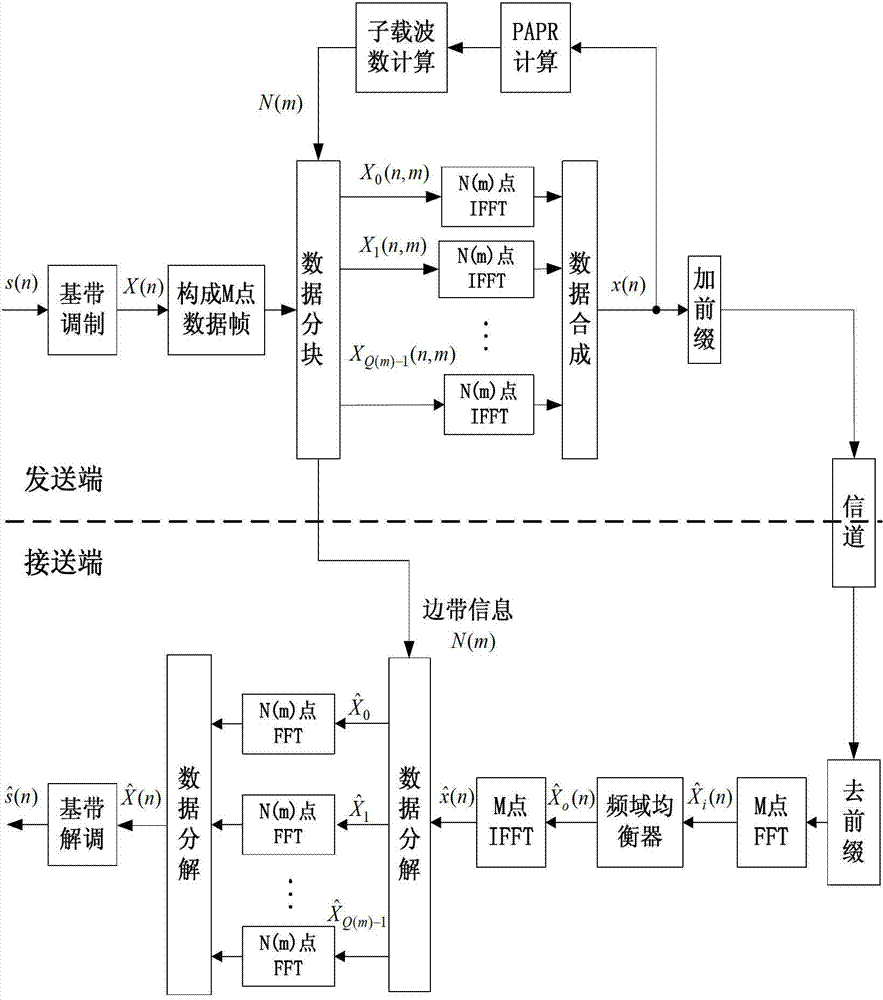
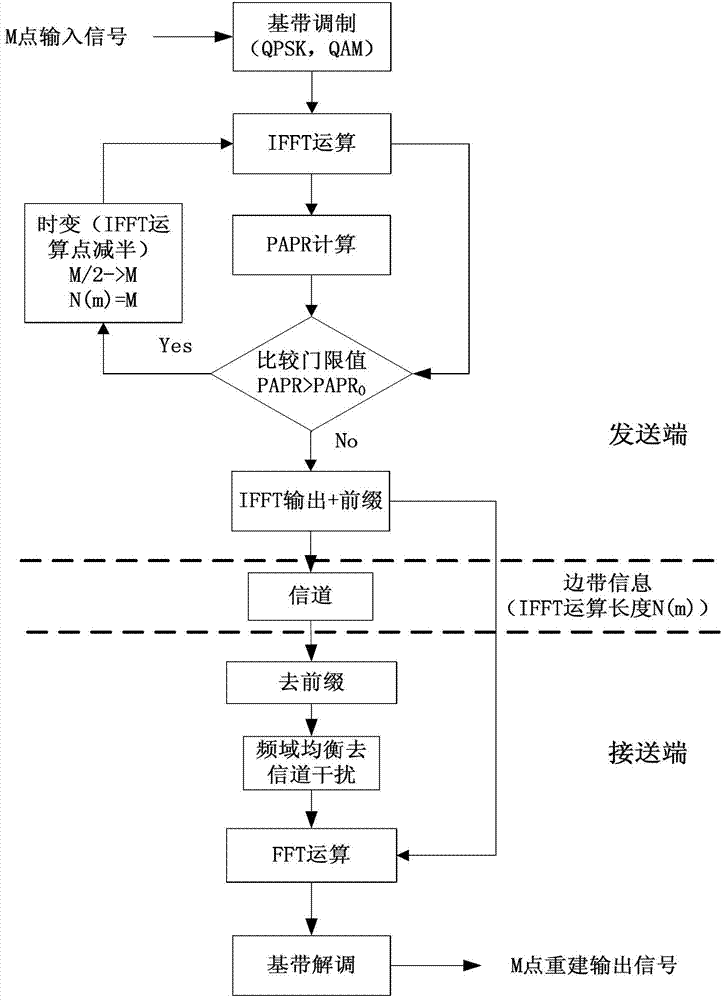
The invention provides a TV-OFDM multi-carrier modulation system. The system is obtained by introducing time-varying signal and processing on the basis of the conventional time-invariant OFDM multi-carrier modulation system. Different from the OFDM system, the amount of sub-carriers in the TV-OFDM system is time-varying, the amount of sub-carriers at a sending end varies according to the size of the peak to average power ratio (PAPR) of each frame of processing signal, and the amount of the sub-carriers is determined by calculating the PAPR, so that the PAPR and power consumption of the system can be reduced effectively. Compared with other methods for reducing the PAPR in the OFDM system, the TV-OFDM system can keep advantages of the OFDM system and is efficient in reducing the PAPR. The sending end of the TV-OFDM system needs to send the amount of each frame of sub-carriers to a receiving end as sideband information.
Need to check novelty before this filing date? Find Prior Art

Description

technical field

[0001] The present invention relates to multi-carrier modulation technology, in particular to a time-varying orthogonal frequency division multiplexing multi-carrier modulation system (TV-OFDM). Background technique

[0002] Orthogonal frequency division multiplexing (OFDM) is the most representative multi-carrier modulation technology. Compared with single-carrier modulation, OFDM modulation system has the advantage of strong anti-interference ability, especially for wireless channels caused by multi-path transmission. Frequency selective attenuation has obvious resistance, so OFDM technology is selected as the only modulation scheme by almost all current wireless communication standards, and it is the core technology in the fourth-generation wireless broadband network standard LTE. In addition to wireless communication, OFDM technology is also widely used in broadcast audio and video fields, as well as wired communication systems, such as asymmetrical digit...

Examples

Embodiment Construction

[0014] As a special frequency-domain multi-carrier modulation system, OFDM has the advantages of the frequency-domain multi-carrier modulation system. While realizing large-capacity data transmission through multiple orthogonal subcarriers, it also improves the spectrum utilization of the system. Similarly, the OFDM modulation system also has the defects of the frequency-domain multi-carrier system, especially the high peak-to-average power, which hinders the development of OFDM technology. Since the OFDM technology was proposed to the present, there have been many methods to reduce the PAPR of the OFDM system, but all current methods need to change the modulation output signal (IFFT output), which will damage the performance of the OFDM system to varying degrees.

[0015] The high PAPR value in the OFDM system is caused by the modulation mechanism of the OFDM system. At the sending end of the OFDM system, the modulation of the signal is realized by IFFT operation. Although thi...