
Method for detecting gallic acid and ampelopsin in tea tincture
A technology of gallic acid and viniferin, which is applied in measuring devices, instruments, scientific instruments, etc., can solve the problems of complex composition, false positives, long analysis time, etc. Good results
- Summary
- Abstract
- Description
- Claims
- Application Information
AI Technical Summary
Problems solved by technology
Method used
Image

Examples
Embodiment 1
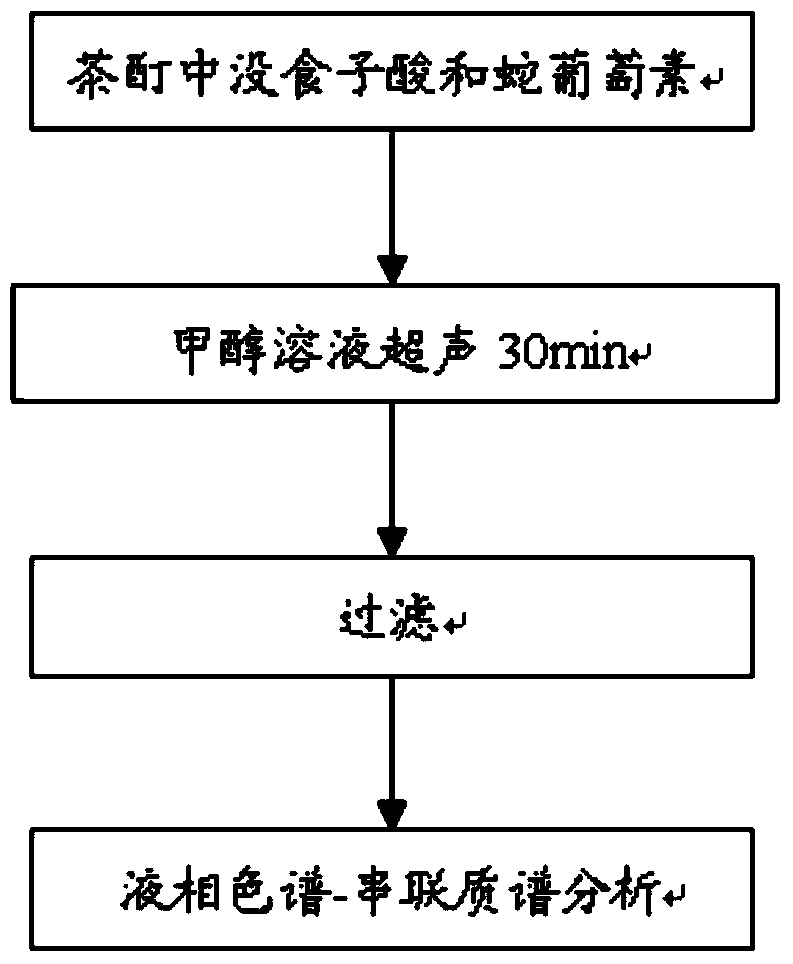
[0050] The present embodiment detects the content of gallic acid and staphylophyllin in tea tincture, and the detection method is as follows, and the flow chart of the detection method is as follows: figure 1 shown.
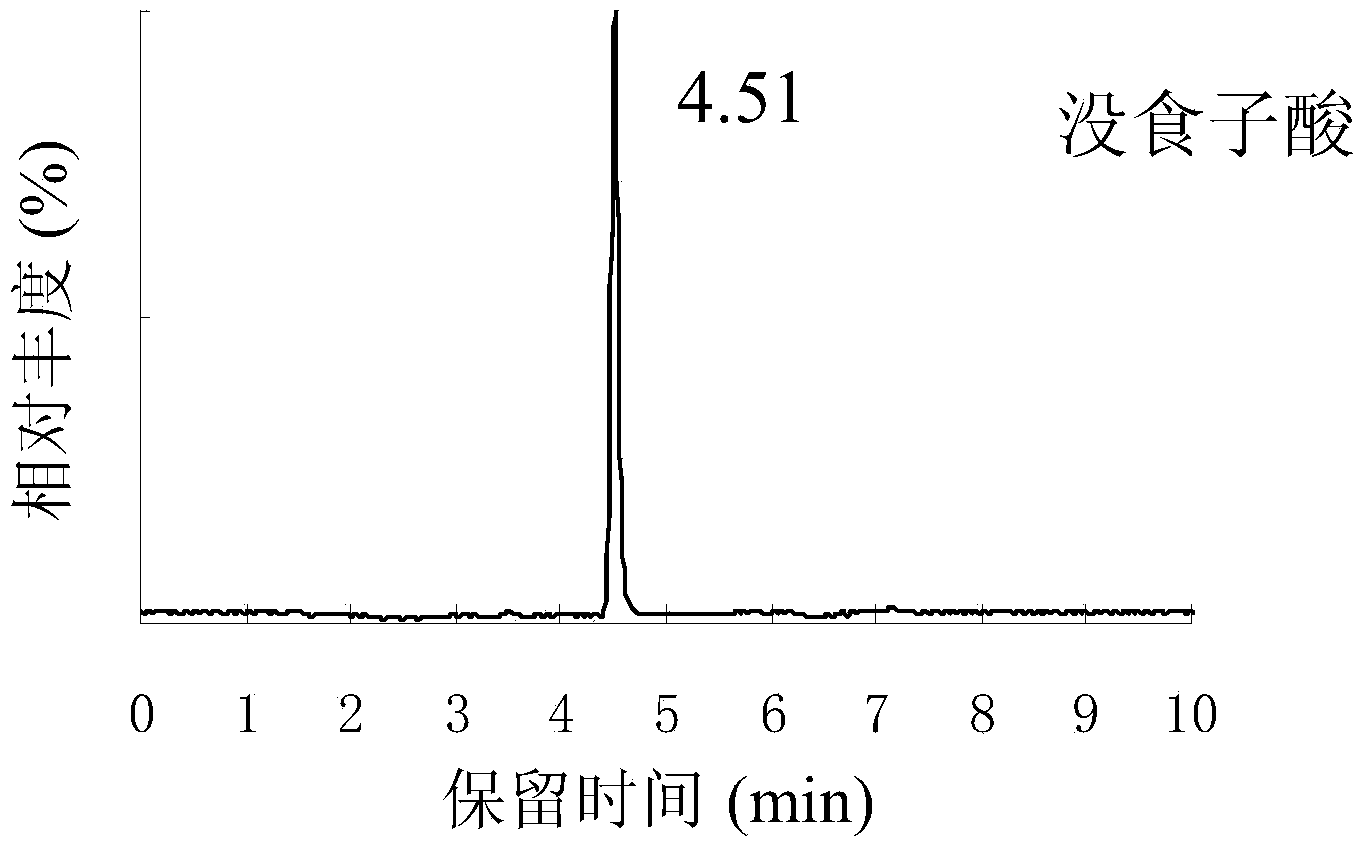
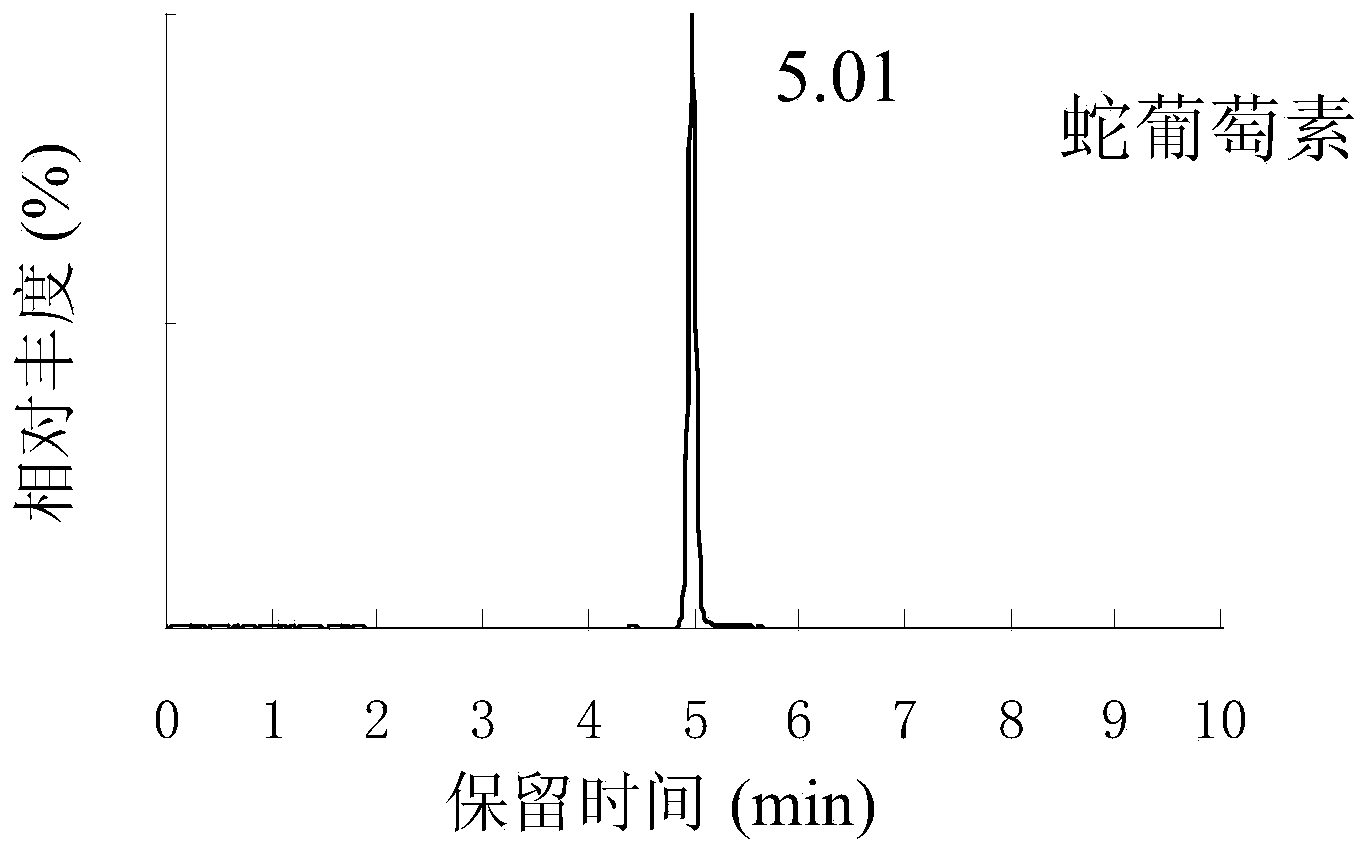
[0051] (1) Weigh 0.1g each of gallic acid and octopus (analytical pure), accurate to 0.0001g, dissolve with methanol and transfer to a 1000mL volumetric flask, and dilute to volume with methanol to obtain standard stock solution of gallic acid and octopus respectively Standard stock solution of steroid; respectively pipette 0.01mL, 0.05mL, 0.1mL, 0.5mL, 1.0mL of gallic acid standard stock solution and steroid standard stock solution to 100mL volumetric flask, and use 10% (v / v) methanol When the aqueous solution is constant volume, the concentrations of gallic acid and staphylophyllin are respectively 0.01μg / mL, 0.05μg / mL, 0.1μg / mL, 0.5μg / mL, and 1.0μg / mL, and the series of standard solutions of gallic acid and staphylophyllin are respectively obtained. Glutin se...
Embodiment 2
[0067] In this embodiment, the repeatability and standard addition recovery of the method of the present invention are tested, and the detection method is as follows.
[0068] The recovery rate of the method of the present invention was determined by the standard addition method. Take by weighing 0.1g of the tea tincture sample to be tested (the sample is the same as the tea tincture sample used in the step (2) of Example 1), each in three parts, add 0.005mL, 0.01mL, 0.02mL, 0.05mL of the example 1 gallic acid standard stock solution and staphylophyllin standard stock solution prepared in step (1), then prepare standard sample solution according to the preparation method in embodiment 1 step (2) " preparation of sample solution ", each sample is respectively Measure 6 times, the condition of chromatographic and mass spectrometry analysis is the same as embodiment 1, calculate the recovery rate of gallic acid and staphyloin in the tea tincture of this method according to the an...
PUM
| Property | Measurement | Unit |
|---|---|---|
| Collision energy | aaaaa | aaaaa |
Abstract
Description
Claims
Application Information
 Login to View More