A user write request processing method for a solid-state hard disk adapting to flash page differences

A processing method and technology of solid-state hard disk, applied in the direction of electric digital data processing, input/output process of data processing, memory system, etc., can solve problems such as low reliability, slow performance, and do not consider flash memory pages, etc., to achieve balanced erasing and writing The effect of increasing the number of times, improving peak performance, improving performance and longevity

CN108829346BActive Publication Date: 2020-11-17HUAZHONG UNIV OF SCI & TECH
10 Cites 0 Cited by

Patent Information

Authority / Receiving Office
CN · China
Patent Type
Patents(China)
Current Assignee / Owner
Publication Date
2020-11-17

Smart Images

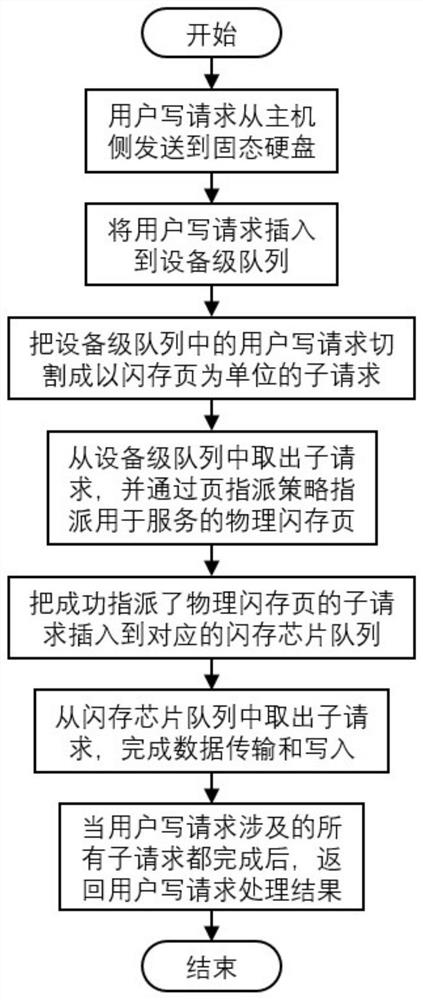
  • Figure 1
    Figure 1
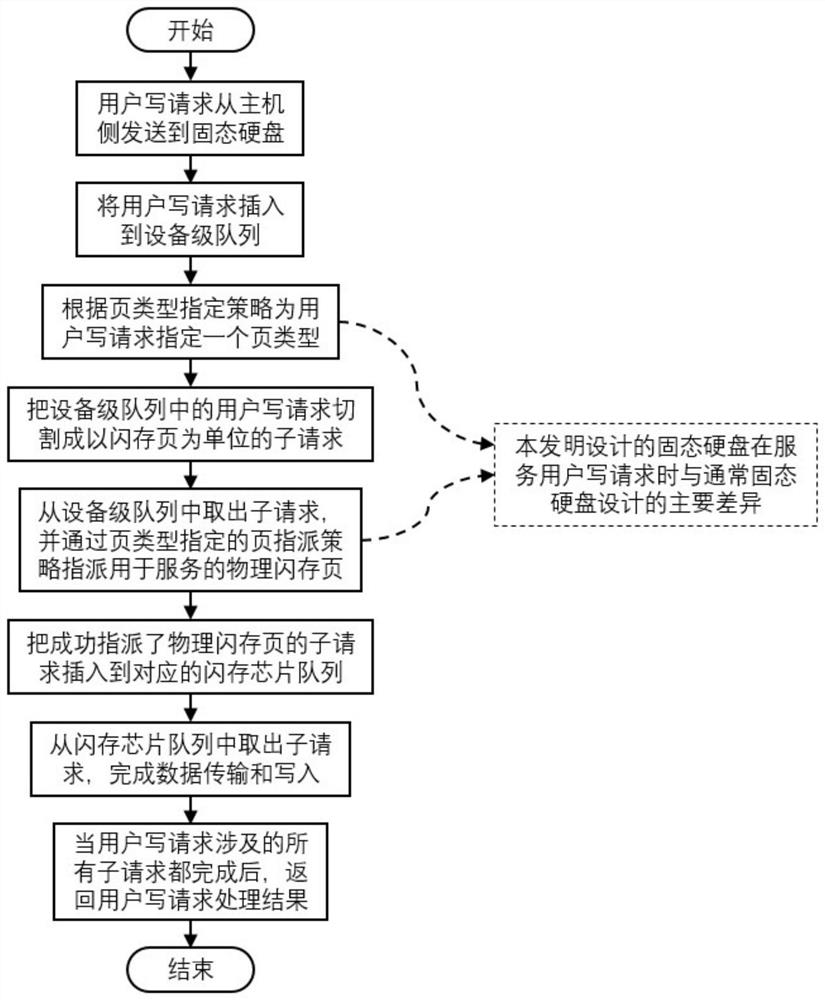
  • Figure 2
    Figure 2
Patent Text Reader

Abstract

The invention discloses a user write request processing method of a solid state disk adaptive to flash page difference. The method comprises the steps of, according to difference among flash pages, classifying the flash pages into different page types; according to a classification method of the flash pages and a page type designation strategy, designating a page type for a user write request in adevice-level I / O queue; cutting the user write request into sub-requests taking the sizes of the flash pages as units; according to a page assignment strategy designated by the page type, assigning aphysical flash page used for serving the sub-request to each sub-request, and inserting the sub-requests successfully assigned with the physical flash pages into corresponding flash chip queues; extracting the sub-requests from the flash memory chip queues, and finishing data transmission and writing; and after all the sub-requests involved by the user write request are completed, returning a user write request processing result. By use of the method, the flash conversion layer design of the solid state disk can be adaptive to the difference among the flash pages, so that the purposes of optimizing the read-write performance and the data reliability of the solid state disk are achieved finally.
Need to check novelty before this filing date? Find Prior Art

Description

technical field

[0001] The invention belongs to the storage field of solid-state hard disks, and more specifically relates to a method for processing user write requests of solid-state hard disks adapting to differences in flash memory pages. Background technique

[0002] Solid-state drives (SSDs) use flash memory chips as storage media, and achieve high read and write throughput by accessing multiple flash memory chips in parallel within the disk. In addition, compared with traditional disks, SSDs do not require physical seeks when accessing data, greatly reducing data access latency. Based on these two advantages, solid-state drives have gradually replaced traditional disks as the mainstream storage devices in computer systems. However, with the gradual popularization of multi-level flash memory with high storage density in SSDs, the advantages of high throughput and low response latency of SSDs began to be lost. In addition, solid-state drives using multi-level flash me...

Examples

Embodiment Construction

[0047] In order to make the object, technical solution and advantages of the present invention clearer, the present invention will be further described in detail below in conjunction with the accompanying drawings and embodiments. It should be understood that the specific embodiments described here are only used to explain the present invention, not to limit the present invention.

[0048] Several terms will be used in the embodiments of the present invention, which are explained as follows:

[0049] Solid State Drive: A storage device that uses flash memory as the main storage medium.

[0050] Flash memory: is a storage medium. Compared with the traditional storage medium disk in the computer system, it has the advantages of high read and write throughput and low latency; relatively, the service life of the flash memory is limited by the number of erasures. In addition, after the flash memory is powered off, the stored data may be lost. lost due to electron escape.

[0051...