Method for realizing accurate identifying of compound and screening of differential component through automatic analysis of complicated sample GC-MS

A GC-MS, automatic analysis technology, applied in the field of gas chromatography-mass spectrometry data analysis, can solve the problems of wrong peak alignment results, similar mass spectra of co-eluting compounds, unreliable results of differential compounds, etc., to achieve accurate analysis , automatic high-throughput analysis, overcoming the effect of inaccurate analysis

CN109507315AActive Publication Date: 2019-03-22NINGXIA MEDICAL UNIV
7 Cites 7 Cited by

Patent Information

Authority / Receiving Office
CN · China
Current Assignee / Owner
Publication Date
2019-03-22

Smart Images

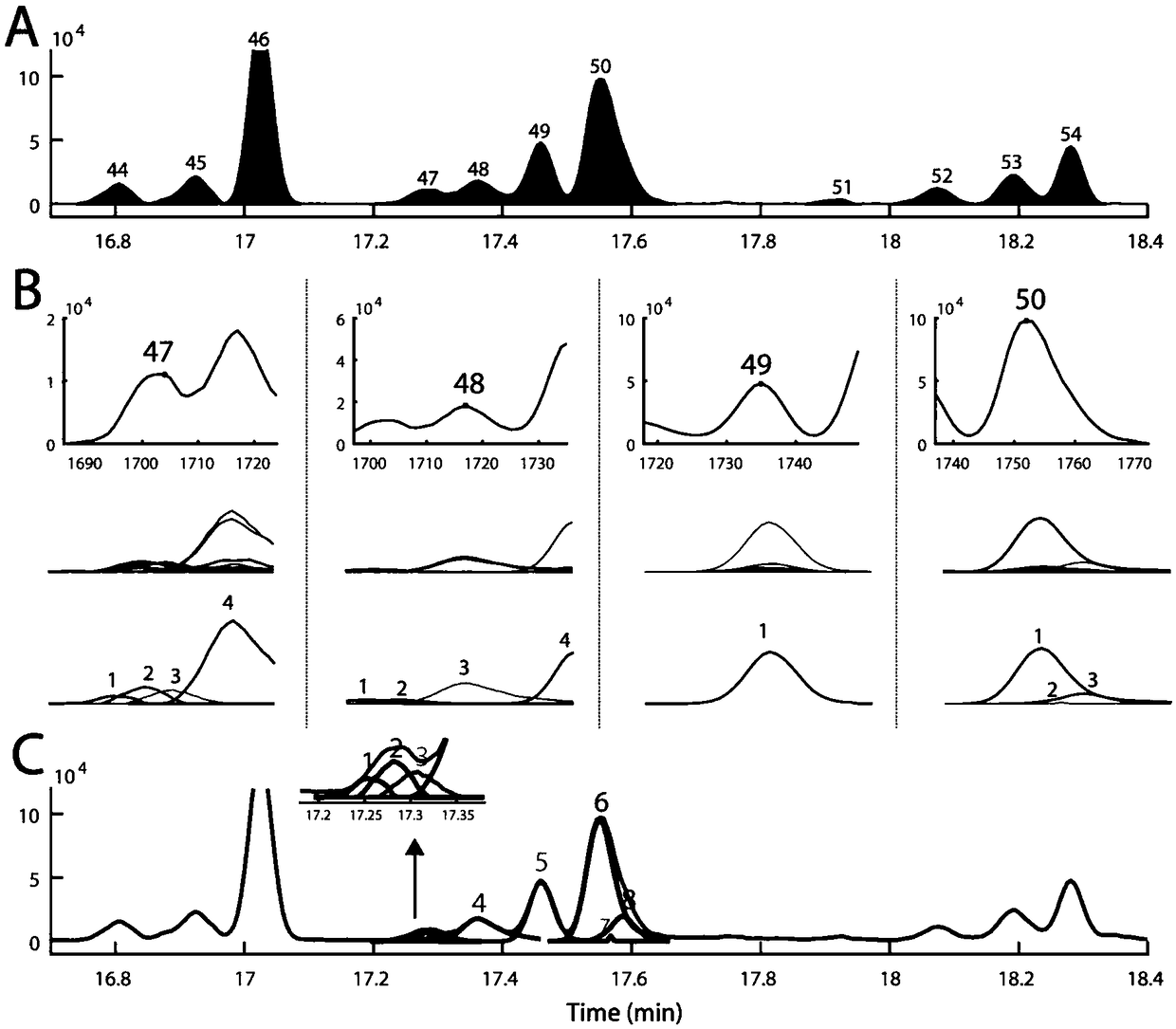
  • Figure 1
    Figure 1
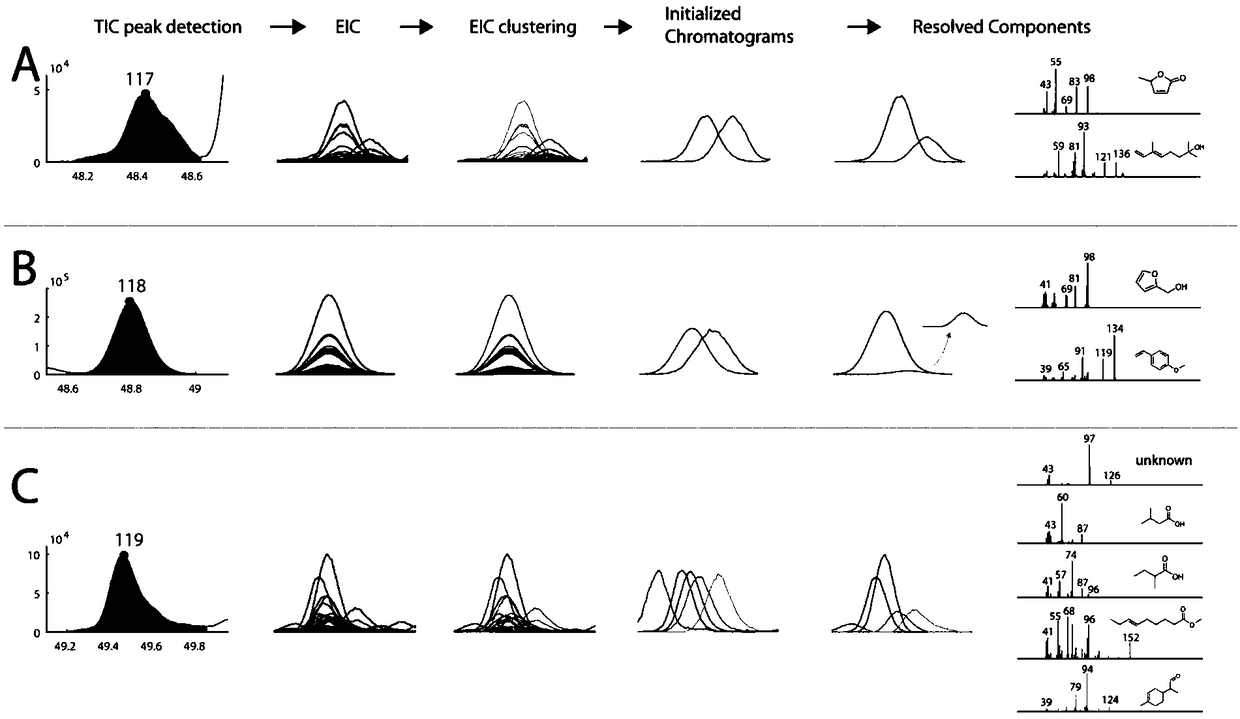
  • Figure 2
    Figure 2
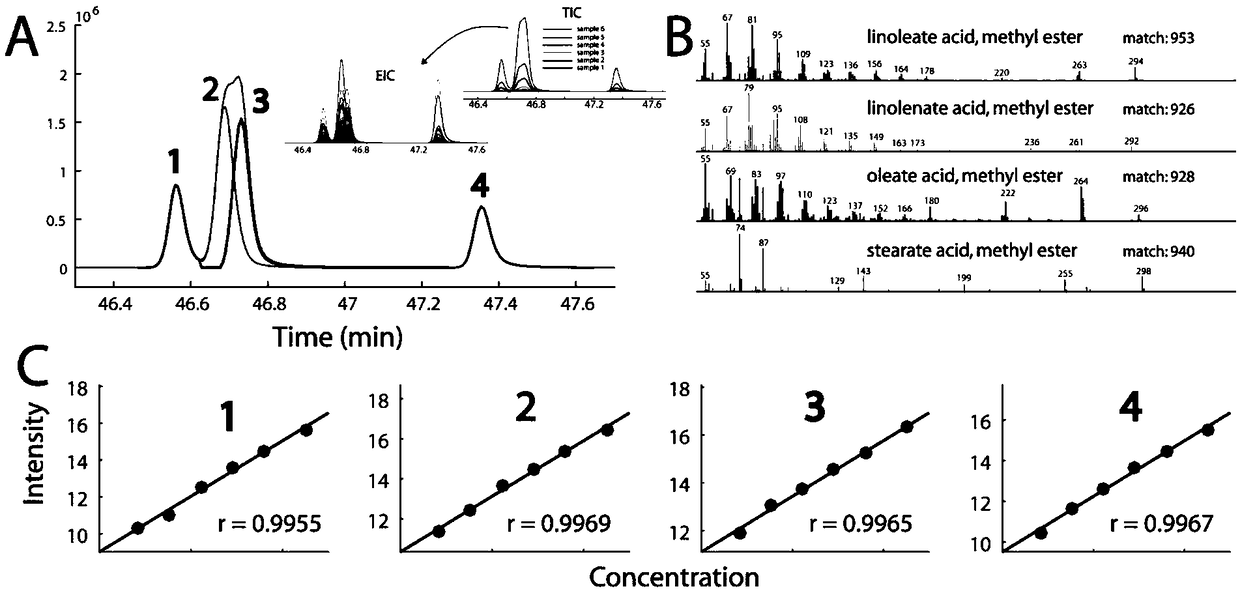
  • Figure 3
    Figure 3
Patent Text Reader

Abstract

The invention provides a method for realizing accurate identifying of a compound and screening of a differential component through automatic analysis of a complicated sample GC-MS, and belongs to thegas chromatography-mass spectrum combined data analysis. The method comprises the following steps: firstly, performing automatic extraction on a chromatographic peak under TIC and EIC, then determining an analysis range of each TIC chromatographic peak, and looking up EIC chromatographic peak information within the analysis range; clustering according to the EIC chromatographic peak information, and acquiring a representative chromatography contour spectrogram of each cluster; after screening, constructing an initial chromatography spectrogram matrix, performing optimized analysis on the initial chromatography spectrogram matrix by using a corrected multivariate curve resolution-alternating least square method, and acquiring the chemical components under each TIC chromatographic peak; andimporting a mass spectrum spectrogram of each chemical component obtained by analysis into a mass spectrum library for automatically matching the compound, and completing compound intelligent accurateidentification of a single sample GC-MS. The method has a good application value in the fields related to a GC-MS technology, such as scientific research, detection, and industrial application.
Need to check novelty before this filing date? Find Prior Art

Description

technical field

[0001] The invention belongs to the technical field of gas chromatography-mass spectrometry data analysis, and in particular relates to a method for realizing accurate identification of compounds and screening of differential components by GC-MS automatic analysis of complex samples. Background technique

[0002] GC-MS is used in many laboratories for high-throughput characterization of small-molecule volatile, semi-active components in complex samples. As one of the most popular analysis and testing instruments at present, the mass spectrum library provided by GC-MS itself provides a very helpful tool for the analysis of complex samples. However, in the application of GC-MS, the precise analysis of compounds in complex samples is a difficult problem in current applications. Compound analysis includes two core steps, one is the identification of chromatographic peaks, and the other is the analysis of co-eluting components. In studies involving simultaneous ...

Examples

Embodiment Construction

[0025] In combination with the accompanying drawings of the present invention, the technical solutions of the embodiments of the invention will be further elaborated in detail.

[0026] The present invention demonstrates intelligently analyzing GC-MS data through the following examples to accurately realize compound identification and differential component screening.

[0027] S1. GC-MS signal acquisition

[0028] In order to obtain as many volatile and semi-volatile components as possible in tobacco plant samples, the samples were derivatized. The details are as follows: (1) 20 mg sample was weighed, the chemical components were extracted with methanol and chloroform, and derivatized with BSTFA at room temperature for 60 min. Take 1 μL for GC-MS analysis.

[0029] The GC-MS conditions were set as follows: chromatographic column DB-5MS 60 m×0.25 µm×0.25 mm. The temperature was programmed to rise from 70 °C to 310 °C at a rate of 3 °C min-1. The inlet temperature was 180 °C...