Application of inhibitory cells derived from medullary system in preparation of diagnostic reagents for autoimmune diseases

An inhibitory cell and autoimmune technology, applied in the field of immune system disease detection, can solve the problems of improving sensitivity and specificity, and achieve the effect of simple and convenient detection, beneficial to clinical application and high accuracy.

CN109929902APending Publication Date: 2019-06-25PEOPLES HOSPITAL PEKING UNIV
1 Cites 3 Cited by

Patent Information

Authority / Receiving Office
CN · China
Current Assignee / Owner
Publication Date
2019-06-25

Smart Images

  • Figure 1
    Figure 1
  • Figure 2
    Figure 2
  • Figure 3
    Figure 3
Patent Text Reader

Abstract

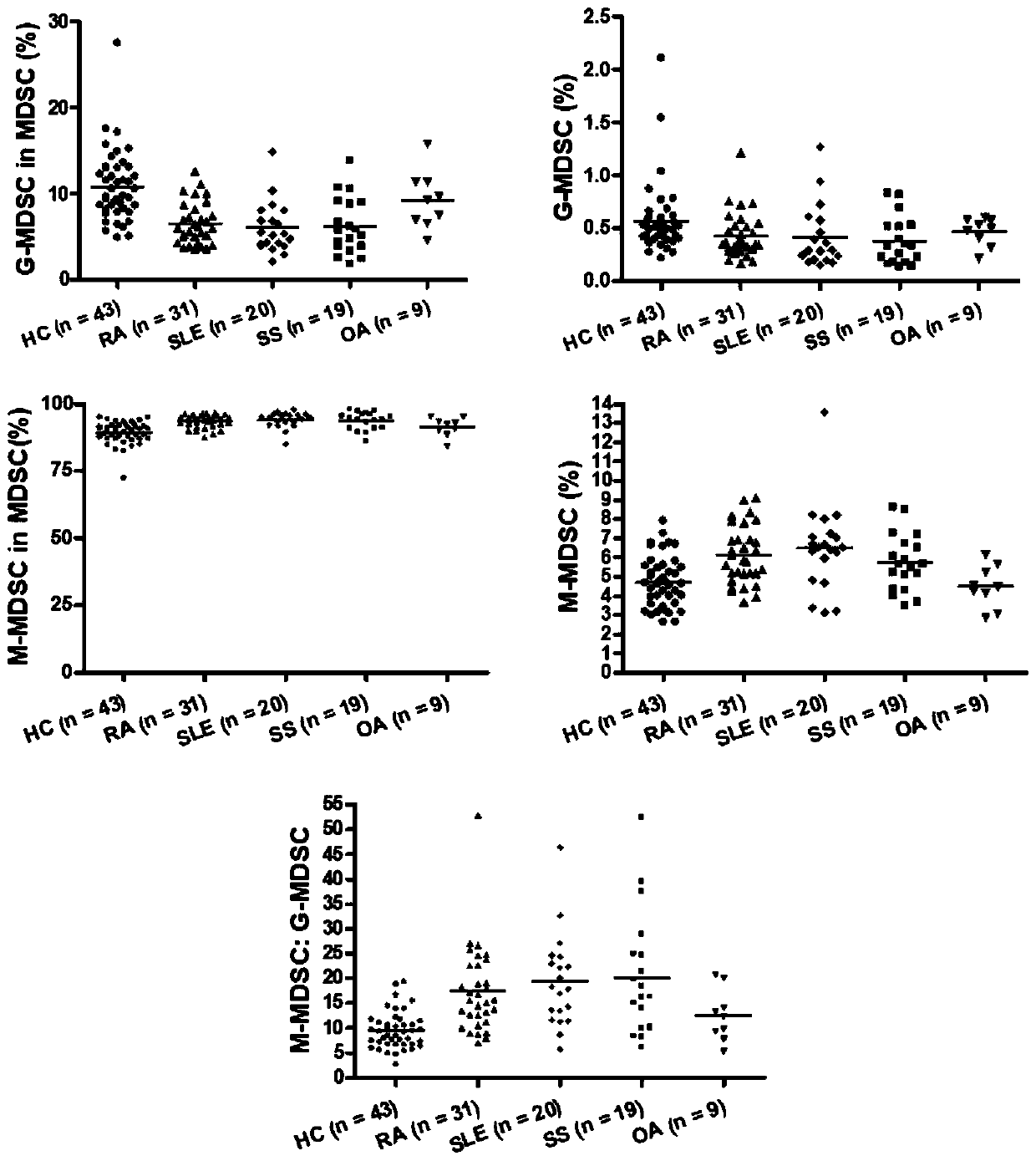
The invention discloses application of inhibitory cells derived from a medullary system in preparation of diagnostic reagents for autoimmune diseases. It is found that MDSCs and its subgroup G-MDSCs,M-MDSCs are obviously different in normal people and patients with autoimmune diseases, and only peripheral blood and / or joint fluid sampling is needed, the ratio can be judged by flow cytometry, a specific value is calculated, and the detection is very simple and convenient; in addition, by setting a cut-off value (mean value of normal human + 3SD), higher accuracy can be further ensured, the autoimmune disease can be determined without comprehensive judgment combined with other markers, good indication can be provided for diagnosis and drug treatment effects of the autoimmune disease, and clinical application is facilitated.
Need to check novelty before this filing date? Find Prior Art

Description

Technical field

[0001] The invention belongs to the technical field of immune system disease detection, and specifically relates to the application of inhibitory cells derived from myeloid lines in the preparation of diagnostic reagents for autoimmune diseases. Background technique

[0002] Autoimmune disease (AID) is a disease caused by a variety of reasons that cause the body's immune function disorder, which leads to the body's immune response to autoantigens and damage to its own tissues. AID is subdivided into more than 100 kinds of diseases. There is no effective cure. However, timely and regular treatment can significantly improve symptoms and slow down the progress of the disease. Therefore, the diagnosis of this type of disease is particularly important.

[0003] The most common AIDs are systemic lupus erythematosus (SLE), rheumatoid arthritis (RA), Sjogren syndrome (SS), scleroderma (scleroderma), and primary platelet purpura (Idiopathic thrombocytopenic purpura, ITP), a...

Examples

Embodiment Construction

[0023] In order to enable those skilled in the art to better understand the solution of the present invention, the present invention will be further described in detail below with reference to the accompanying drawings and specific embodiments. In the following examples, unless otherwise specified, the biological materials and reagents used are all commercially available products or can be formulated according to conventional technical means, and the test methods are also conventional techniques in the art.

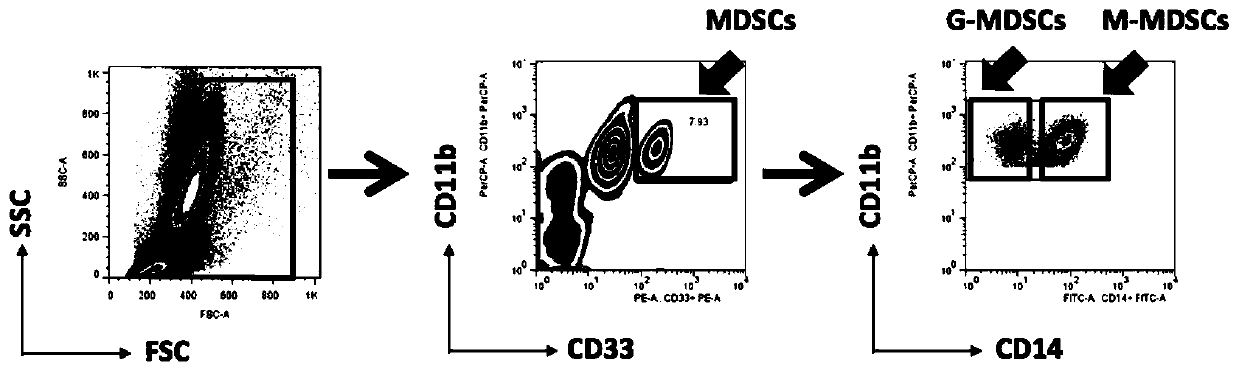
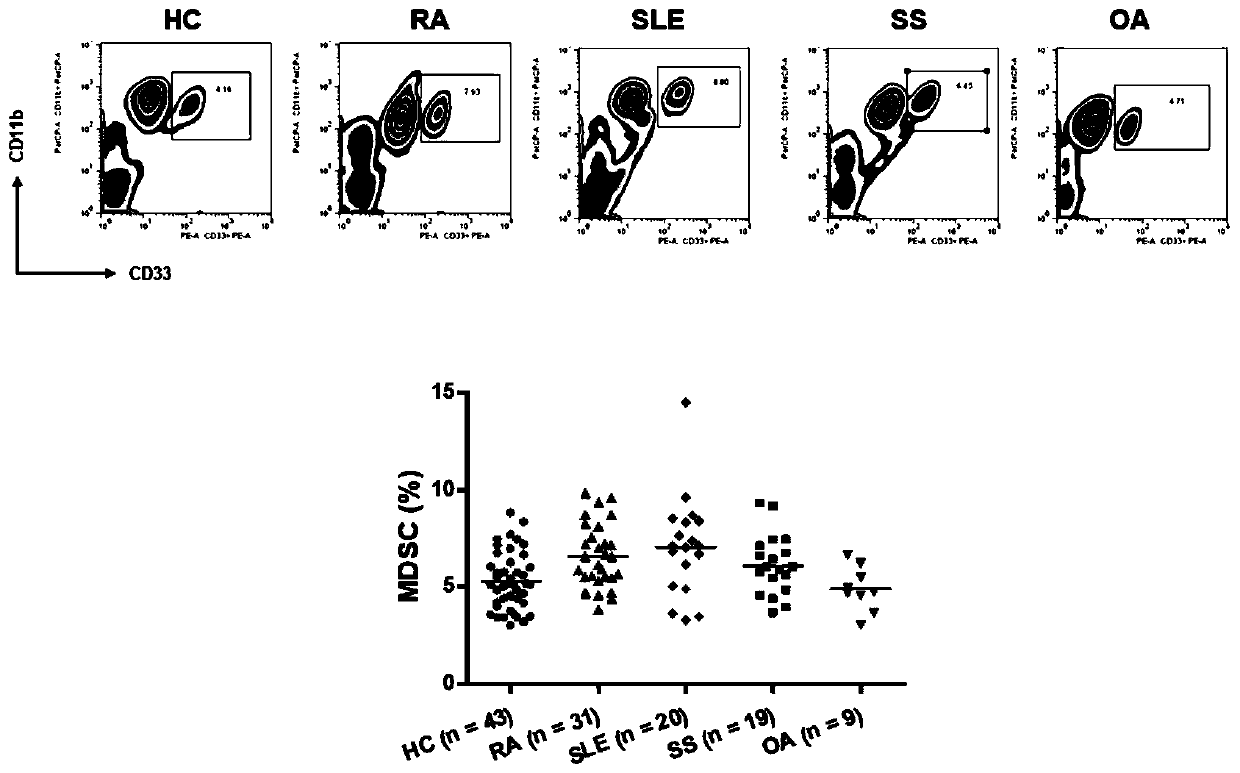
[0024] Based on flow cytometry, the detection of myeloid-derived suppressor cells (MDSCs) and its subgroups of granulocyte-derived MDSCs (G-MDSCs), monocyte-derived MDSCs (M-MDSCs) in rheumatoid arthritis (RA), systemic lupus erythematosus (SLE), Sjogren’s syndrome (SS) and other autoimmune disease patients, and compare the test results of RA patients before and after treatment to evaluate MDSCs and its subgroups in autoimmune diseases The distribution and its evaluation val...