
Suicide-homicide plasmid, saccharomyces cerevisiae traceless gene editing method using suicide-homicide plasmid and application
A gene editing, Saccharomyces cerevisiae technology, applied to the suicide homicide plasmid, using its Saccharomyces cerevisiae traceless gene editing, Saccharomyces cerevisiae traceless gene editing field, can solve the problem of not achieving gene editing effect, unable to continue to express Cas9 protein and gRNA, difficult to screen Saccharomyces cerevisiae strains, etc., to achieve the effect of improving efficiency and not easy to degrade
- Summary
- Abstract
- Description
- Claims
- Application Information
AI Technical Summary
Problems solved by technology
Method used
Image

Examples
Embodiment 1
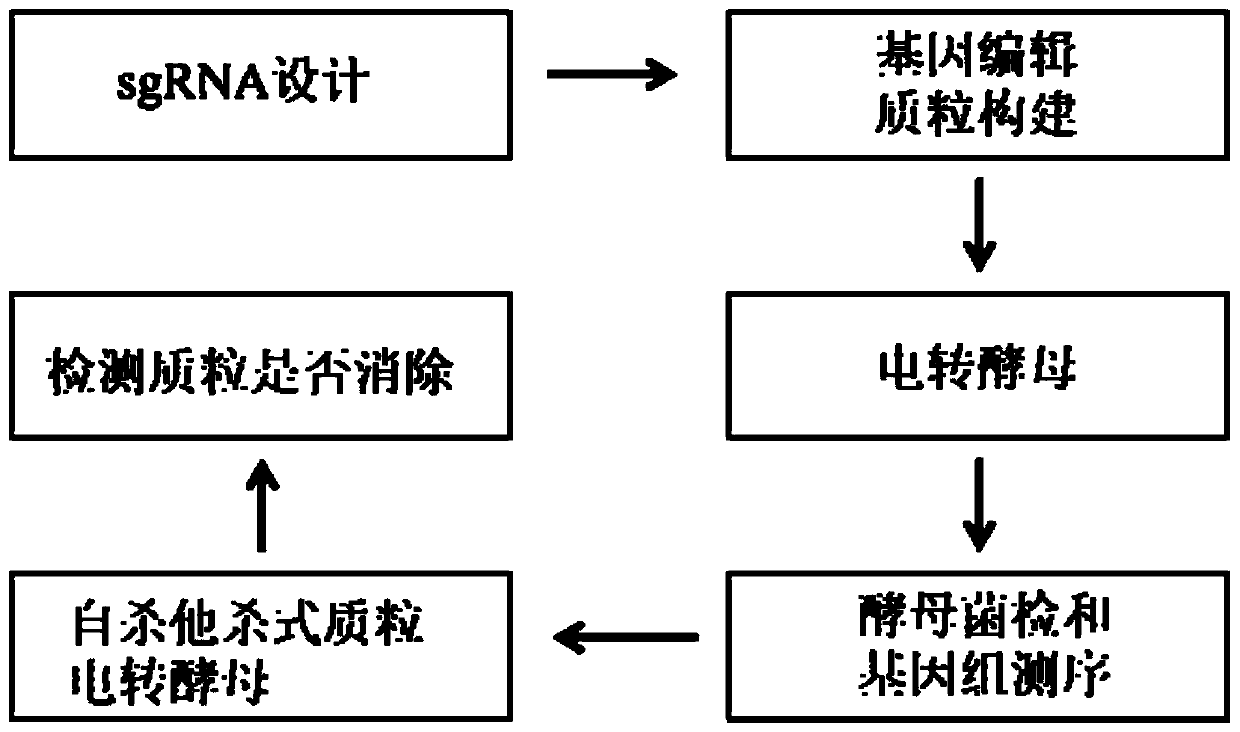
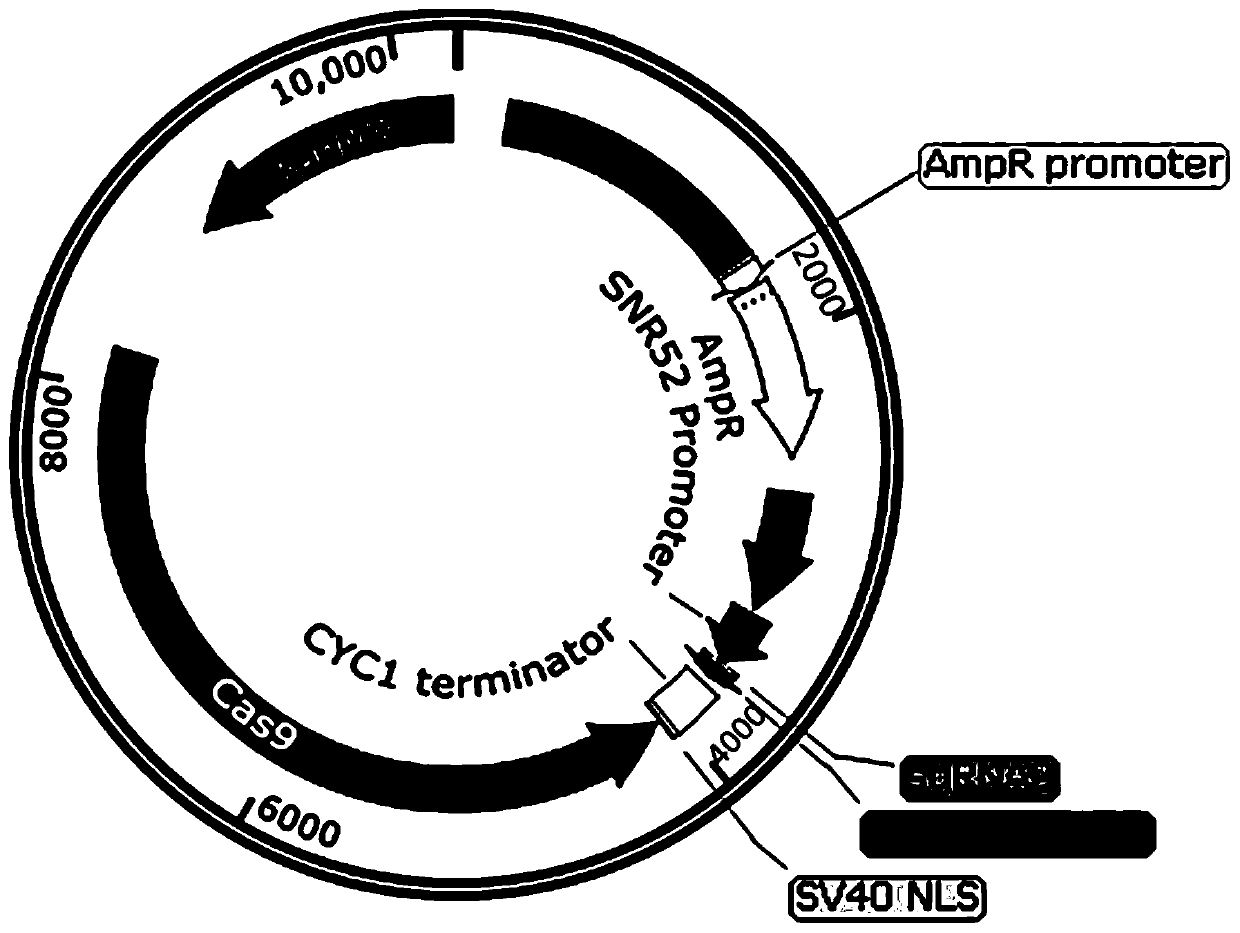
[0062] This embodiment provides a method for seamless gene editing of Saccharomyces cerevisiae, the schematic flow chart of which is shown in figure 1 As shown, it mainly includes sgRNA design, gene editing vector construction, electroporation, yeast detection and genome sequencing, electroporation of suicide plasmids, and finally testing whether the plasmids are eliminated to obtain Saccharomyces cerevisiae after seamless editing. Specifically include the following steps:
[0063] 1. sgRNA design
[0064] (1) The sgRNA1 in the suicide plasmid is designed for the common Cas9 sequence of the gene editing plasmid and its own plasmid, and the sgRNA1 sequence is shown in SEQ ID NO.1-3:
[0065] sgRNA1-1: AATTCTGGTTTCGTACAAAC (SEQ ID NO.1);
[0066] sgRNA1-2: GTATCTCTTTCTGTCAATGG (SEQ ID NO.2);
[0067] sgRNA1-3: AACAGCCCAACCAACAGGT (SEQ ID NO.3); Each sgRNA sequence is designed as forward and reverse primers, with homology arms of the vector added at both ends, and the length o...
PUM
 Login to View More
 Abstract
Description
Claims
Application Information
 Login to View More