System, master control device, microcontroller and method for transferring substances into cells

A technology of a master control device and a microcontroller, which is applied to systems that transfer substances into cells, the field of master control devices, can solve the problems of reduced cell transfer efficiency, no solution proposed, low transfer accuracy, etc., and achieves high efficiency and accuracy. Intracellular transmission, the effect of improving the success rate of transmission and improving the accuracy rate

CN111909839APending Publication Date: 2020-11-10香港城市大学深圳研究院
13 Cites 0 Cited by

Patent Information

Authority / Receiving Office
CN · China
Patent Type
Applications(China)
Current Assignee / Owner
Publication Date
2020-11-10

Smart Images

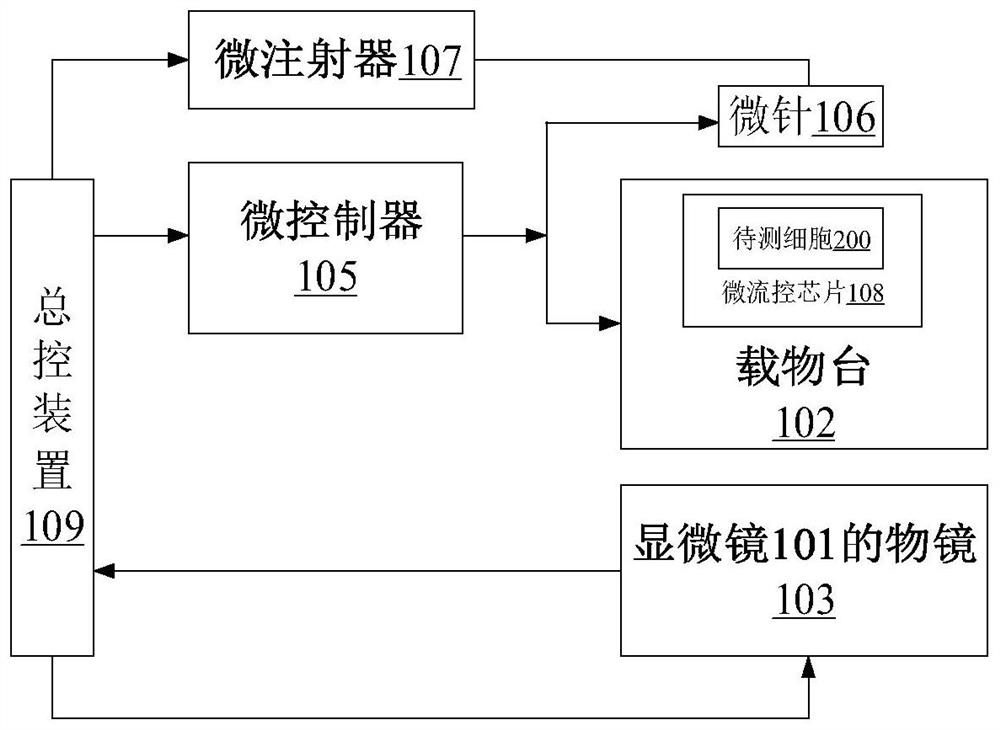
  • Figure 1
    Figure 1
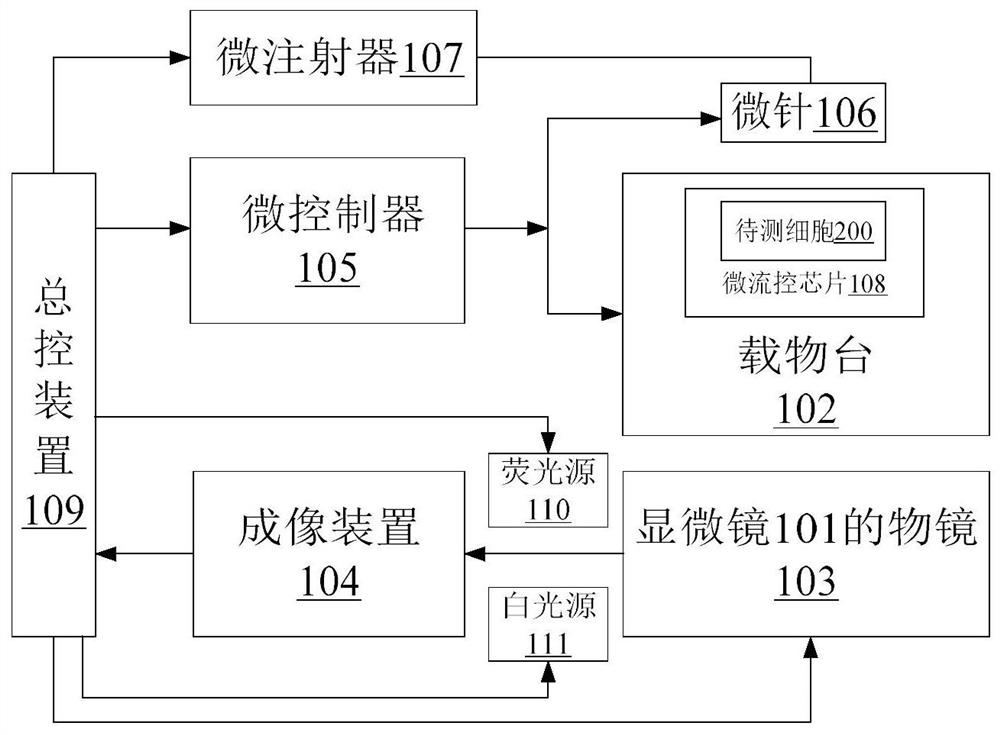
  • Figure 2
    Figure 2
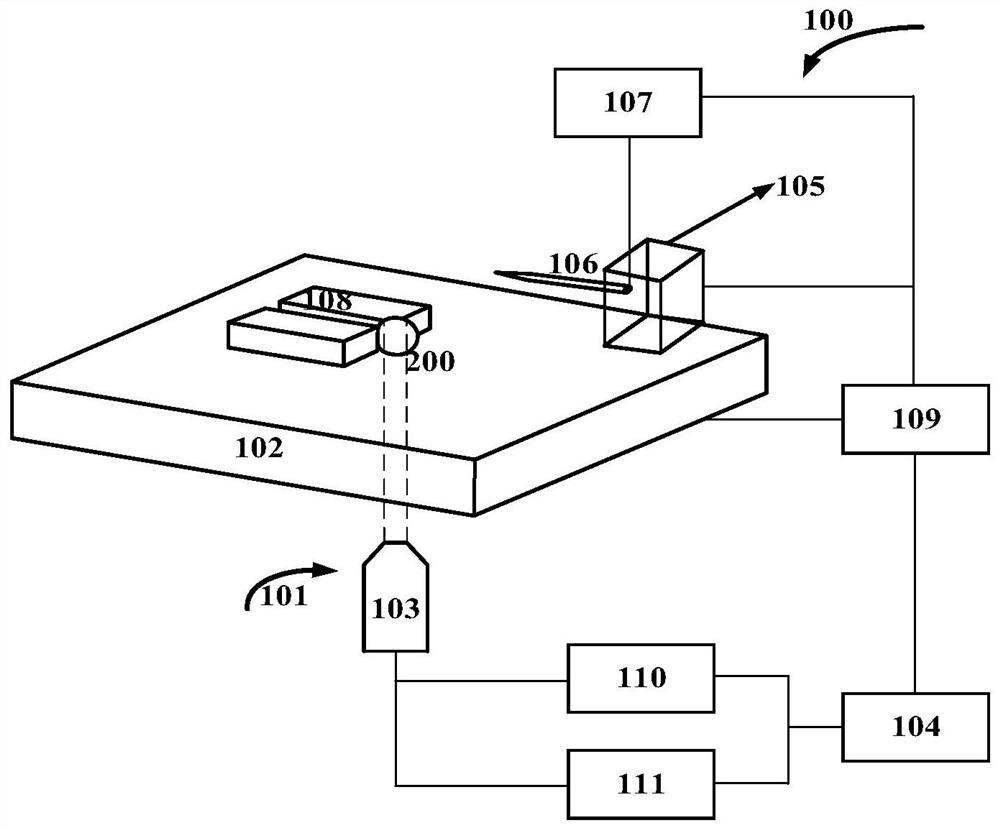
  • Figure 3
    Figure 3
Patent Text Reader

Abstract

The invention provides a system, a master control device, a microcontroller and a method for transmitting substances into cells, and the system comprises a micro-fluidic chip used for fixing cells tobe detected; the objective table is used for placing a micro-fluidic chip fixed with cells to be detected; the objective lens of the microscope is used for optically sampling the to-be-detected cell under the control of the master control device to obtain a sampling picture; the master control device is used for carrying out three-dimensional reconstruction processing on the sampling picture to obtain a three-dimensional reconstruction body corresponding to the to-be-detected cell, and performing geometric analysis on the three-dimensional reconstruction body to obtain an optimal transmissionposition; the microcontroller is used for controlling the microneedle and / or the objective table to move according to the position adjustment instruction, so that the microneedle reaches the optimal transmission position in the to-be-detected cell; and the micro-injector is used for providing ejection pressure for the micro-needle under the control of the master control device and transmitting theexternal substances to be transmitted in the micro-needle into the cells. According to the technical scheme, substances can be efficiently and accurately conveyed into cells, and the conveying success rate is increased.
Need to check novelty before this filing date? Find Prior Art

Description

technical field

[0001] The invention relates to the technical field of intracellular transport processing, in particular to a system, a general control device, a microcontroller and a method for transporting substances into cells. Background technique

[0002] In microassembly and gene editing, such as transfection of DNA and RNA, it involves the step of transporting foreign substances into the interior of the cell. The current intracellular delivery scheme has the following problems:

[0003] Cells need to be fixed before transfer operation to prevent cell movement during operation. Traditional fixation methods, such as the use of microneedles to adsorb cells, cannot fix and arrange more cells in a short period of time, resulting in low intracellular transport efficiency.

[0004] Traditional intracellular transport methods are generally biological and chemical transport methods, such as vesicles, viruses, etc. as carriers, and physical methods: electroporation, microflui...

Examples

Embodiment Construction

[0060] The following will clearly and completely describe the technical solutions in the embodiments of the present invention with reference to the accompanying drawings in the embodiments of the present invention. Obviously, the described embodiments are only some of the embodiments of the present invention, not all of them. Based on the embodiments of the present invention, all other embodiments obtained by persons of ordinary skill in the art without making creative efforts belong to the protection scope of the present invention.

[0061] Since the inventor discovered the technical problems of the intracellular transmission scheme in the prior art, he proposed a scheme for transporting foreign substances into the cell, which is an automated intracellular transmission scheme for three-dimensional reconstruction information using a robot-assisted microscope system . The present invention uses a microfluidic chip to fix the cells to be tested in the chip channel, and uses the ...