Method for inducing rooting of caragana test-tube plantlets

A technology of test-tube seedlings and Caragana, applied in the biological field, can solve the problems of test-tube seedlings with poor leaf structure development, low transplanting survival rate, and poor photosynthetic ability, so as to promote photosynthesis and rooting, high transplanting survival rate, and promote rooting effect

CN112470930APending Publication Date: 2021-03-12GANSU ACAD OF SCI INST OF BIOLOGY
2 Cites 2 Cited by

Patent Information

Authority / Receiving Office
CN · China
Patent Type
Applications(China)
Current Assignee / Owner
Publication Date
2021-03-12

Smart Images

  • Figure 1
    Figure 1
  • Figure 2
    Figure 2
  • Figure 3
    Figure 3
Patent Text Reader

Abstract

The invention discloses a method for inducing rooting of caragana test-tube plantlets, which effectively promotes rooting of the caragana test-tube plantlets through subculture of the caragana test-tube plantlets and rooting culture under the condition that CO2, illumination period and illumination intensity are controlled. The method is easy to operate and low in culture cost, cultured seedlingsgrow robustly, the photosynthetic capacity is high, the transplanting survival rate is high, and high-quality caragana seedlings can be provided for environmental protection and restoration.
Need to check novelty before this filing date? Find Prior Art

Description

technical field

[0001] The invention relates to the field of biotechnology, in particular to a method for inducing rooting of Caragana test tube seedlings. Background technique

[0002] Caragana is an important leguminous tree species widely distributed in northern my country. It has strong vitality and stress resistance. It is a pioneer tree species for afforestation and restoration of vegetation in Northwest China. It also has resource value such as feed and green manure. Not only has high ecological value, but also has high medicinal value, and has broad application prospects.

[0003] Caragana plants are similar to other leguminous species, with difficult propagation, high seed hardening rate and low germination rate; the rooting rate of asexual cuttings and tissue culture is very low, and the rooting rate of different hormones and concentrations varies greatly. The above factors greatly limit the application of Caragana plants in ecological construction. At present, t...

Examples

Embodiment 1

[0016] Caragana test tube seedling cultivation

[0017] The new stems of Caragana pheasant were used as explants. Bud induction medium adopts MS+15 μmol.L -1 6-BA+1 μmol.L -1 NAA, cultivated for 30 days; the medium for proliferation culture is MS+5 μmol.L -1 6-BA +0.1 μmol.L -1 NAA+2 μmol.L -1 GA 3 , cultivated for 30d.

Embodiment 2

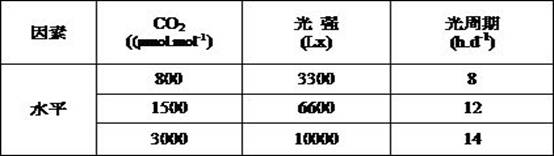
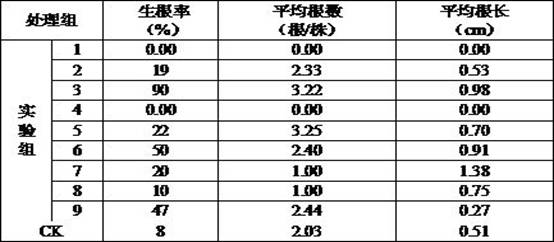
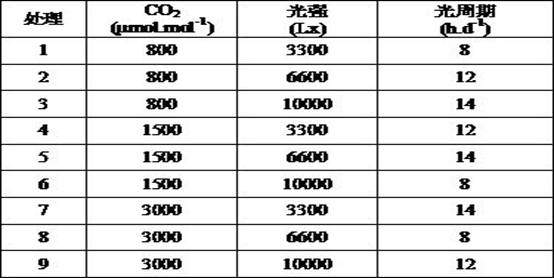
[0019] Choose well-grown, Caragana pheasus rootless test-tube plantlets with 2-3 stem nodes; Subculture the selected Caragana pheasus rootless test-tube plantlets on MS medium that adds 30 g / L of sucrose for 30 days; Caragana unrooted test tube seedlings were placed in 1 / 2 MS medium containing 6g / L agar, sealed with a parafilm with air holes, the conditions set in Table 1 and Table 2 were the experimental group, and 20 g.L of sugar was added -1 and NAA 3 μmol.L -1 , photoperiod 14 h.d -1 , the control treatment with light intensity of 3300 lx was used as the control, and the rooting situation and root system status were counted after 28 days of cultivation.