
Method for semiaseptic culturing heterotrophic chlorella
A technology of heterotrophic chlorella and culture bottle, applied to unicellular algae and other directions, can solve the problems of high power consumption and complicated operation, and achieve the effects of increasing the OD value, simplifying the cultivation operation and reducing the cultivation cost.
- Summary
- Abstract
- Description
- Claims
- Application Information
AI Technical Summary
Problems solved by technology
Method used
Image

Examples
Embodiment 1
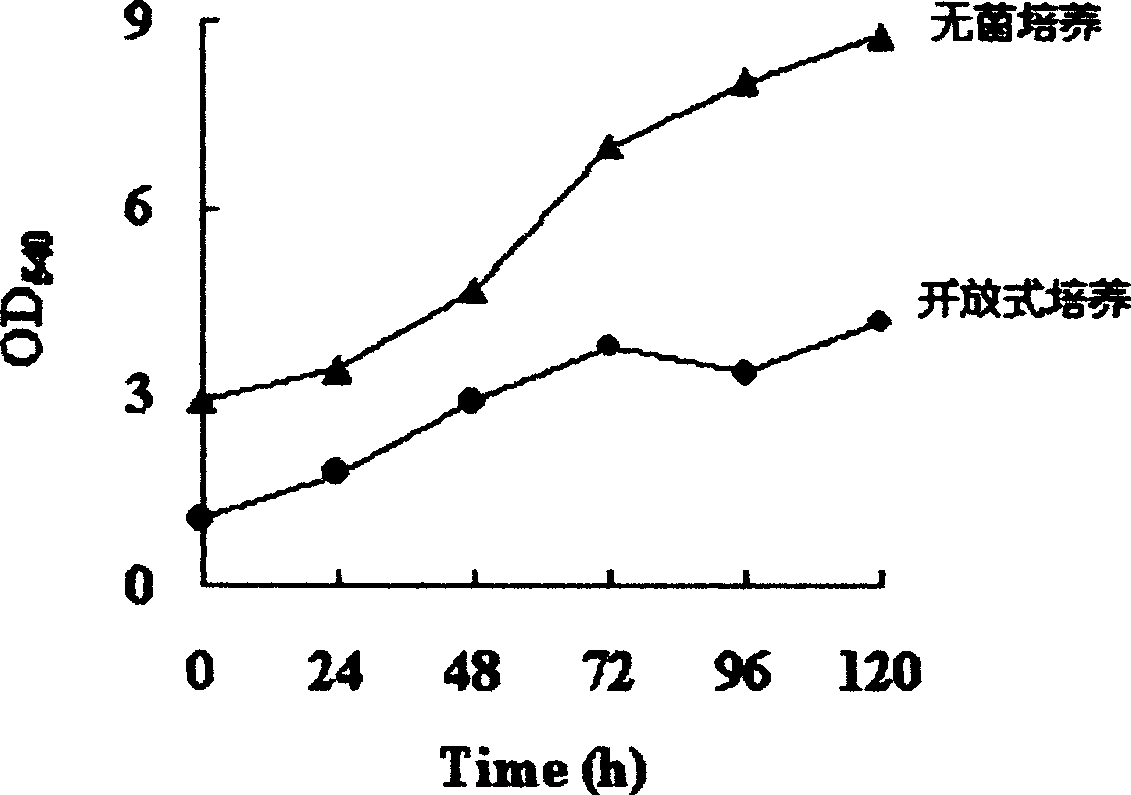
[0013] Comparing the growth state of heterotrophic algae cells under simple aseptic culture and open culture conditions, the results show (such as figure 1 shown). Chlorella was cultured openly in a non-sterilized 20L glass tank (the culture medium was not sterilized), the growth of heterotrophic cells was very slow, the degree of bacterial contamination was high, and the OD value reflecting the density of heterotrophic cells increased slowly. It ended up only getting to around 3. Chlorella is not easy to be centrifuged and precipitated, which is not conducive to the collection of cell products. If feeding (that is, continuing to supplement nutrients and glucose in the culture solution), it is easier to make bacteria grow in large quantities, and the algae collected by centrifugation are impure and have low biomass. The growth curve of heterotrophic cells in the experimental group after sterilization showed that the OD value reflecting the density of heterotrophic cells incr...
Embodiment 2
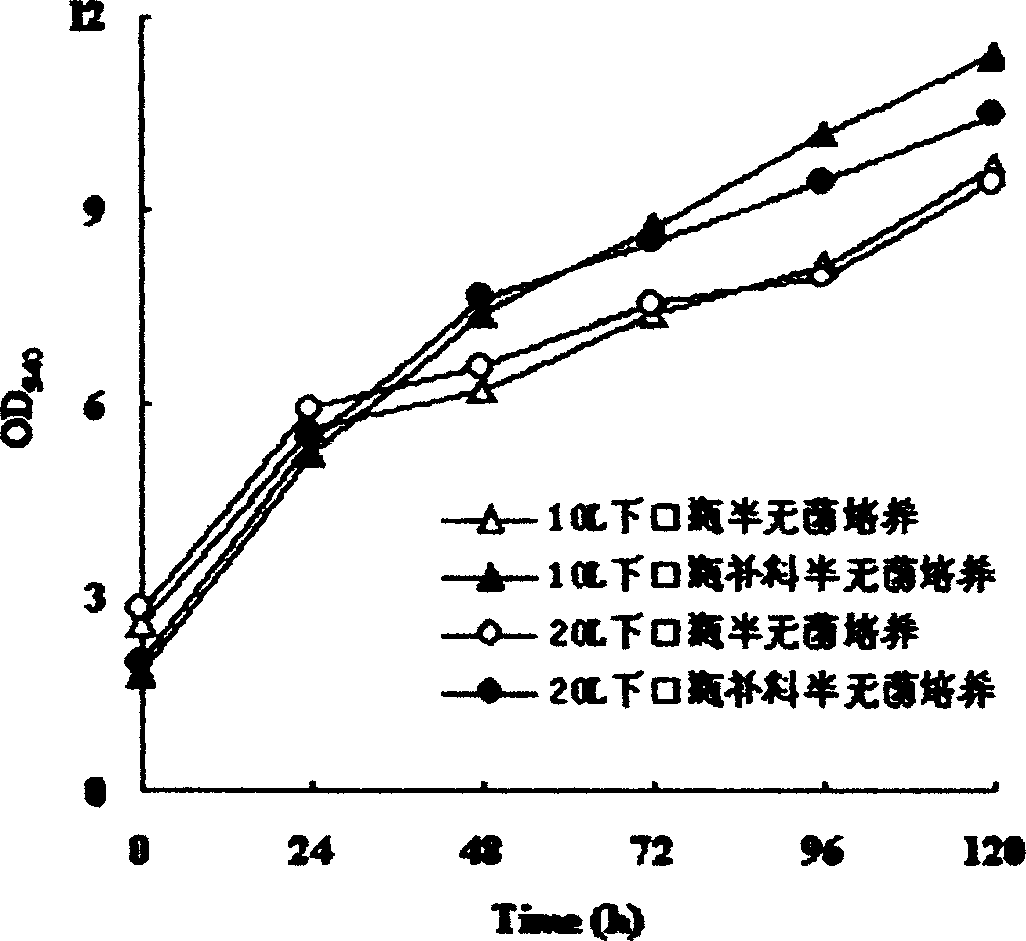
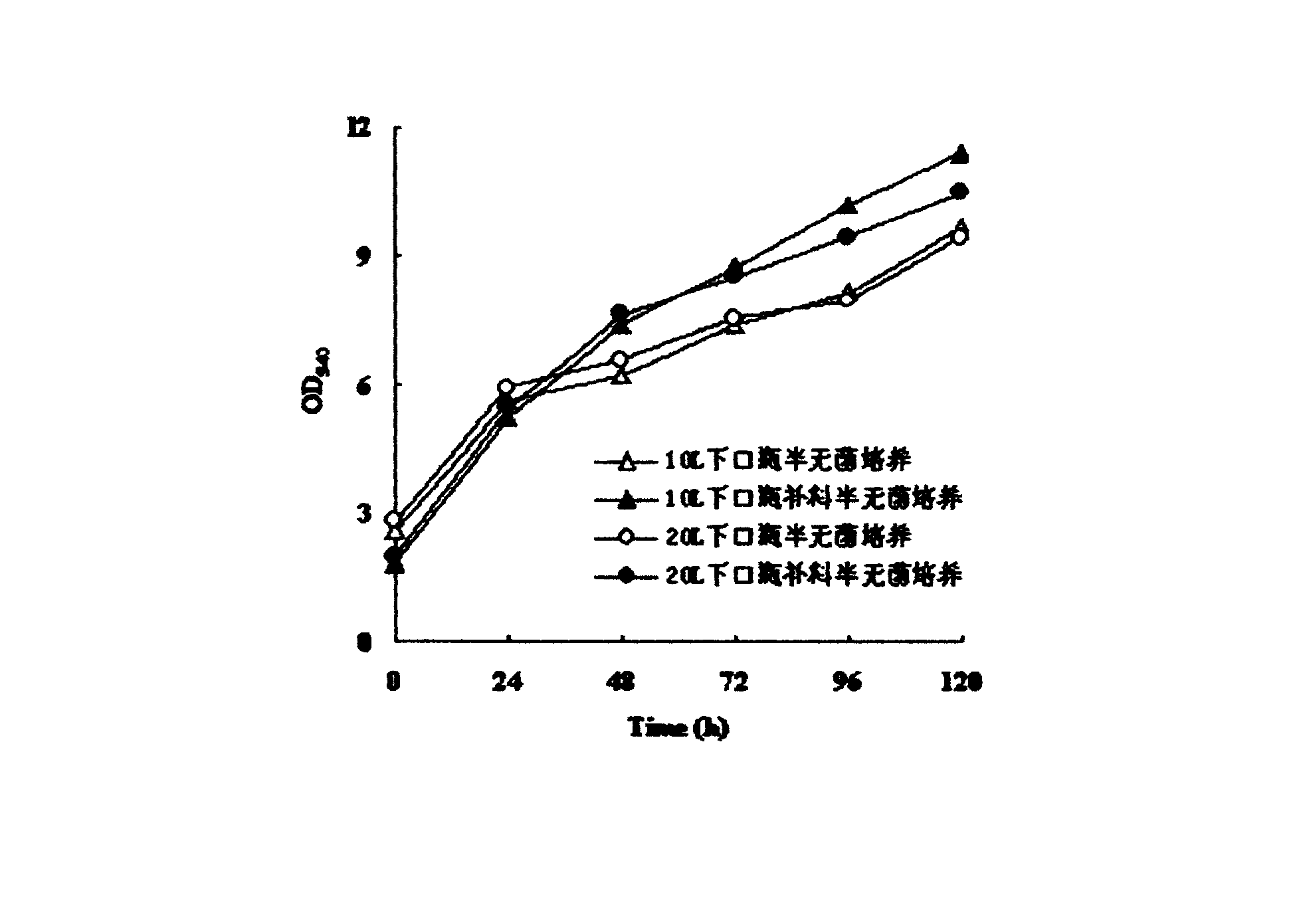
[0015] The growth state of chlorella in 10L, 20L bottom bottle (feeding) semi-sterile culture is compared respectively, and the result shows (as figure 2 shown). In the first step, all media and culture vessels are autoclaved. Then, the heterotrophic Chlorella species were subjected to strict aseptic culture in a 400ml ventilated culture bottle at a temperature of 26°C and no requirement on light intensity. When the algae cells grow to the logarithmic phase, after 20-24 hours, transfer the algae cells to a 3L Erlenmeyer flask under aseptic conditions and continue to cultivate them in a light incubator as a 20L mass-cultured algae species. In the second step operation, the algae species in the 3L Erlenmeyer flask were transferred to a 10L or 20L bottom flask under non-sterile conditions (in an open system) for cultivation. The upper and lower openings of the lower bottle are ventilated, the culture temperature changes with the laboratory temperature, and the light intensity ...
PUM
 Login to View More
 Abstract
Description
Claims
Application Information
 Login to View More