
Braking force control apparatus
- Summary
- Abstract
- Description
- Claims
- Application Information
AI Technical Summary
Benefits of technology
Problems solved by technology
Method used
Image

Examples
embodiments
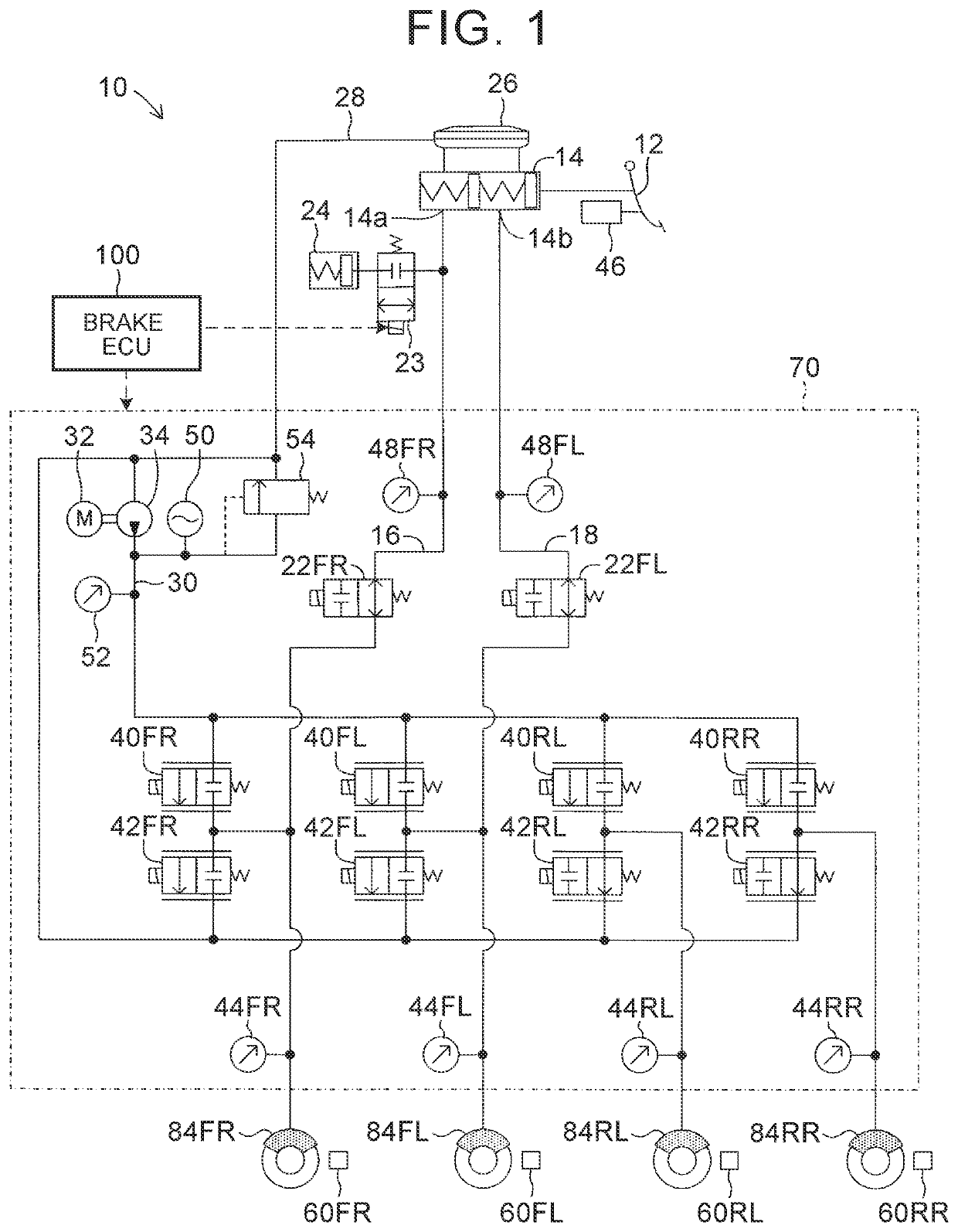
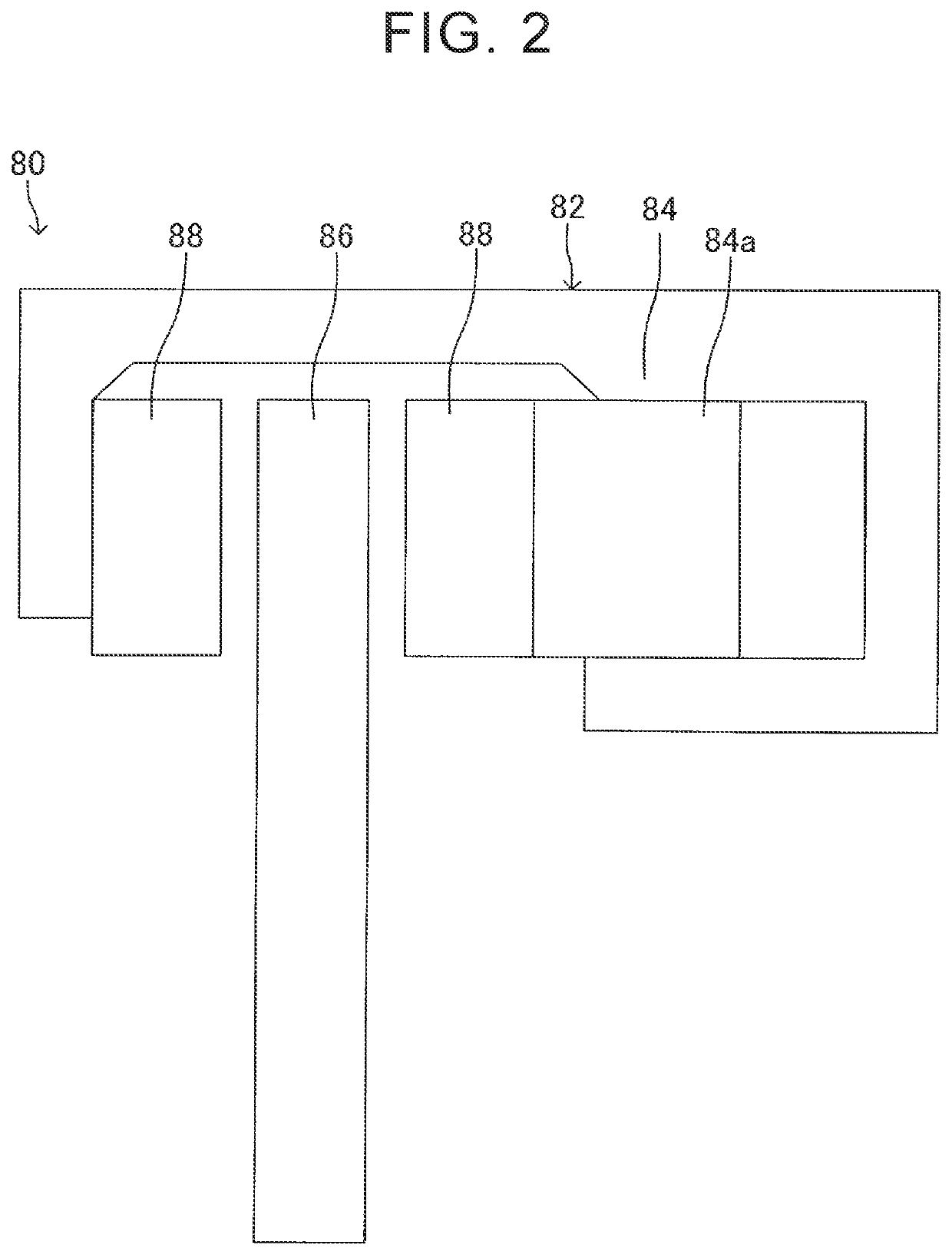
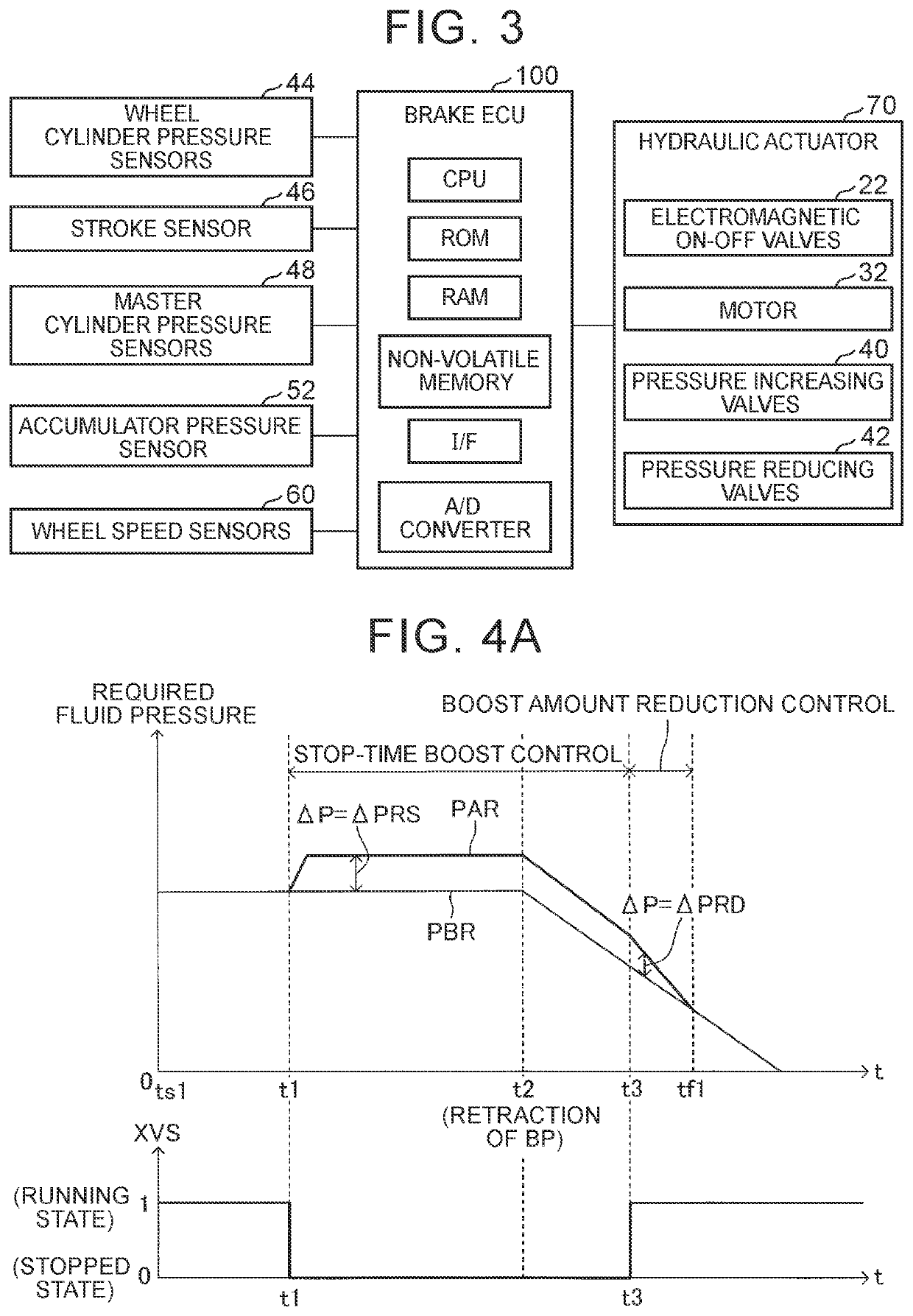
[0027]As shown in FIG. 1, a braking force control apparatus according to one of the embodiments of the disclosure (hereinafter referred to also as “the apparatus of the present embodiment) 10 constitutes a vehicular electronically controlled brake system (ECB), and controls braking forces that are applied to four wheels provided in a vehicle. The apparatus 10 of the present embodiment is mounted in, for example, a hybrid vehicle that is equipped with an electric motor and an internal combustion engine as drive sources for running. In this hybrid vehicle, regenerative braking for braking the vehicle through regeneration of kinetic energy of the vehicle into electric energy, and hydraulic braking by the apparatus 10 of the present embodiment can each be used to brake the vehicle. The vehicle that is mounted with the apparatus 10 according to the present embodiment can perform brake regeneration cooperative control for generating a desired braking force by combining this regenerative b...
modification example
[0096]A braking force control apparatus according to the modification example (which will be hereinafter referred to also as “the modified apparatus”, and a vehicle mounted with the modified apparatus will be hereinafter referred to also as “the own vehicle”) is different from the apparatus 10 of the present embodiment in that a brake ECU performs various kinds of driving support control, and that a braking request is created based on these kinds of driving support control. As driving support control, for example, adaptive cruise control (ACC), pre-crash brake control (PBC), and the like can be mentioned. The following description will focus on the difference from the apparatus 10 of the present embodiment.
[0097]ACC is well-known control for causing the own vehicle to run at a constant speed such that an actual vehicle speed thereof coincides with a set vehicle speed when there is no vehicle (preceding vehicle) running in front of the own vehicle, and causing the own vehicle to run ...
PUM
 Login to View More
 Abstract
Description
Claims
Application Information
 Login to View More