
Gravimetric moisture-determination instrument with an air duct for cooling
a technology of air duct and gravity, which is applied in the direction of material thermal analysis, lighting and heating apparatus, drying, etc., can solve the problems of clogging the filter pad with dust particles from the ambient air, affecting and users' neglect of the task, so as to improve the design of the air duct and simple routine procedure
- Summary
- Abstract
- Description
- Claims
- Application Information
AI Technical Summary
Benefits of technology
Problems solved by technology
Method used
Image

Examples
Embodiment Construction
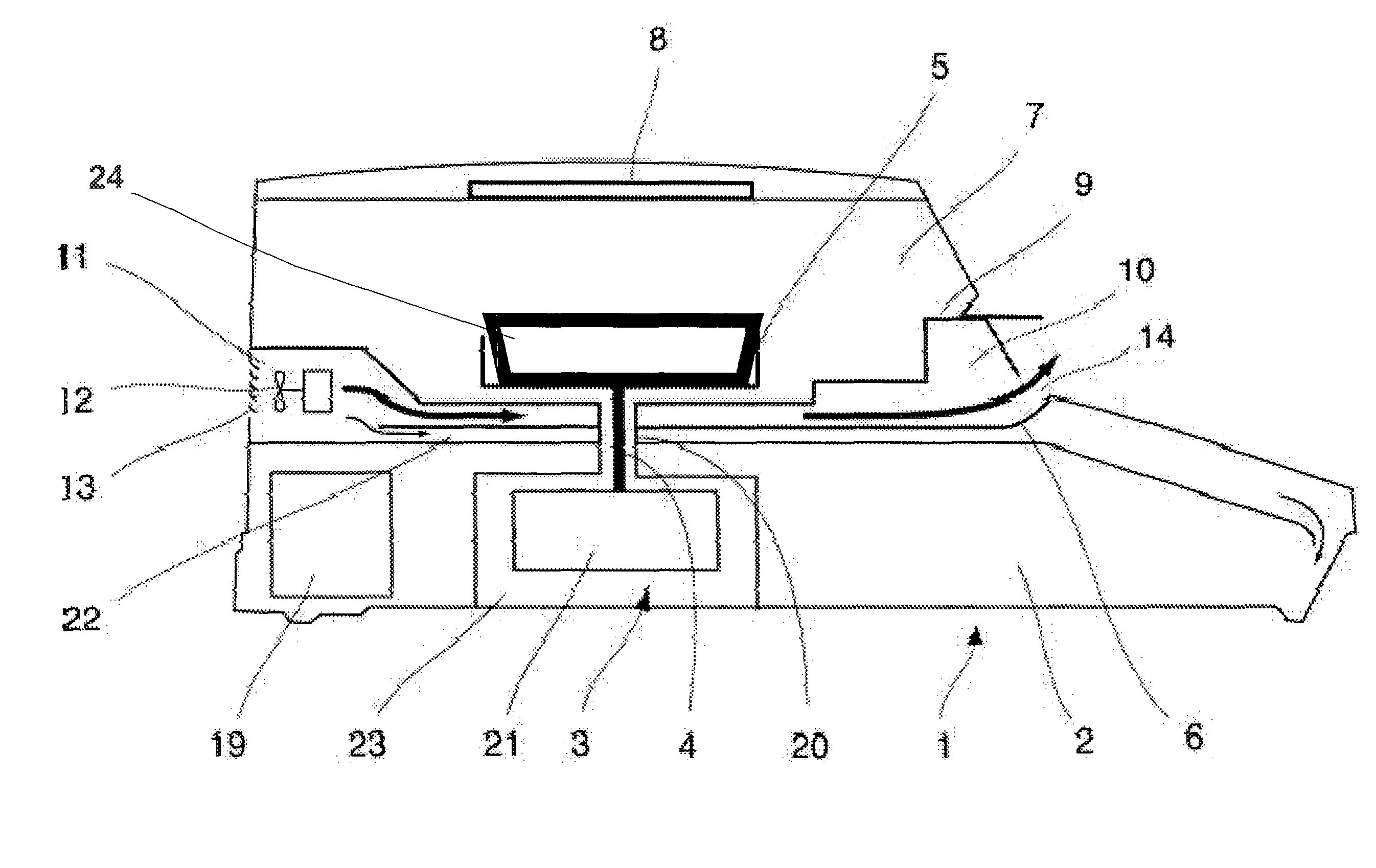
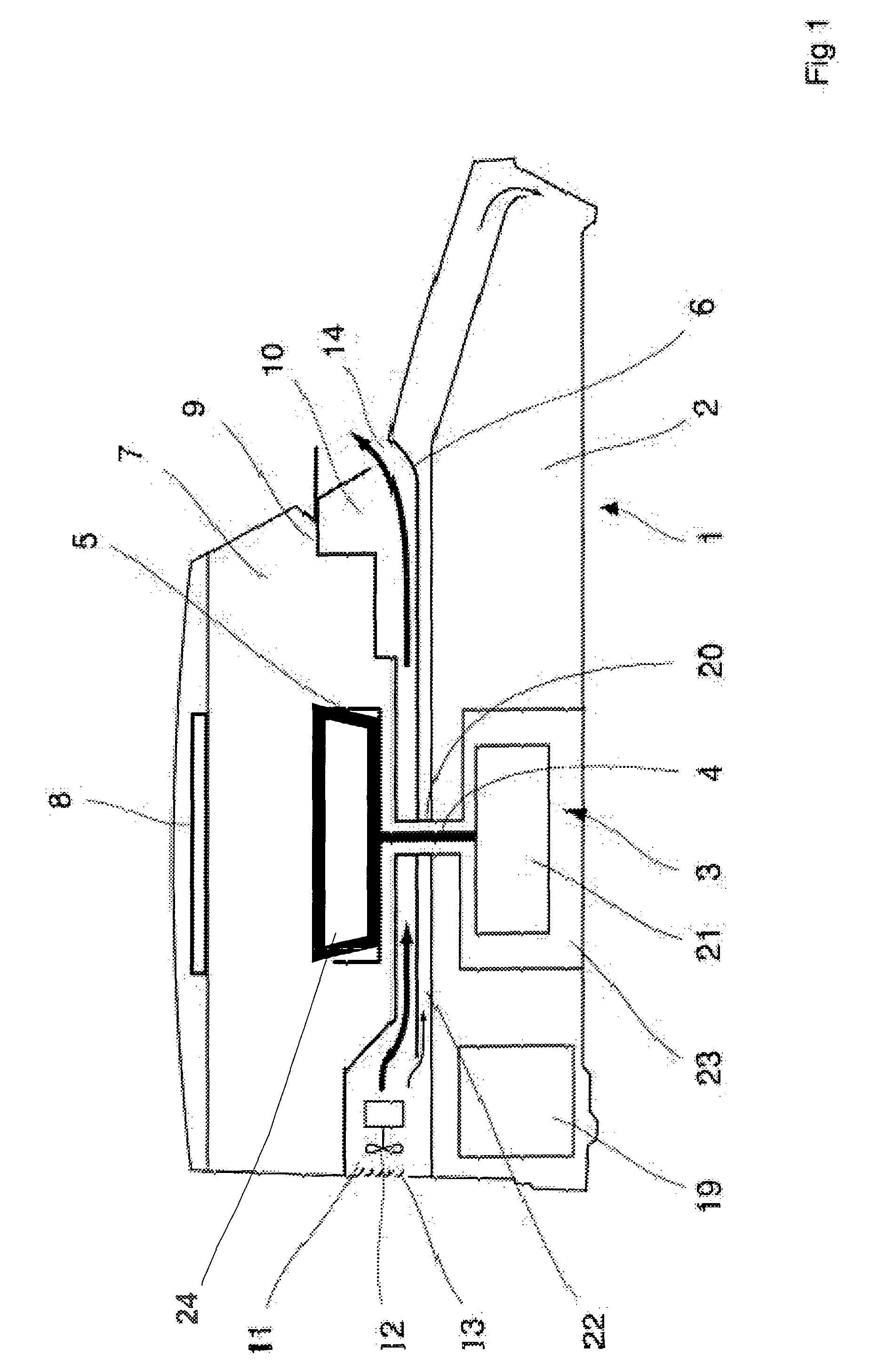
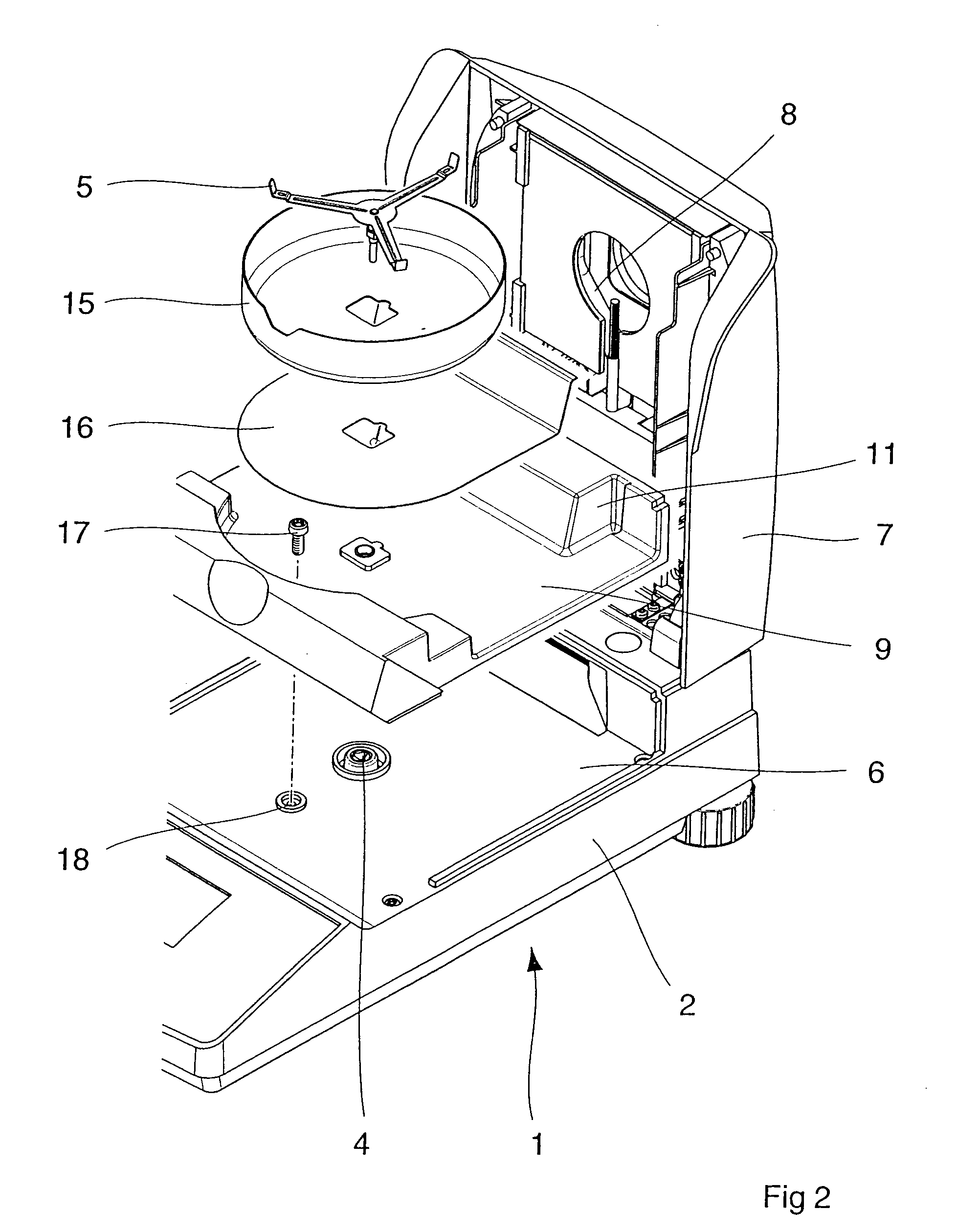
[0017] The moisture-determination instrument 1 of FIG. 1 has an instrument housing 2 containing a balance 3. The balance has a load-receiving connection 4 protruding through an opening in the housing 2 and supporting a removable sample tray carrier 5. A plate 6 covers the top of the instrument housing 2 except for an opening in the rear portion of the housing. The pass-through collar 20 for the load-receiving connection 4 through the plate 6 is sealed so that air and dust from the air duct cannot penetrate the areas of the weighing cell 21 and the sample tray carrier 5. The weighing cell 21 has its own enclosed compartment 23, which is sealed against dust and air from the outside. Integrated in the tilt-up cover 7 is a radiant heater 8 to heat-dry the samples that are placed on a sample tray and whose moisture content is to be determined. When the tilt-up cover 7 is closed, its side walls adjoin the plate 6 substantially over its full length and thereby close off the interior space ...
PUM
| Property | Measurement | Unit |
|---|---|---|
| weight | aaaaa | aaaaa |
| weight loss | aaaaa | aaaaa |
| time | aaaaa | aaaaa |
Abstract
Description
Claims
Application Information
 Login to View More