Urinary catheter device with a pharmaceutically active composition

a technology of urinary catheter and composition, which is applied in the field of urinary catheter with a pharmaceutically active composition, can solve the problems of urinary incontinence, urinary incontinence, systemic drug treatment affecting the whole body, and high risk of side effects

US20060058777A1Inactive Publication Date: 2006-03-16COLOPLAST AS
10 Cites 36 Cited by

Patent Information

Authority / Receiving Office
US · United States
Patent Type
Applications(United States)
Current Assignee / Owner
Publication Date
2006-03-16
Estimated Expiration
Not applicable · inactive patent

Smart Images

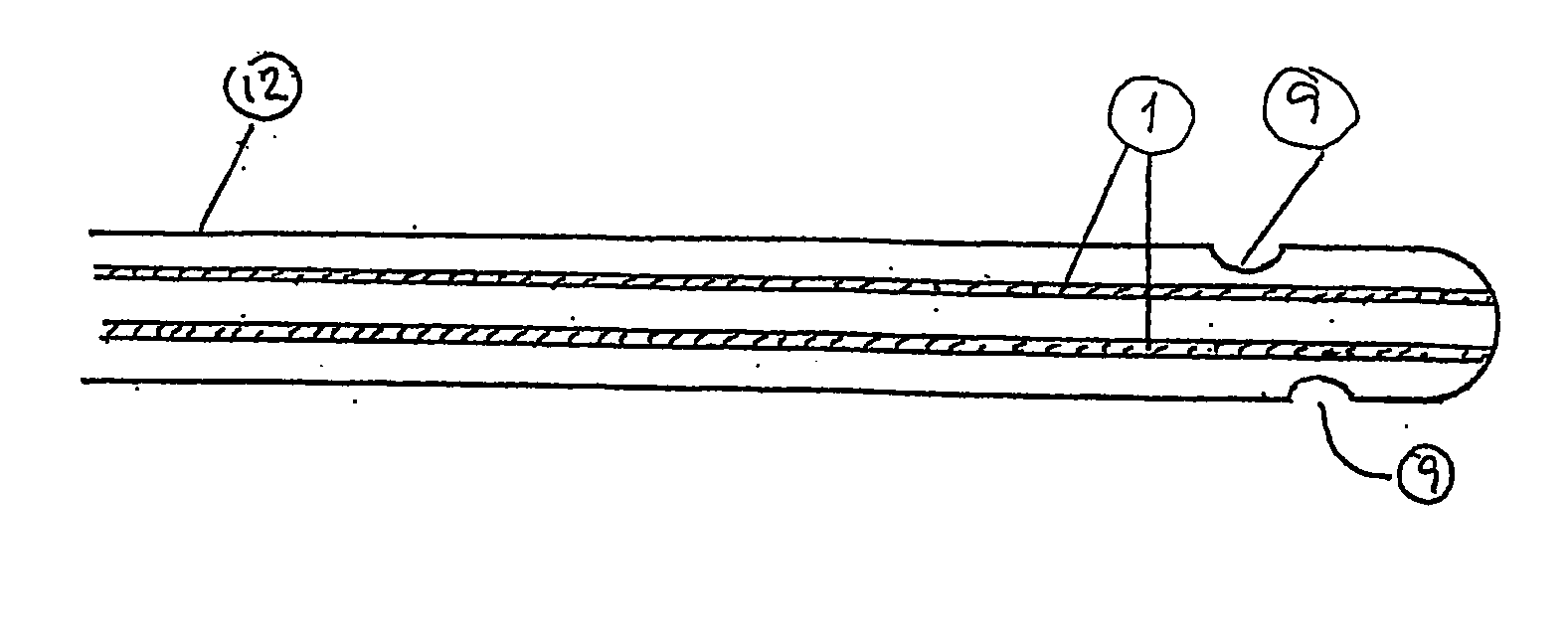
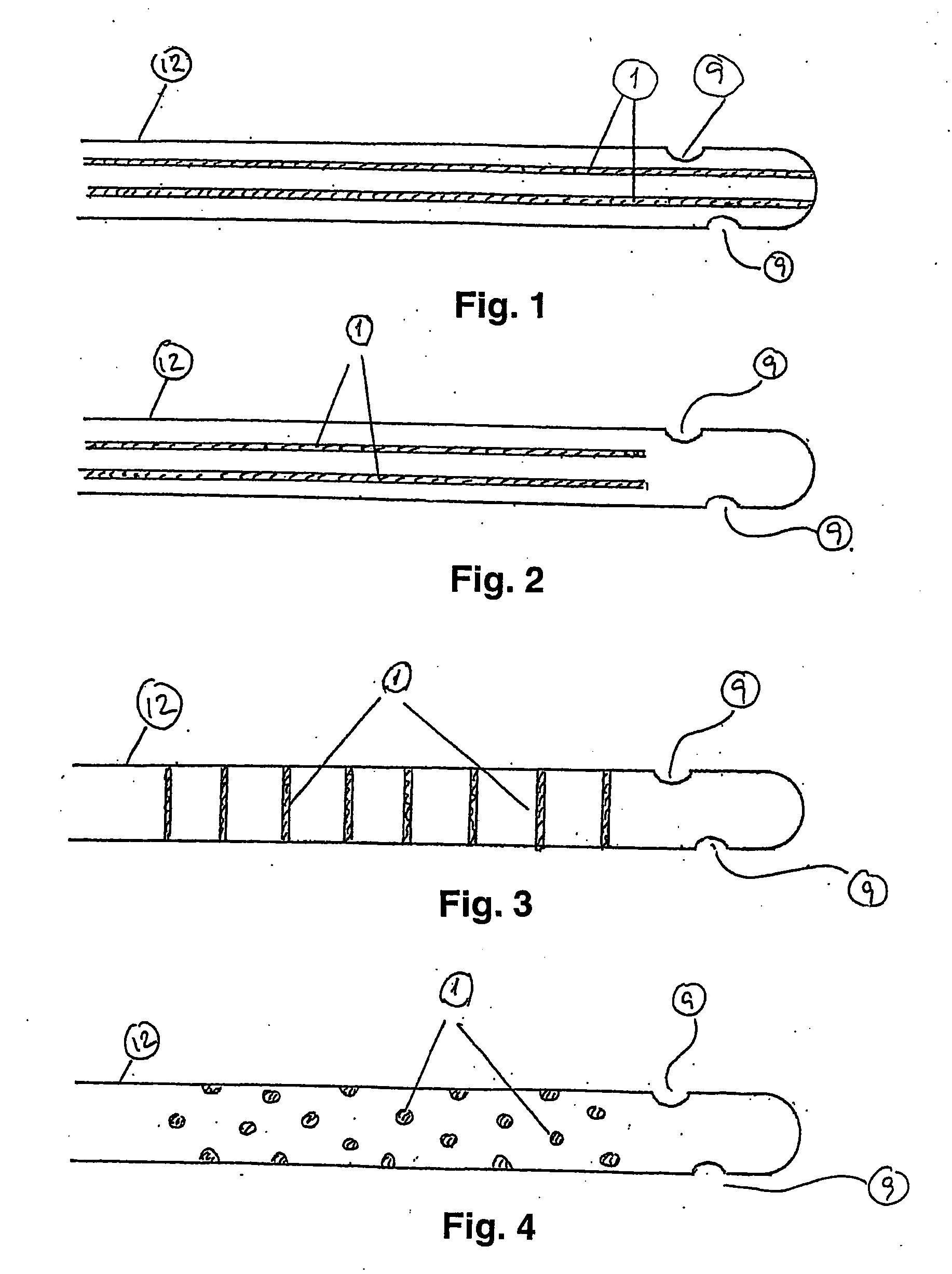
  • Figure 1
    Figure 1
  • Figure 2
    Figure 2
  • Figure 3
    Figure 3
Patent Text Reader

Abstract

The invention relates to a device for urinary catheterisation comprising a catheter element and a pharmaceutically active composition containing a hormone, an efferent blocking agent, an afferent blocking agent and / or a sympathomimetic agent, the catheter element being adapted to deliver the pharmaceutically active composition in the lower urinary tract system during catheterisation. The invention also relates to the use of said pharmaceutically active composition for the manufacture of a device for the treatment, alleviation or prophylaxis of incontinence in a human and to a method of treating a human suffering from or being susceptible to incontinence. The invention further relates to a device for urinary catheterisation comprising a discrete unit dose comprising a pharmaceutically active composition and a catheter element adapted to shed said pharmaceutically active composition in the lower urinary tract system during catheterisation.
Need to check novelty before this filing date? Find Prior Art

Description

FIELD OF THE INVENTION

[0001] The present invention relates to a urinary catheter with a pharmaceutically active composition. BACKGROUND OF THE INVENTION

[0002] Urinary incontinence is involuntary loss of urine from the bladder and affects millions of people worldwide. It can be caused by a great variety of conditions, including weak pelvic floor and sphincter muscles, estrogen deficiency, traumatic lesions of the urinary system or lesions of peripheral nerves innervating the bladder. Furthermore, spinal cord injury or central nervous diseases or lesions can cause urinary incontinence.

[0003] In some cases, urinary incontinence is seen in combination with overactive bladder and difficulties with complete emptying of the bladder. Intermittent catheterisation is the preferred method of bladder emptying, in the case of over active bladder. Often this method is combined with medical treatment to relax the bladder musculature and increase bladder capacity. In general, systemic drug treat...

Examples

Embodiment Construction

Device for Urinary Catheterisation

[0024] This invention relates to a device for urinary catheterisation, said device comprising a catheter element adapted to be inserted in the urethra of a human, and a pharmaceutically active composition comprising at least one agent selected from the group consisting of hormones, efferent blocking agents, afferent blocking agents and sympathomimetic agents, and said catheter element is adapted to deliver at least a part of said pharmaceutically active composition in the lower urinary tract system during catheterisation.

[0025] A device according to the invention comprises a pharmaceutically active composition, which has an effect on the continence system, and a catheter element for drainage of urine from the bladder and for delivering the pharmaceutically active composition in the urethra during the catheterisation procedure. In addition to catheterisation, a device according to the invention is thus performing a local medical treatment of the l...