
Multimode device and method for controlling breathing
a multi-mode device and breathing control technology, applied in the field of respiratory and related disorders, can solve the problems of drug therapy not providing satisfactory, varied treatment methods and devices used with very limited success, and failure to provide satisfactory results in osa patients, so as to reduce the occurrence of upper airway collapse or upper airway flow limitation, increase functional residual capacity, and increase upper airway patency
- Summary
- Abstract
- Description
- Claims
- Application Information
AI Technical Summary
Benefits of technology
Problems solved by technology
Method used
Image

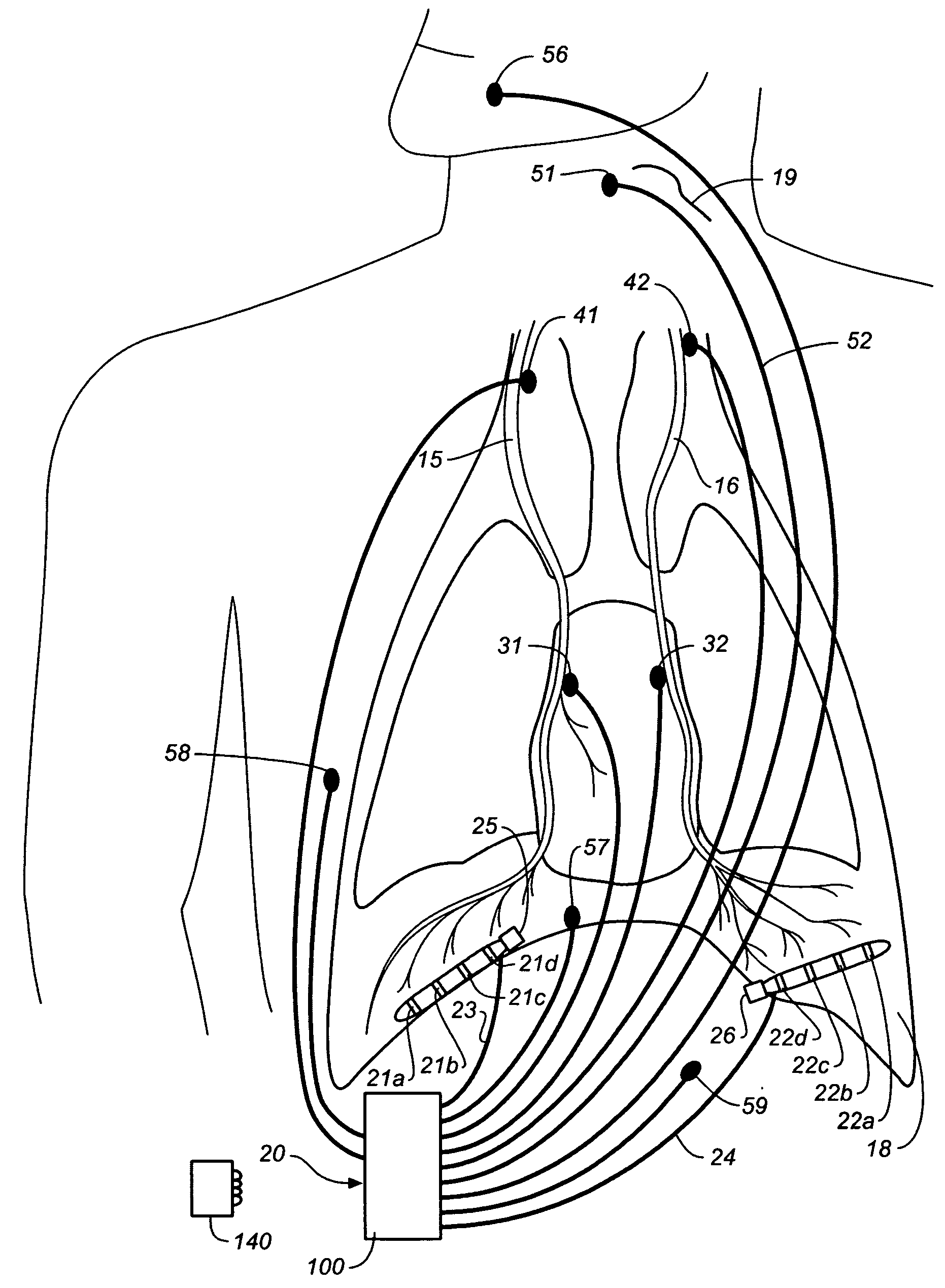
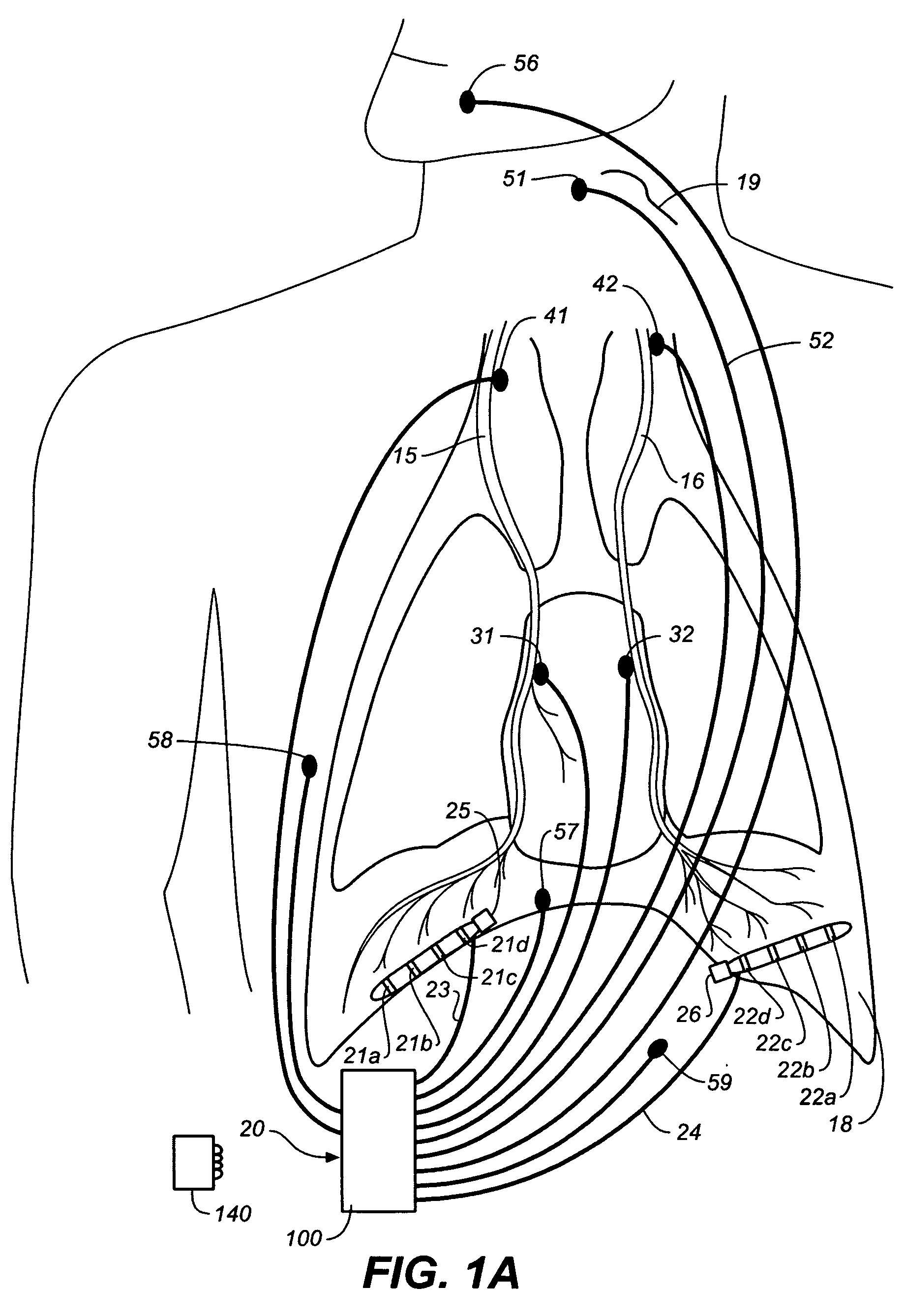
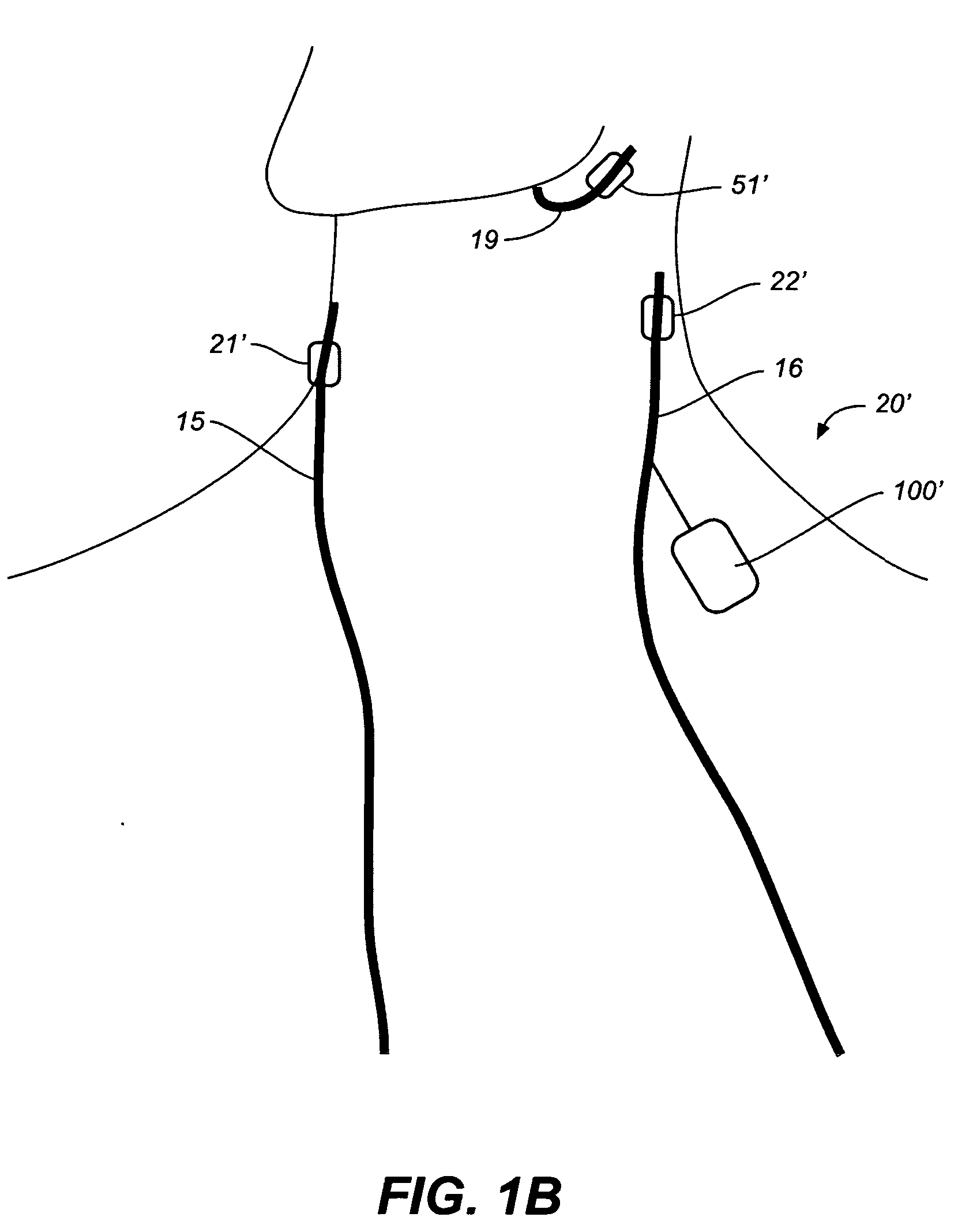
Examples
Embodiment Construction
[0064] In accordance with one aspect of the invention, a method and device for treating obstructive sleep apnea patients is provided. According to one embodiment, a device is provided that manipulates breathing according to one or more protocols, by stimulating the diaphragm or phrenic nerve to mitigate or prevent obstructive respiratory events including obstructive sleep apnea or other events with an obstructive component. The device may comprise a phrenic nerve or diaphragm stimulator and a sensor configured to sense a condition of a subject indicating a possibility that an obstructive respiratory event will occur or is occurring. In accordance with the invention, obstructive respiratory events are characterized by a narrowing of the air passageway, typically the upper air passageway. Examples of obstructive respiratory events include but are not limited to obstructive sleep apnea, obstructive hypopnea and other respiratory events with an obstructive component.
[0065] In another e...
PUM
 Login to View More
 Abstract
Description
Claims
Application Information
 Login to View More