Nucleotide vaccine composition

a technology of nucleotide and vaccine, applied in the field of vaccine composition, can solve the problems of serious doubt about the utility of dna vaccine, ineffectiveness, etc., and achieve the effects of stimulating secretion, increasing antigen presentation, and enhancing immune response of subjects

US20070071722A1Active Publication Date: 2007-03-29HUANG MALLEN
8 Cites 9 Cited by

Patent Information

Authority / Receiving Office
US · United States
Current Assignee / Owner
Publication Date
2007-03-29

Smart Images

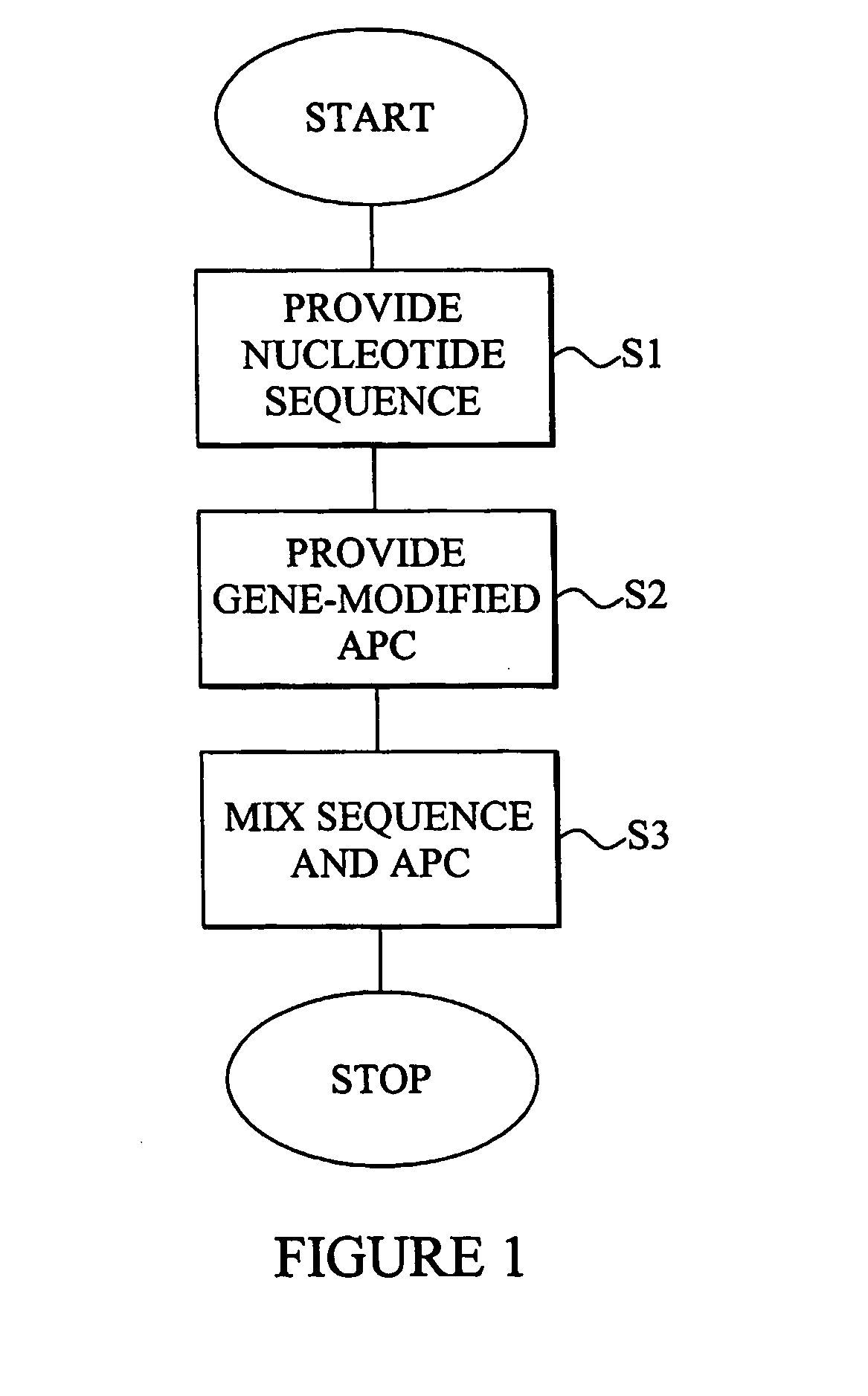
  • Figure 1
    Figure 1
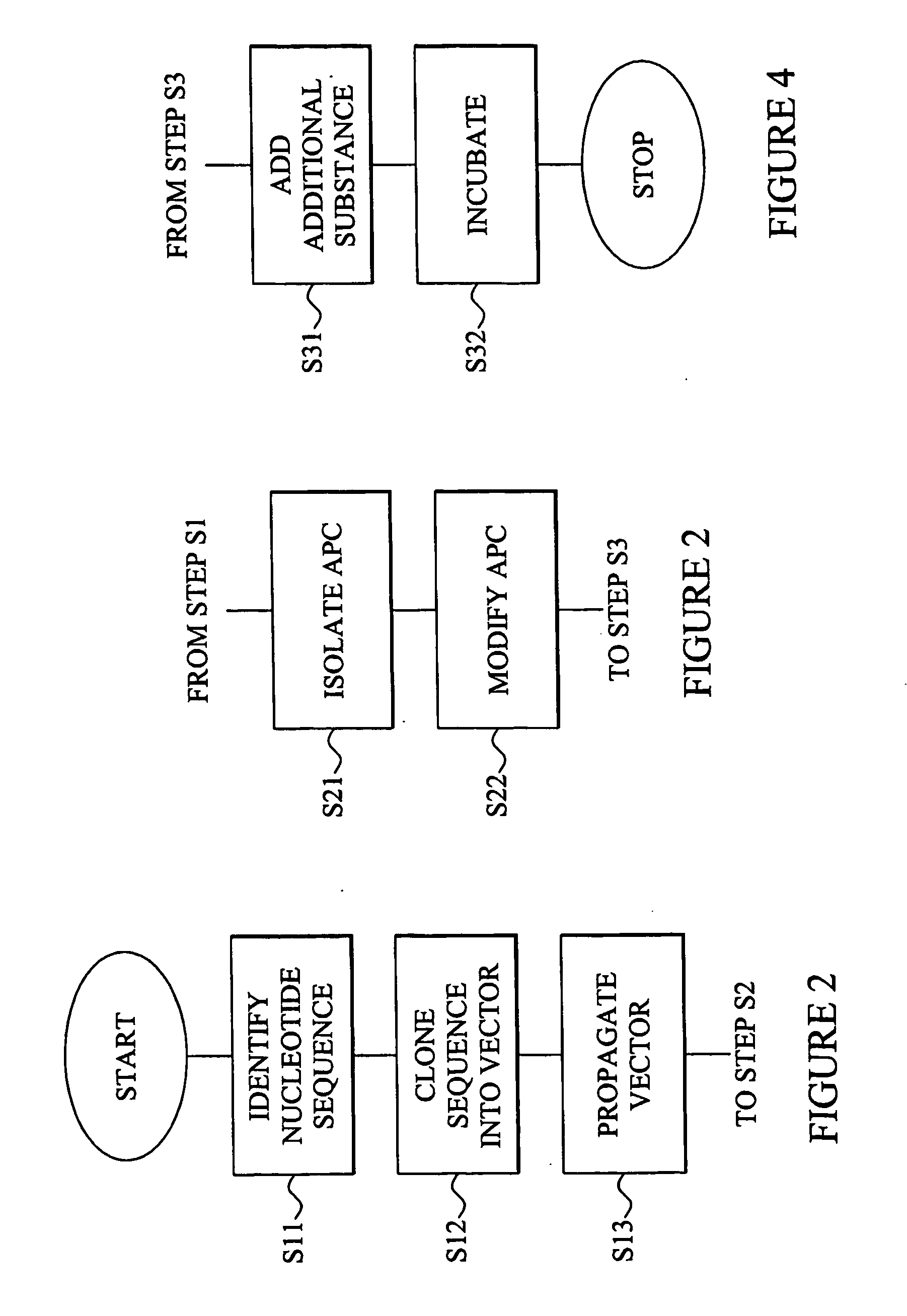
  • Figure 2
    Figure 2
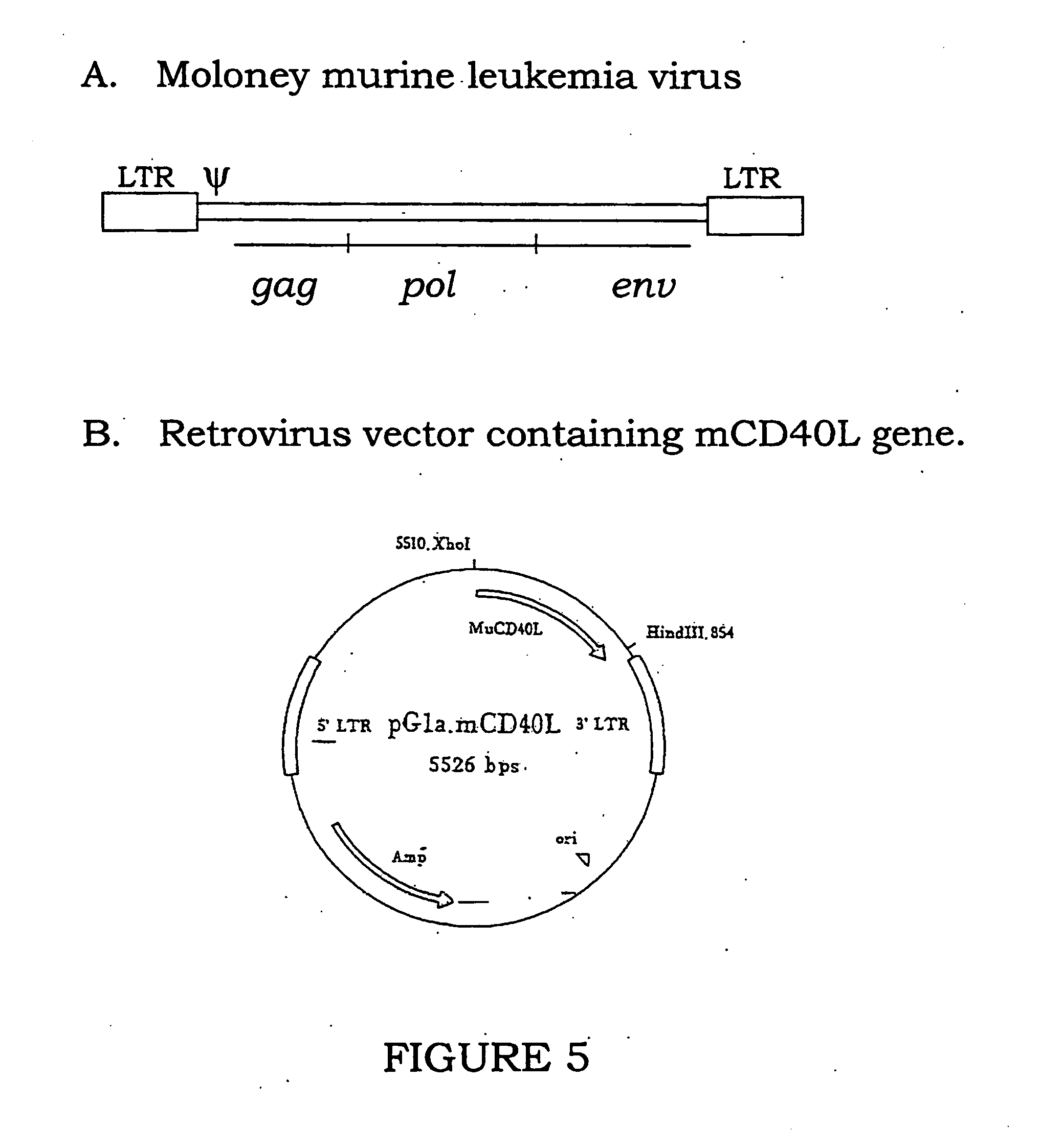
  • Figure 3
    Figure 3
Patent Text Reader

Abstract

The present invention refers to a novel combination of nucleotide and cellular vaccine composition and pharmaceutical composition and use thereof for treating and / or preventing diseases, including infectious diseases, cancer, autoimmune diseases, allergy, diabetes and blood disorders. The vaccine composition comprises a nucleotide sequence encoding an antigenic molecule and gene-modified antigen-presenting cells (APCs), preferably provided as an intermixture. The APCs are modified to express immune modulating molecules. Immunization with the vaccine composition of present invention into a subject, induces the host immune system to respond and generate efficient immunity against either pre-existing disease or protect the host against the disease.
Need to check novelty before this filing date? Find Prior Art

Description

TECHNICAL FIELD

[0001] The present invention generally refers to vaccine compositions and in particular to a vaccine composition containing of nucleotide sequences and gene-modified antigen presenting cells and use thereof. BACKGROUND OF THE INVENTION

[0002] Vaccination approaches utilizing nucleotide sequences, including DNA or RNA sequences, have been developed during the last decade. DNA vaccines are easy to construct, stable and cost effective to produce. In addition, DNA vaccines can be repeatedly administrated without significant generation of vector-specific immune response. When naked plasmid DNA is injected into the skin and muscle of mice, the DNA is taken up by neighboring cells. These nonlymphoid tissues express the plasmid-encoded protein and the antigenic peptide is then presented to T cells in the context of the major histocompatibility complex (MHC) class I or class II molecules. (Annu. Rev. Immunel. 2000, 18:927).

[0003] DNA immunization has been studied in animal m...

Examples

example

[0130] The vaccine composition of present invention was compared with a variety of other approaches including vaccinations with antigenic peptide and plasmid DNA encoding antigenic peptide.

Cell line

[0131] A20 (H-2d) is a B cell lymphoma cell line derived from BALB / c mice used as a CTL target in the present invention study. A20 cells express B220, MHC-I, MHC-II and CD19 molecules.

[0132] The tumor cells (BM185wt, H-2d) is a murine acute leukemia cell line (pre-B ALL) and was established from bone marrow cells of BALB / c mice transduced with retroviral vector encoding a human 185-kDa bcr / abl oncoprotein (Cell 1995, 82:981-988). BM185wt cells express B220, CD19 and MHC-I molecules on their cell surface.

[0133] D2SC / wt cells (or D2SC / 1) was kindly provided by Dr. Paola Paglia. The D2SC / wt, (H-2d) used in the present invention was obtained by retroviral immortalization of dendritic cells from BALB / c spleen (J. Immunel. Methods 1994, 174:269-279). D2SC / wt cells show most of the morpholo...