Tethered Airway Implants and Methods of Using the Same

a technology of airway implants and airway, applied in the direction of prosthesis, instruments, osteosynthesis devices, etc., can solve the problems of poor snoring, labored breathing, noisy, etc., and achieve the effect of preventing tissue growth

US20070246052A1Active Publication Date: 2007-10-25MEDTRONIC XOMED INC
2 Cites 79 Cited by

Patent Information

Authority / Receiving Office
US · United States
Patent Type
Applications(United States)
Current Assignee / Owner
Publication Date
2007-10-25

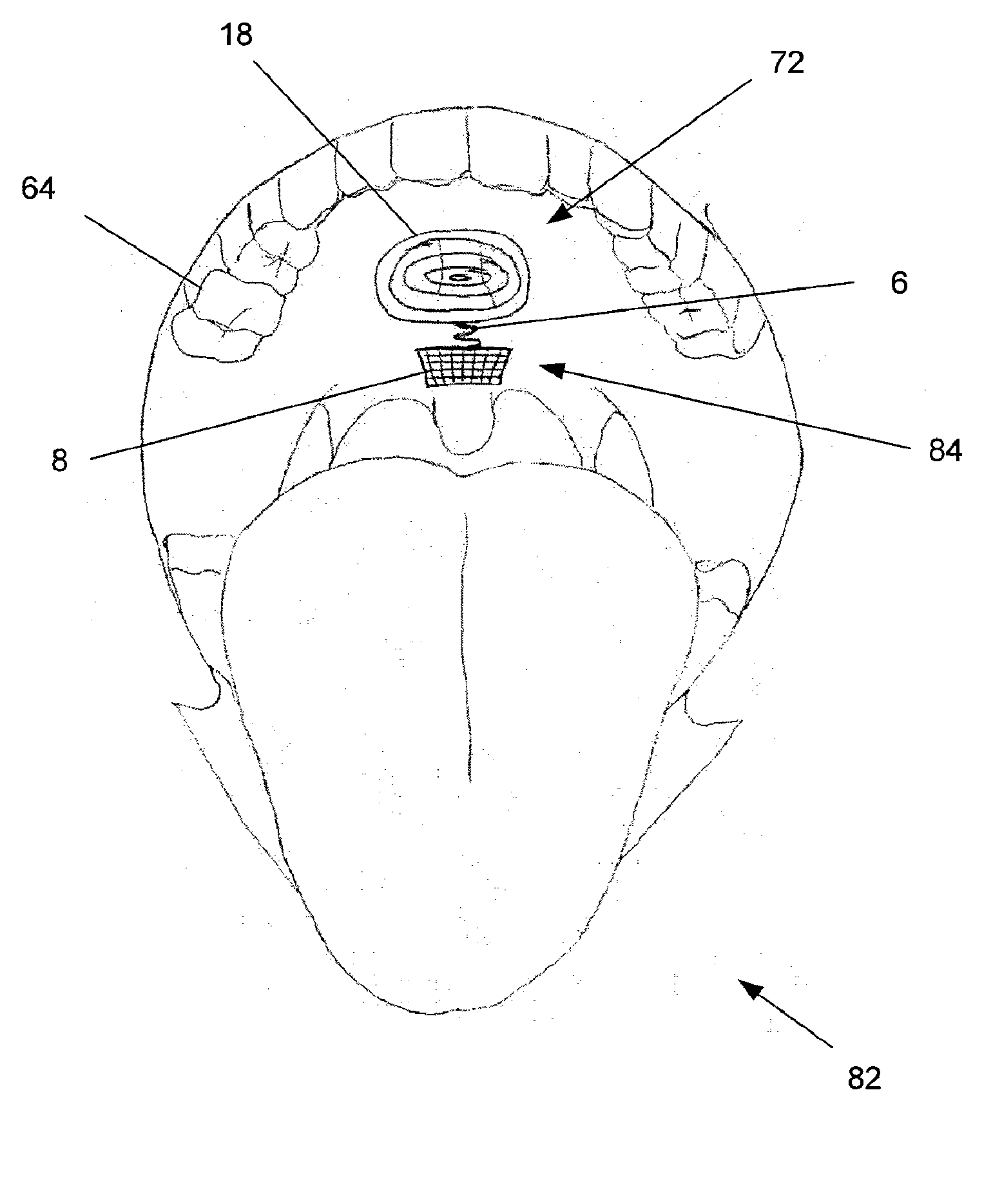
Smart Images

  • Figure 1
    Figure 1
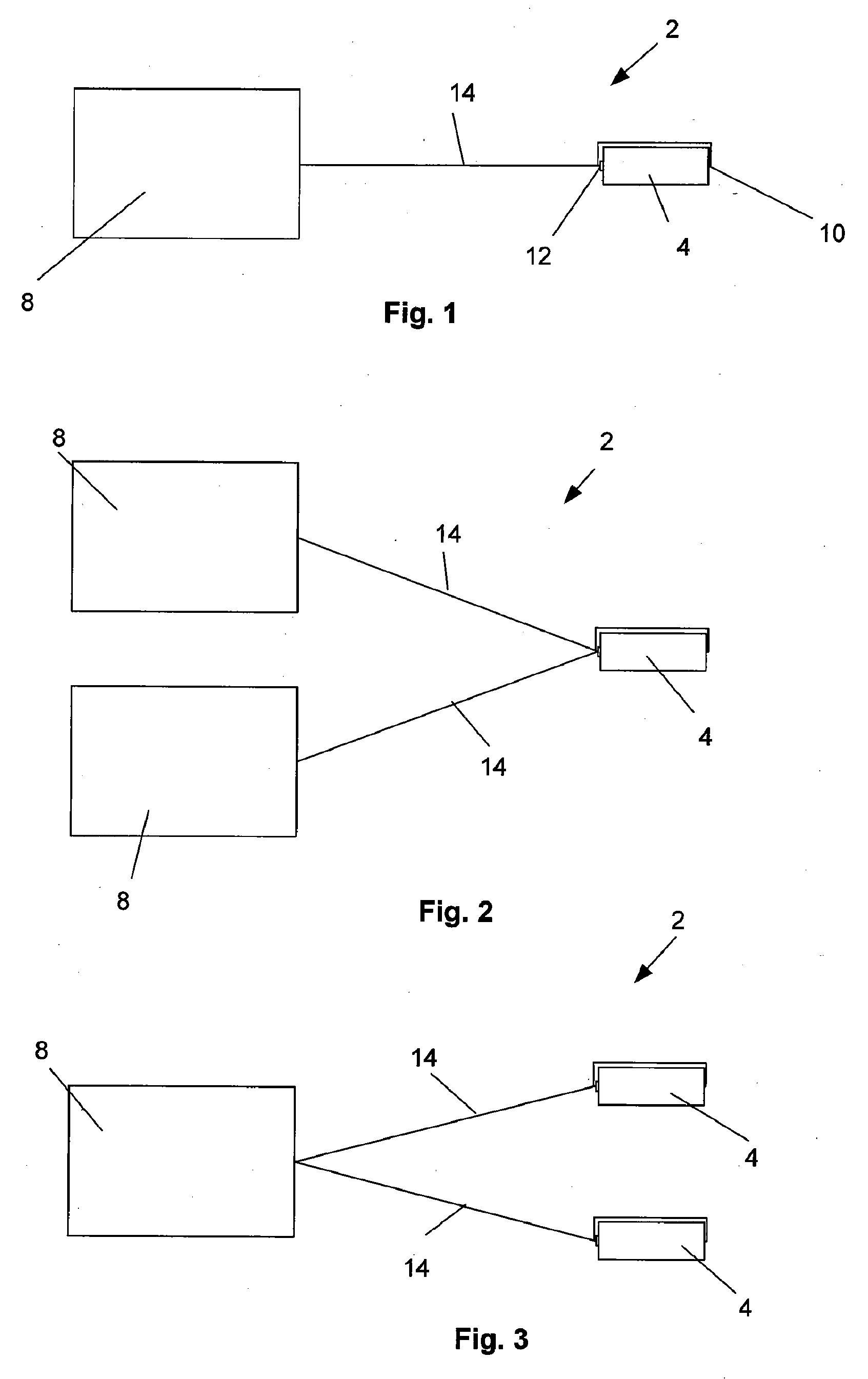
  • Figure 2
    Figure 2
  • Figure 3
    Figure 3
Patent Text Reader

Abstract

An airway implant device for maintaining and / or creating an opening in air passageways is disclosed. Methods of using the device are also disclosed. The airway implant device includes a deformable element to control the opening of an air passageway and a tether. Preferably the deformable element is an electroactive polymer element. Energizing of the electroactive polymer element provides support for the walls of an air passageway, when the walls collapse, and thus, completely or partially opens the air passageway. Also disclosed is an implant for stabilizing the tongue, the implant having an anchoring portion for securing a first end of the implant with the mandibula; a control portion connected with the anchoring portion, configured for selectively activating the implant; a flexible portion connected at its proximal end with the control portion, where the flexible portion has three-dimensional flexibility in a first state and where the flexible portion has a lesser three-dimensional flexibility in a second state, and where the flexible portion is selectively switchable between the first and second state by the control portion; and an anchoring portion for connecting the implant with the base of the tongue connected with the distal end of the flexible portion. Methods of treating airway disorders such as sleep apnea and snoring with the airway implant device are disclosed herein.
Need to check novelty before this filing date? Find Prior Art

Description

CROSS-REFERENCES TO RELATED APPLICATIONS

[0001] The present application claims priority to U.S. Provisional Patent Application No. 60 / 745,254, filed Apr. 20, 2006, the teachings of which are incorporated herein by reference.BACKGROUND OF THE INVENTION

[0002] Snoring is very common among mammals including humans. Snoring is a noise produced while breathing during sleep due to the vibration of the soft palate and uvula. Not all snoring is bad, except it bothers the bed partner or others near the person who is snoring. If the snoring gets worst overtime and goes untreated, it could lead to apnea.

[0003] Those with apnea stop breathing in their sleep, often hundreds of times during the night. Usually apnea occurs when the throat muscles and tongue relax during sleep and partially block the opening of the airway. When the muscles of the soft palate at the base of the tongue and the uvula relax and sag, the airway becomes blocked, making breathing labored and noisy and even stopping it altogeth...

Examples

Embodiment Construction

Devices and Methods

[0099]A first aspect of the invention is a device for the treatment of disorders associated with improper airway patency, such as snoring or sleep apnea. The device comprises of a deform able element to adjust the opening of the airway. In a preferred embodiment, the deform able element comprises of an electroactive polymer (EAP) element. The electroactive polymer element in the device assists in maintaining appropriate airway opening to treat the disorders. Typically, the EAP element provides support for the walls of an airway, when the walls collapse, and thus, completely or partially opens the airway.

[0100]The device functions by maintaining energized and non-energized configurations of the EAP element. In preferred embodiments, during sleep, the EAP element is energized with electricity to change its shape and thus modify the opening of the airway. Typically, in the non-energized configuration the EAP element is soft and in the energized configuration is stiff...