
Methods and Apparatus for Unidirectional Timing Message Transport Over Packet Networks
a packet network and message technology, applied in electrical equipment, digital transmission, time-division multiplex, etc., can solve the problems of long synchronization time, inability to tolerate pdv at high orders of magnitude, and protocol poor tolerance for uncertain and variable delay, etc., to achieve high variation of propagation delay
- Summary
- Abstract
- Description
- Claims
- Application Information
AI Technical Summary
Benefits of technology
Problems solved by technology
Method used
Image

Examples
Embodiment Construction
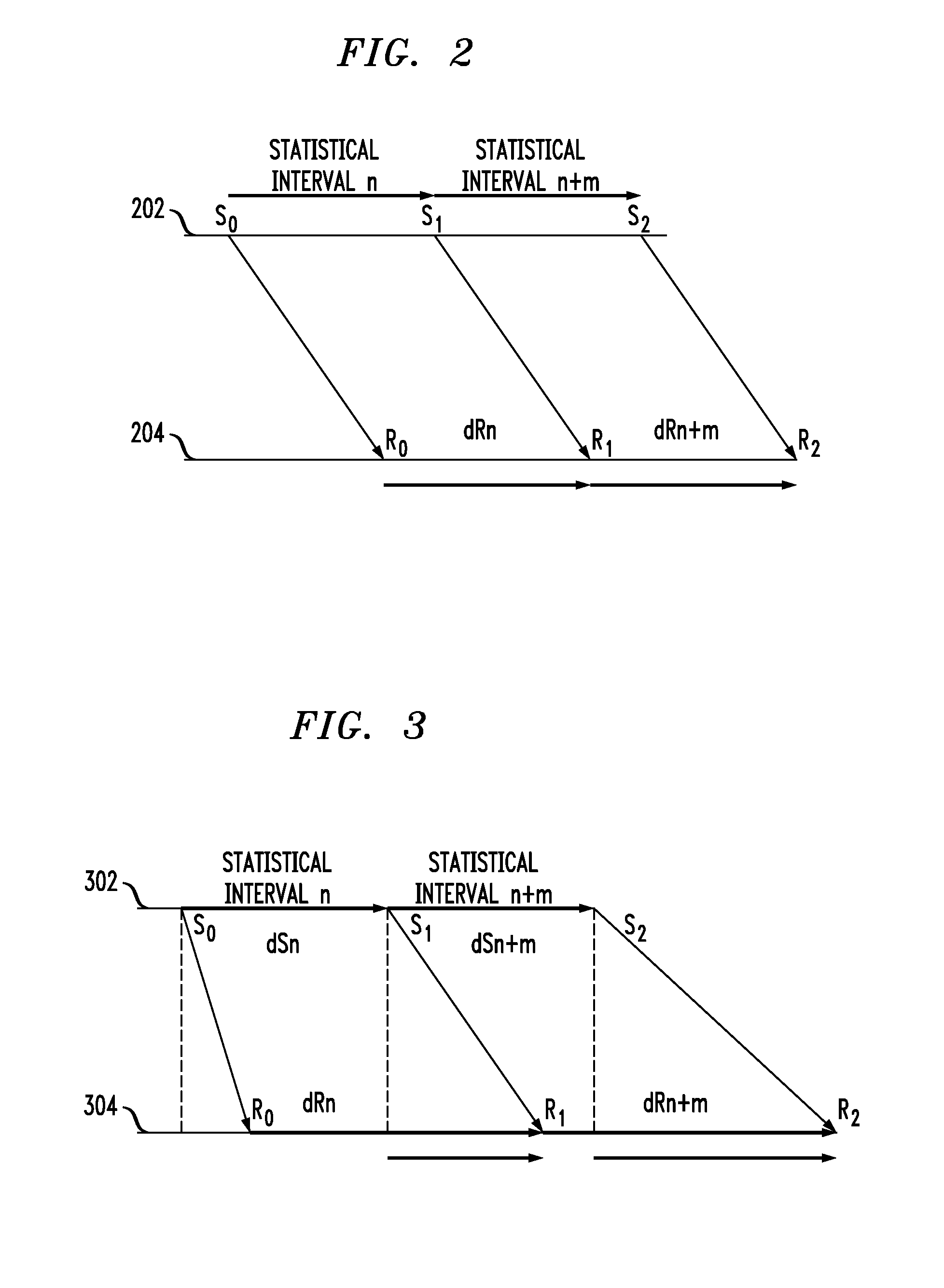
[0015]As will be described in detail below, the present invention in the illustrative embodiment relates generally to the field of packet transfer networks and, more particularly, to improved techniques for the transmission of precision timing information from a first clock source to a second clock source over packet networks having propagation delay. The illustrative embodiment extracts a correction factor from consecutive intervals of time-stamped packets having a difference in delay noise within a defined acceptance window.
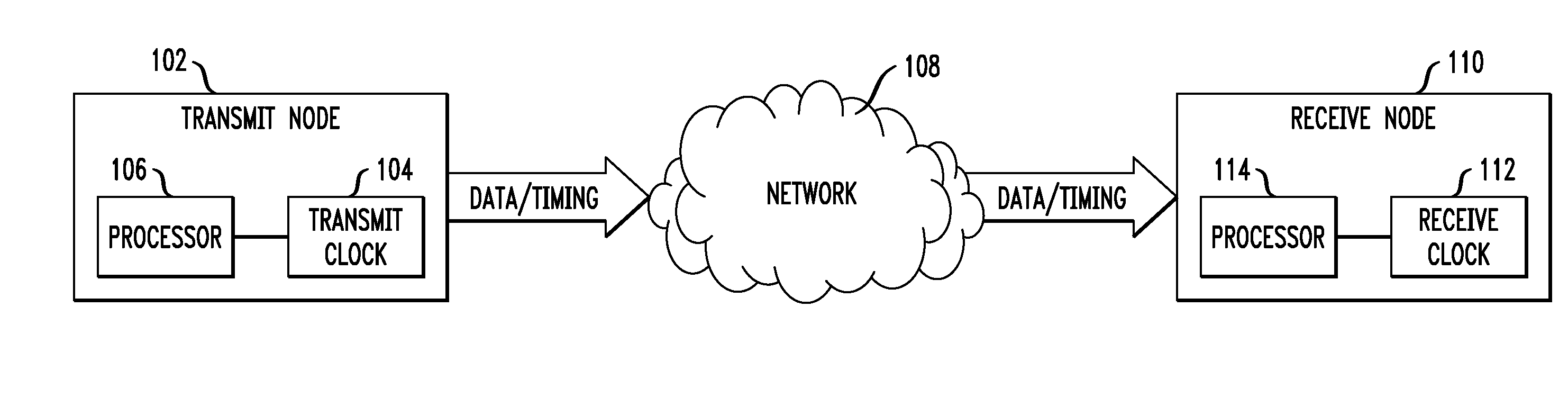
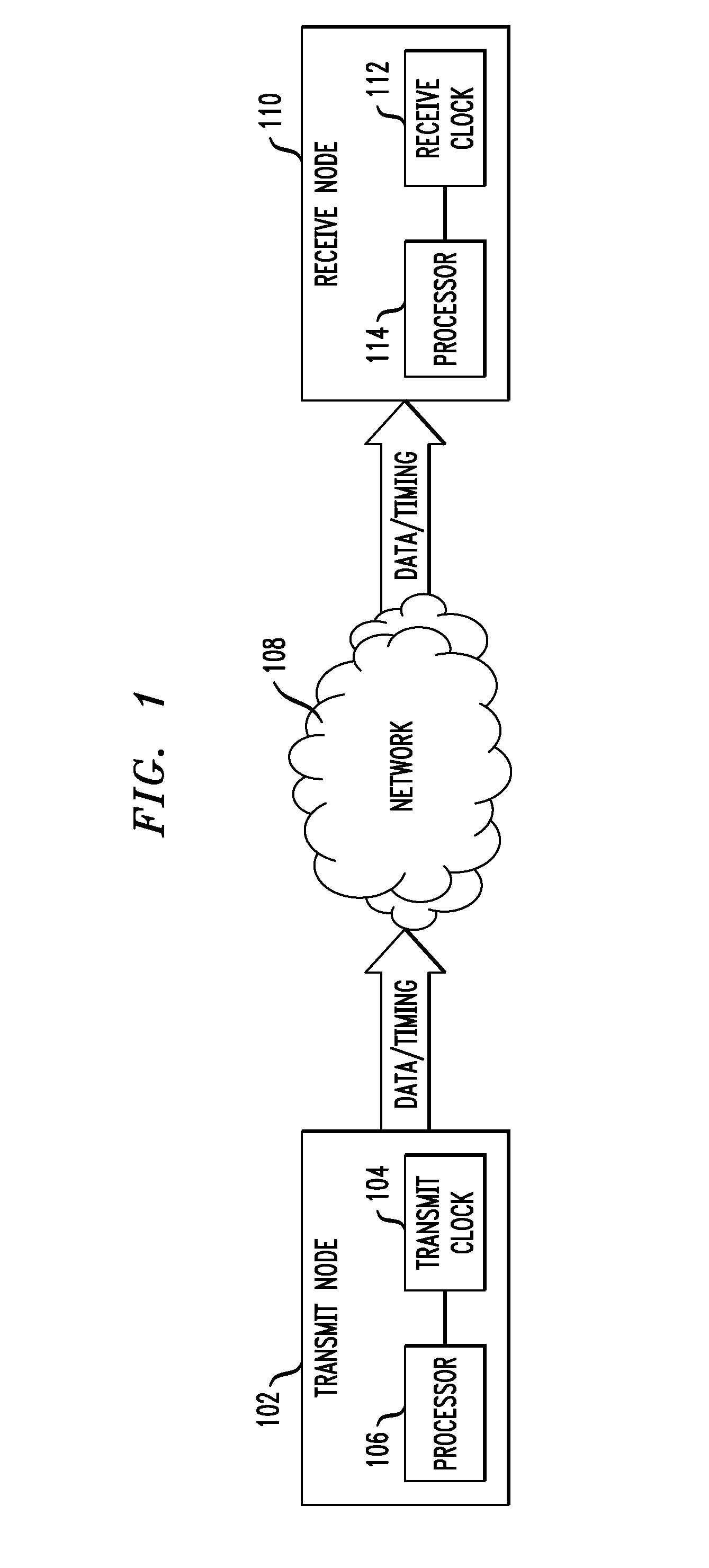
[0016]Referring initially to FIG. 1, a diagram illustrates a packet transfer system, according to an embodiment of the present invention. A transmit node 102 includes a transmit clock 104, or master clock, in communication with a transmit node processor 106. Packets including data and timing information are transferred through a network 108 to a receive node 110. Receive node 110 includes a receive clock 112, or slave clock, in communication with a receive node...
PUM
 Login to View More
 Abstract
Description
Claims
Application Information
 Login to View More