
Textile sheet, method for manufacturing same, and use
a technology of textile sheets and conductive yarns, applied in the field of textile sheets, can solve the problems of inflexible textile sheets, high cost of weaving or knitting with conductive yarns, and low economic and accepted products,
- Summary
- Abstract
- Description
- Claims
- Application Information
AI Technical Summary
Benefits of technology
Problems solved by technology
Method used
Image

Examples
Embodiment Construction
[0007]The object of the invention is to provide an electrically conductive textile sheet which may be easily and economically manufactured and is also universally usable for many different applications. A further object of the invention is to provide a method for manufacturing such a textile sheet.
[0008]This object is achieved by a textile sheet having all the features of claim 1, and by a method for manufacturing such a textile sheet having all the features of claim 8. Preferred uses for such a textile sheet are stated in claims 15 and 16. Preferred embodiments of the invention are described in the subclaims.
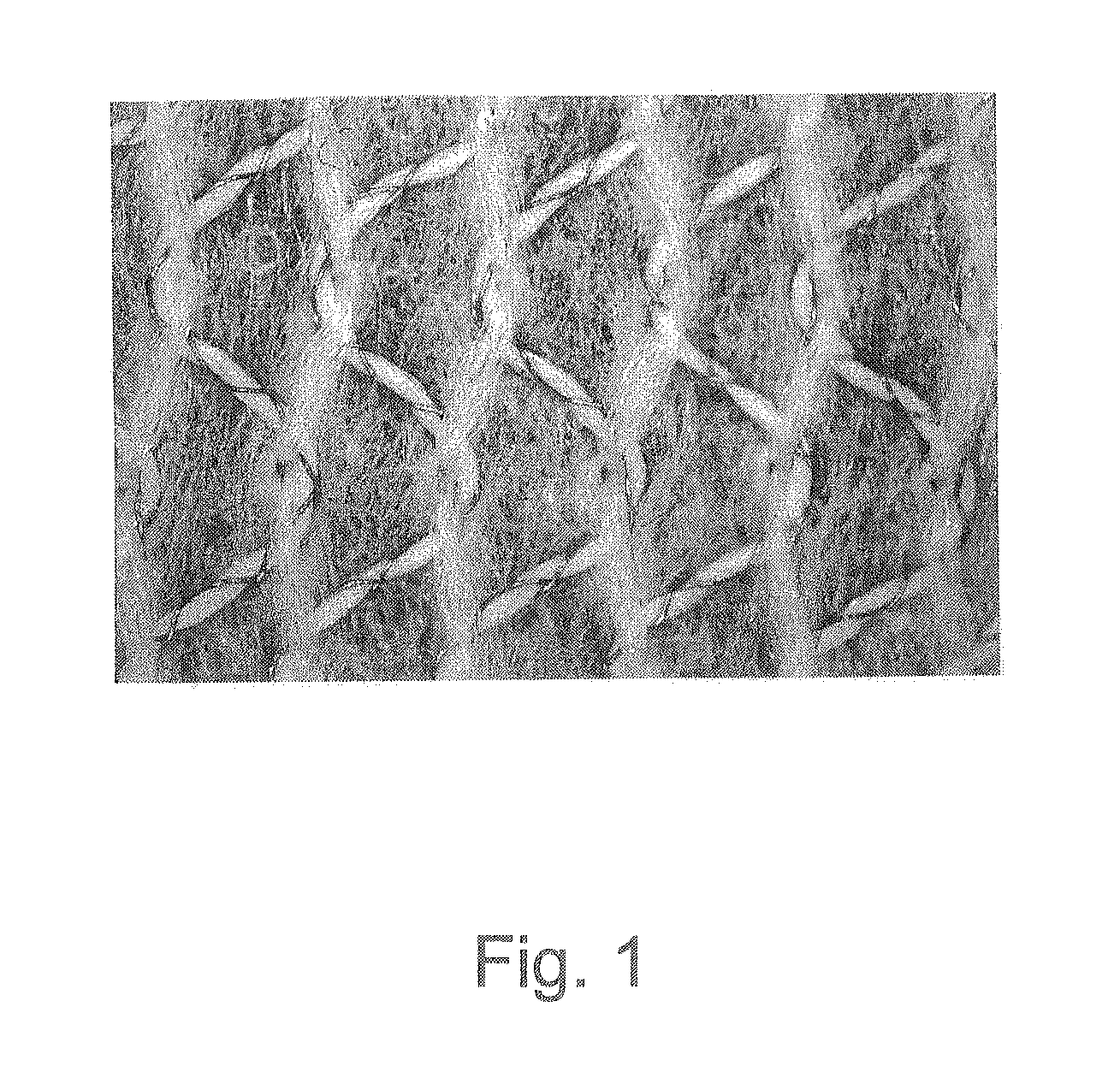
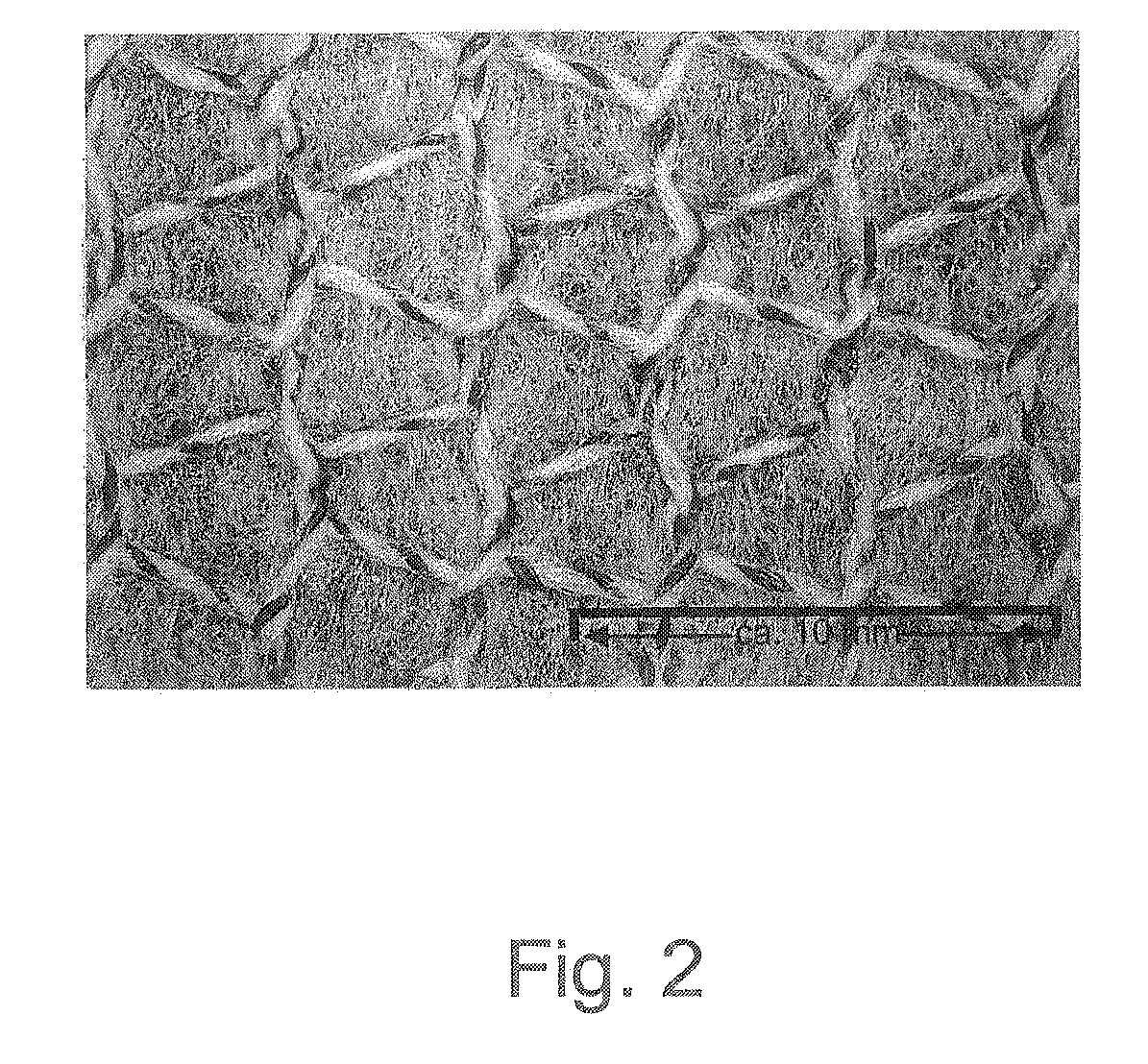
[0009]According to the invention, for a textile sheet which is intended in particular for use as an interlining material in the textile industry and which has a substrate made of nonwoven fabric, woven fabric, knitted fabric, or the like, the substrate is provided with a mesh configuration comprising meshes of an electrically conductive material which are interlinked or interco...
PUM
| Property | Measurement | Unit |
|---|---|---|
| fixing temperatures | aaaaa | aaaaa |
| voltage | aaaaa | aaaaa |
| electrically conductive | aaaaa | aaaaa |
Abstract
Description
Claims
Application Information
 Login to View More