
Low Temperature Process for Recovering and Producing Para-Xylene and Heat Exchange Network Therefore
a heat exchange network and low temperature technology, applied in the direction of organic chemistry, chemistry apparatus and processes, sustainable manufacturing/processing, etc., can solve the problems of large equipment, significant energy consumption, and/or substantial recycling, and achieve the effect of increasing or optimizing capacity and saving connection
- Summary
- Abstract
- Description
- Claims
- Application Information
AI Technical Summary
Benefits of technology
Problems solved by technology
Method used
Image

Examples
Embodiment Construction
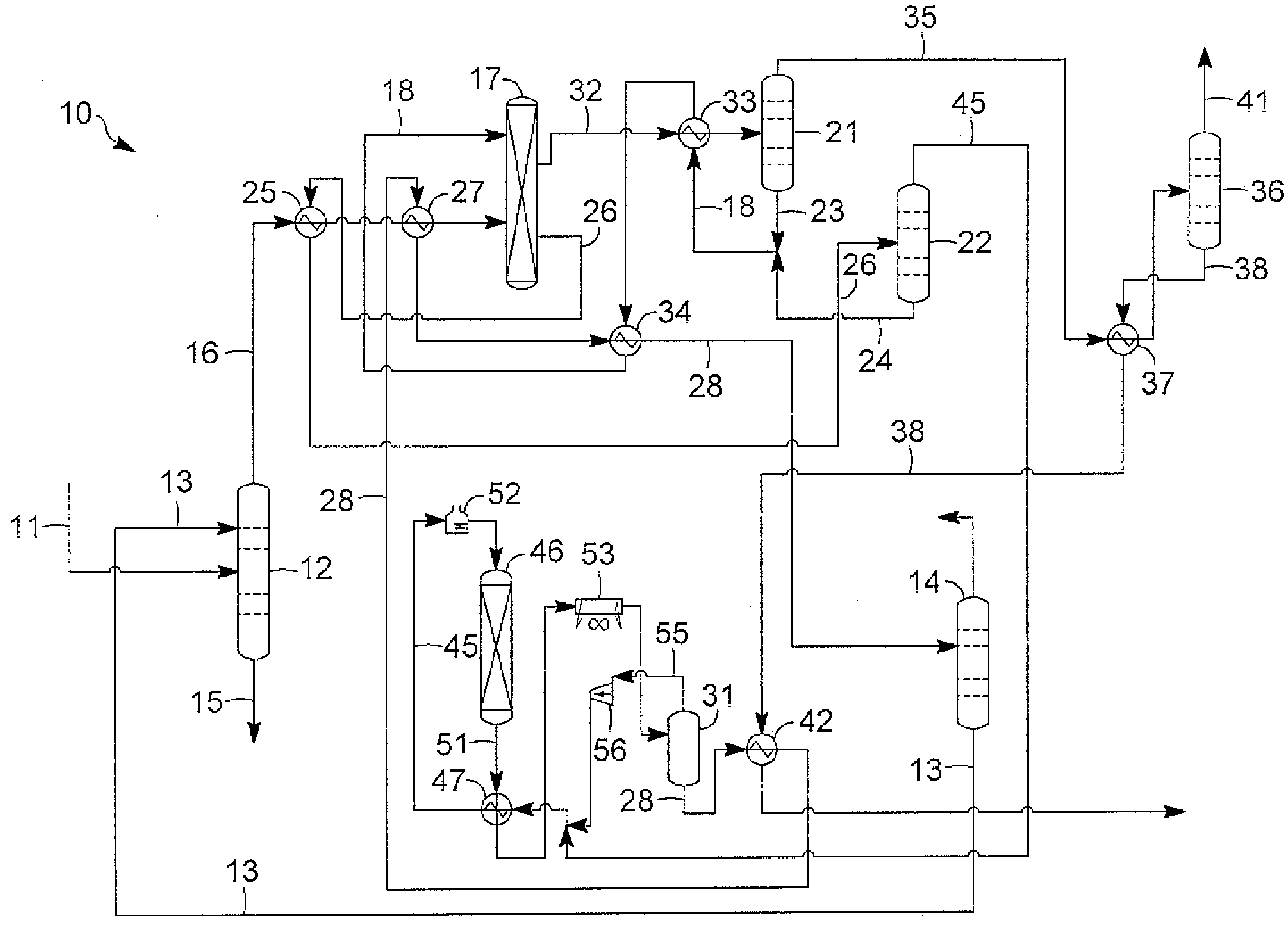
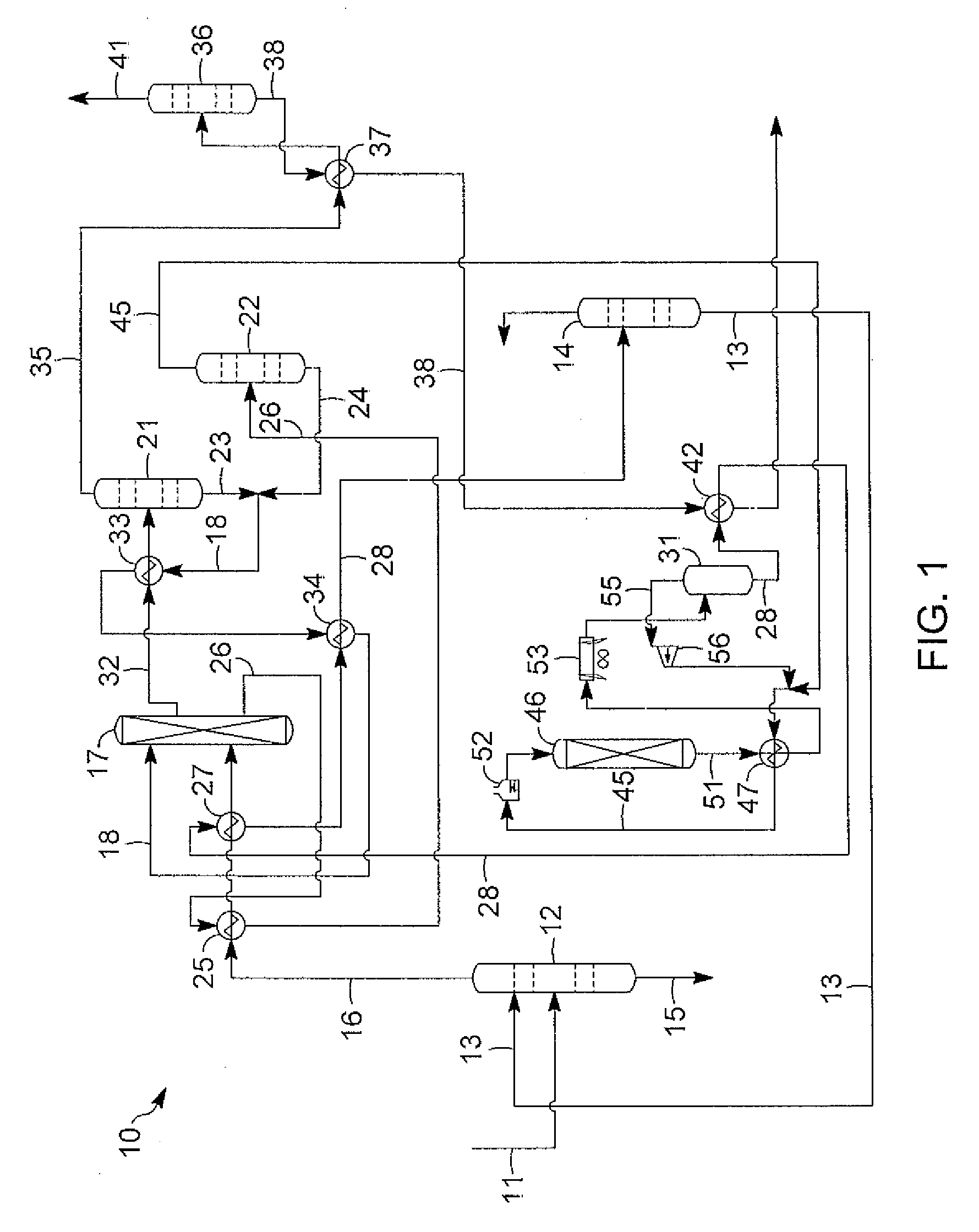
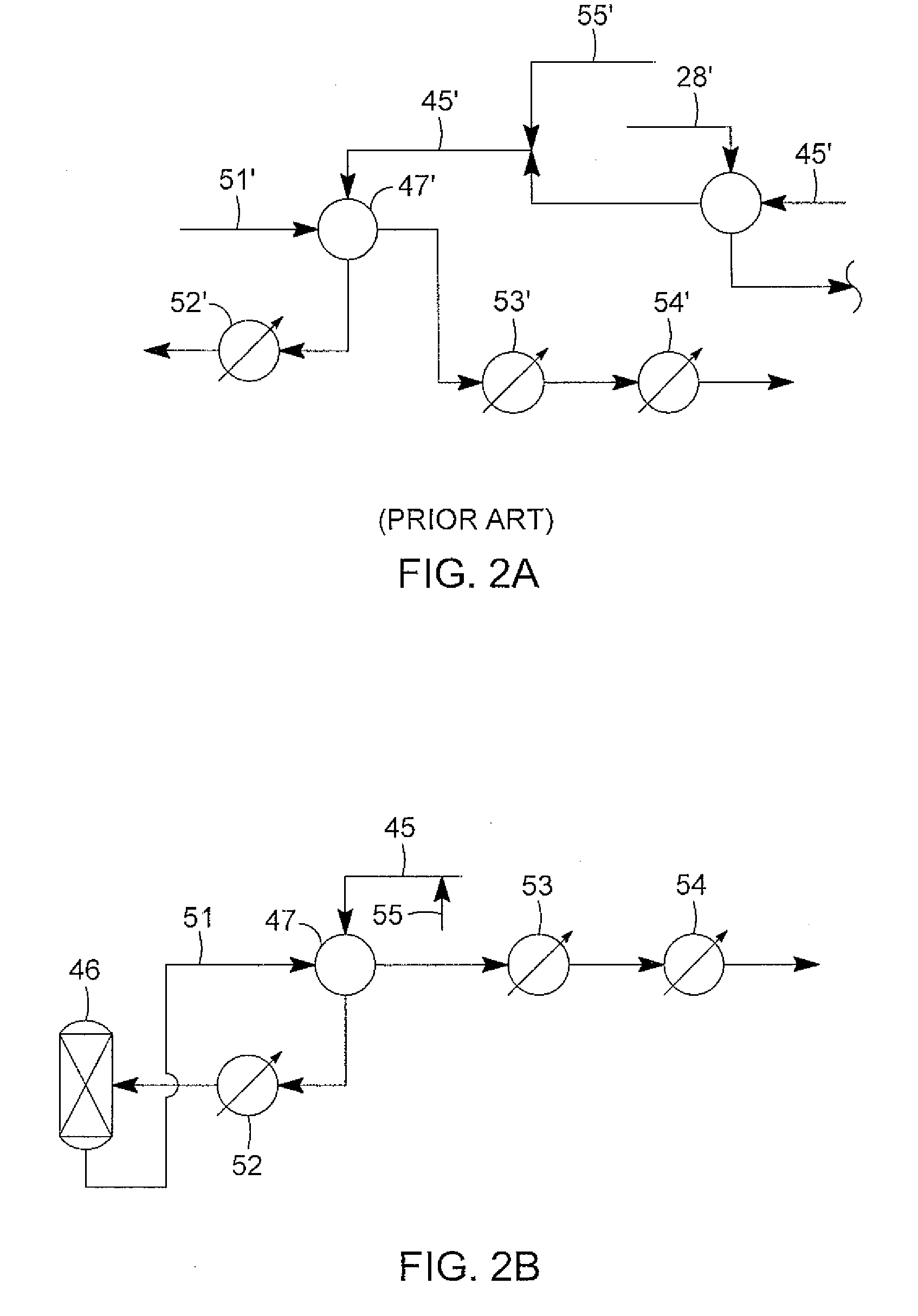
[0050]By way of example, the example provided in FIGS. 1-8B is directed toward a SMB adsorption-isomerization process loop. Needless to say, the concepts of this disclosure are also applicable to process loops other those disclosed in the Figures. It will be also noted that the order in which process steps are recited is not important unless a process directly depends upon a preceding step or as otherwise indicated.
[0051]The simulated moving bed (SMB) adsorptive separation method for the recovery of para-xylene from mixed xylenes and ethylbenzene. The term “mixed xylenes” refers to a mixture of C8 aromatic isomers that includes ethylbenzene, para-xylene, meta-xylene, and ortho-xylene. As shown above in Table 1, these isomers have boiling points so close together that separating them by conventional distillation is not practical. The SMB adsorption separation process provides an efficient means of recovering para-xylene using a solid zeolitic adsorbent that is selective for para-xyle...
PUM
| Property | Measurement | Unit |
|---|---|---|
| Temperature | aaaaa | aaaaa |
| Temperature | aaaaa | aaaaa |
| Temperature | aaaaa | aaaaa |
Abstract
Description
Claims
Application Information
 Login to View More