Selective Accumulation of Energy With or Without Knowledge of Tissue Topography

a tissue topography and energy accumulation technology, applied in the field of catheter-based treatment for heating body tissue, can solve the problems of stents that cannot be used or present significant disadvantages, implants can present risks, and balloon dilation may be limited in time, so as to avoid significant thermal damage

US20100125268A1Active Publication Date: 2010-05-20BOSTON SCI SCIMED INC
100 Cites 117 Cited by

Patent Information

Authority / Receiving Office
US · United States
Patent Type
Applications(United States)
Current Assignee / Owner
Publication Date
2010-05-20

Smart Images

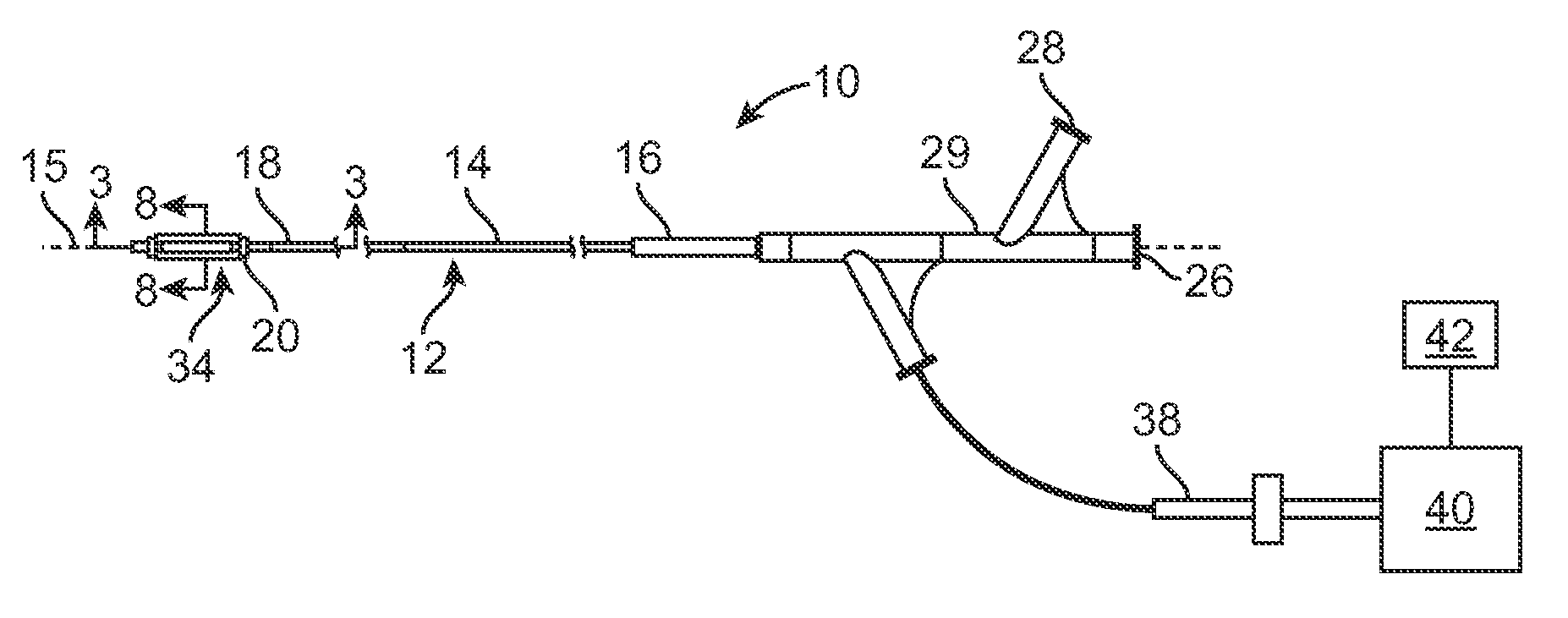
  • Figure 1
    Figure 1
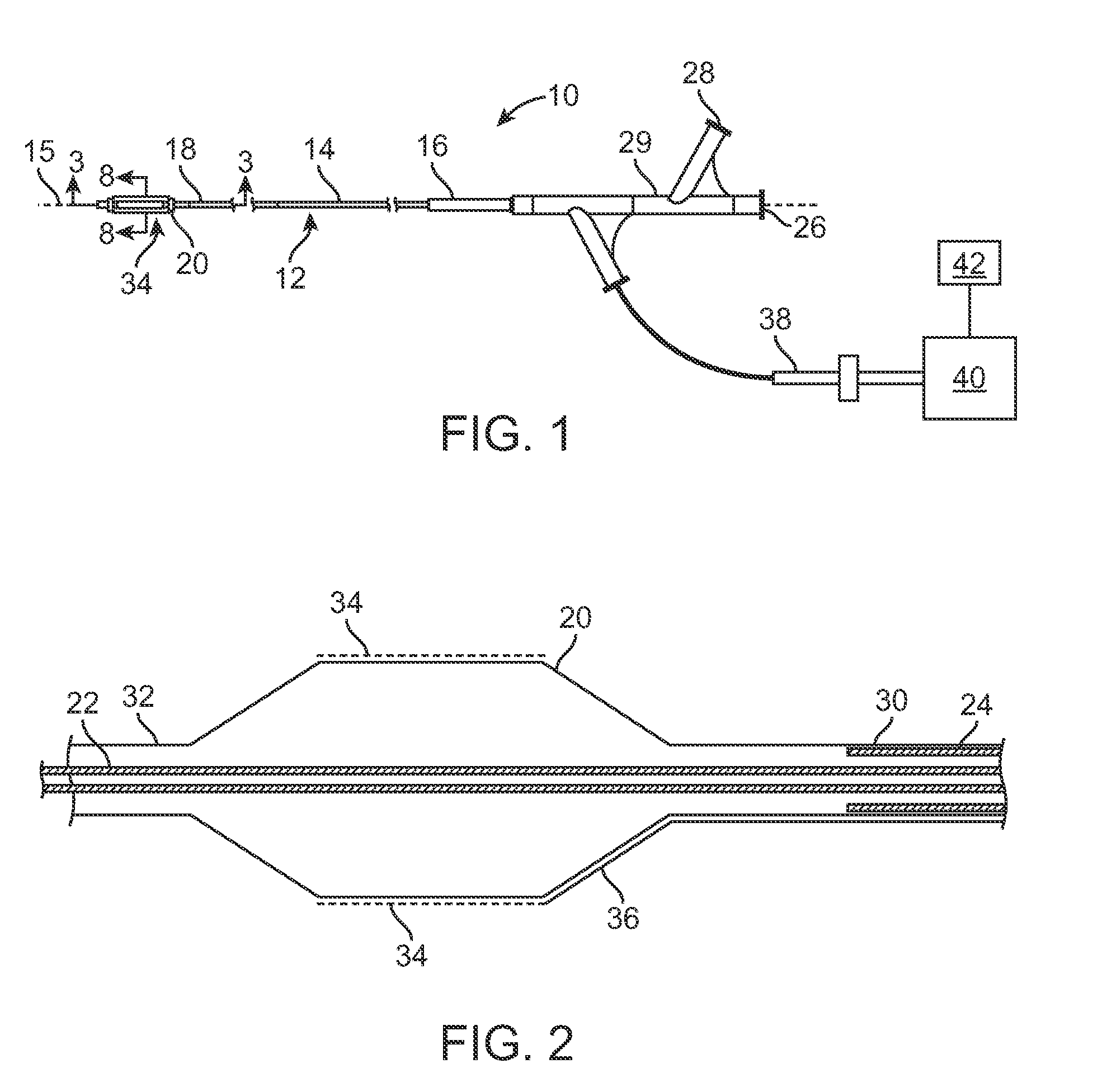
  • Figure 2
    Figure 2
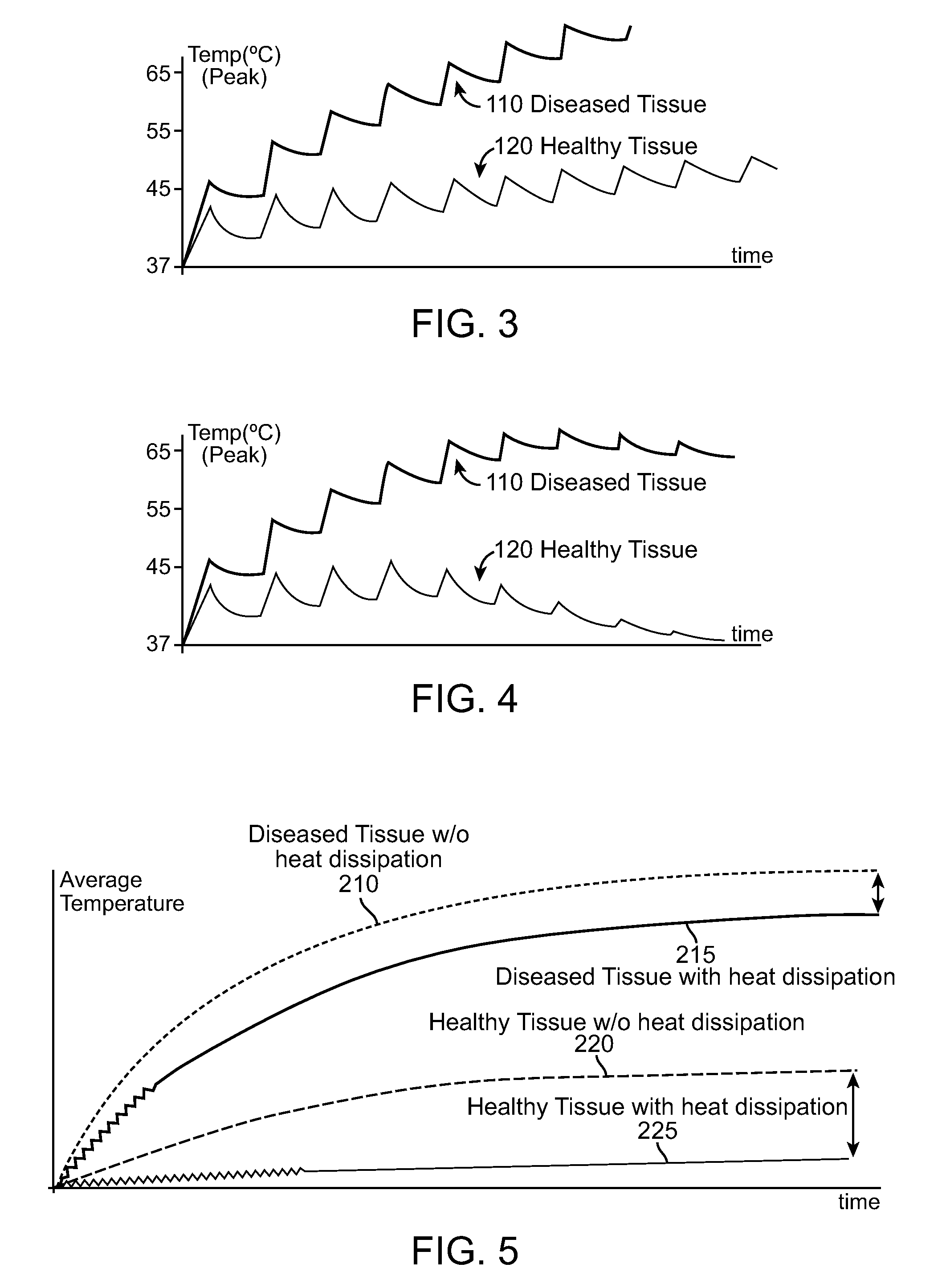
  • Figure 3
    Figure 3
Patent Text Reader

Abstract

Methods and systems for heating a body tissue region adjacent a body lumen with diseased and healthy portions using selective accumulation of energy in the artery tissue with or without knowledge of tissue topography. The method includes positioning an energy delivery portion of a catheter body within the lumen adjacent the body tissue region to be heated, determining a pulse characteristic in response to a thermal property of a first tissue type and applying pulsed energy with the pulse characteristic from the energy delivery portion so as to therapeutically treat the second tissue type within the body tissue region by drawing heat from the first tissue type at a rate that avoids significant thermal damage to the first tissue type while building-up heat in the second tissue type. The system includes an elongate flexible catheter body having a proximal end and a distal end with an axis therebetween, an energy delivery portion proximate the distal end, an energy source coupled to the energy delivery portion and a processor coupled to the energy source, the processor configured to control a pulse characteristic of pulsed energy transmitted from the energy source to the energy delivery portion so as to therapeutically treat the second tissue type within the body tissue region by drawing heat from the first tissue type at a rate that avoids significant thermal damage to the first tissue type while building-up heat in the second tissue type.
Need to check novelty before this filing date? Find Prior Art

Description

CROSS-REFERENCES TO RELATED APPLICATIONS

[0001] The present application claims the benefit under 35 USC 119(e) of U.S. Provisional Application No. 61 / 115,344 filed Nov. 17, 2008; the full disclosure of which is incorporated herein by reference in its entirety.

[0002] This application is related to U.S. application Ser. No. 11 / 975,474, filed on Oct. 18, 2007, entitled “Inducing Desirable Temperature Effects on Body Tissue”; U.S. application Ser. No. 11 / 975,383, filed on Oct. 18, 2007, and entitled “System for Inducing Desirable Temperature Effects on Body Tissues”, U.S. patent application Ser. No. 11 / 122,263, filed on May 3, 2005, entitled “Imaging and Eccentric Atherosclerotic Material Laser remodeling and / or Ablation Catheter”, and U.S. Provisional Application No. 61 / 099,155, filed on Sep. 22, 2008, entitled “Inducing Desirable Temperature Effects On Body Tissue Using Alternate Energy Sources”, the full disclosures of which are incorporated herein by reference.STATEMENT AS TO RIGHTS TO...

Examples

Embodiment Construction

[0037]Many therapies have been developed to replace or improve upon traditional balloon angioplasty and stents. Many of the devices described in the BACKGROUND OF THE INVENTION either cut, ablate, or vaporize diseased tissue in an artery. For example, laser devices vaporize plaque and flush it downstream. Atherectomy devices excise plaque and suck it out of the body. Cutting balloons incise the artery wall, damaging the tissue.

[0038]It would be advantageous to provide systems and devices that do not cut, ablate, or vaporize. Three modalities of treatment avoid these drawbacks, they include: cooling the tissue; non-ablative forms of direct molecular denaturing; and non-ablative heating. Cooling has been implemented using devices such as Boston Scientific's Cryo-cath. Direct molecular denaturing can be achieved with radiation—gamma rays, for instance. The present invention is directed to the remaining modality, non-ablative heating.

[0039]Some embodiments of the present invention gener...